For centuries, Kano stood as one of Sub-Saharan Africa’s foremost commercial centres. Long before the emergence of Nigeria as a modern state, the city was a major node in the trans-Saharan trade network, linking West Africa with North Africa and the Mediterranean through commerce in textiles, leather, grains, livestock and other commodities. Its strategic location attracted merchants, scholars and investors, establishing Kano as one of Africa’s enduring centres of enterprise.
That commercial heritage remains one of Kano’s greatest assets. Today, the administration of Governor Abba Kabir Yusuf is pursuing an economic strategy aimed at restoring the state’s position as a leading destination for investment, manufacturing and regional trade through fiscal reforms, infrastructure development and private sector engagement.
With an estimated gross domestic product of about $20 billion, Kano is Nigeria’s most populous state and one of the country’s largest consumer markets. It also serves as a strategic gateway to the markets of northern Nigeria as well as neighbouring countries in West and Central Africa. These structural advantages continue to make the state an important destination for commerce, industry and logistics.
“These investments target sectors considered critical to economic competitiveness, including road infrastructure, urban renewal, industrial development, water supply, environmental sanitation, power, renewable energy and employment generation.”
The Yusuf administration has sought to build on these advantages by improving the state’s investment climate while strengthening public finance. Central to this strategy is the expansion of Internally Generated Revenue (IGR), which has become one of the administration’s principal fiscal reform priorities.
Between 2023 and 2025, Kano’s internally generated revenue increased from about ₦40 billion to approximately ₦102 billion, representing a growth of more than 150 per cent within two years. State officials attribute the increase to reforms in revenue administration, improved collection systems, stronger fiscal discipline and ongoing public financial management reforms designed to widen the tax net and improve compliance.
The significance of this growth extends beyond the figures themselves. Higher internally generated revenue provides the state with greater fiscal flexibility, reduces dependence on monthly federal allocations and expands the government’s capacity to finance infrastructure, education, healthcare and other public services from its own resources.
The state’s fiscal management has also shown measurable improvements. According to official government records, Kano achieved a budget implementation rate of 96.9 percent during the 2025 fiscal year. High budget implementation is often regarded as an indicator that planned projects and public expenditure are being executed largely in line with approved appropriations, improving predictability in government spending.
Efforts to improve the business environment have also attracted national recognition. Kano is now ranked among Nigeria’s top ten states on the Presidential Enabling Business Environment Council’s Ease of Doing Business assessment. The ranking reflects reforms aimed at simplifying business processes, improving regulatory efficiency and creating a more predictable environment for investors.

Recognising that sustained investment requires long-term planning, the administration introduced a Five-Year Multi-Sectoral Investment Strategic Plan covering the period from 2025 to 2029. The framework identifies priority sectors for investment promotion, including agriculture, manufacturing, renewable energy, solid minerals, commerce and industrial development, while providing a structured roadmap for attracting domestic and international investors.
According to state government data, the investment strategy has already attracted more than $150 million in investments, particularly within agriculture and renewable energy. Government officials have also disclosed that investment proposals valued at more than $800 million are currently undergoing various stages of consideration and engagement.
Infrastructure development forms another major pillar of the state’s economic agenda. Over the past three fiscal cycles, Kano has steadily increased capital expenditure through progressively larger budgets. Following budgets exceeding ₦536 billion in 2024 and ₦935 billion in 2025, the state approved a ₦1.4 trillion budget for 2026, with substantial allocations directed towards capital projects.

These investments target sectors considered critical to economic competitiveness, including road infrastructure, urban renewal, industrial development, water supply, environmental sanitation, power, renewable energy and employment generation. Such investments are intended to improve the physical infrastructure that supports commerce while addressing constraints that have historically affected industrial productivity.
Among the flagship initiatives is the planned industrial layout along the Ajaokuta-Kaduna-Kano (AKK) gas pipeline corridor. The project is expected to leverage access to natural gas to support manufacturing and attract industrial investors seeking reliable energy for production. The state is also pursuing the rehabilitation of its hydro-independent power plants with a combined installed capacity of 14 megawatts, alongside expanded support for industrial clusters designed to stimulate manufacturing activities and create employment opportunities.
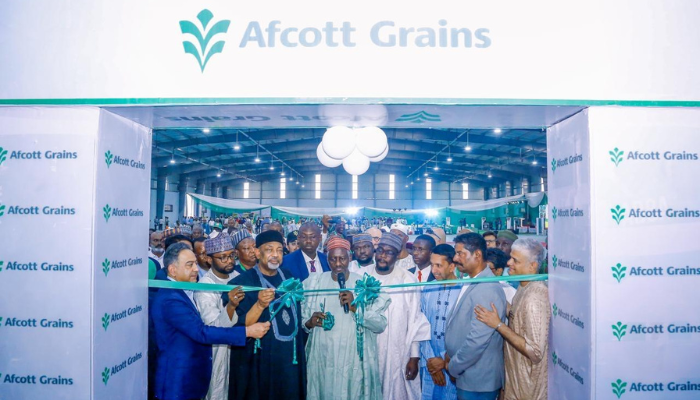
The administration has equally sought to strengthen the institutional framework governing private investment. The recent approval of a comprehensive public-private partnership policy and its accompanying operational manual establishes procedures for project identification, procurement, financing, implementation and monitoring. By providing clearer rules for collaboration between government and private investors, the framework seeks to improve transparency, reduce investment uncertainty and facilitate infrastructure financing.
For investors, policy consistency often carries as much weight as financial incentives. Clear regulatory procedures, transparent procurement systems and predictable government policies help lower transaction costs and improve investor confidence. Kano’s recent reforms therefore represent an attempt to address both physical infrastructure deficits and institutional constraints simultaneously.
The state’s economic strategy is being implemented under the Kano First Agenda, which places emphasis on expanding economic opportunities while strengthening public institutions. Although many of the long-term outcomes will depend on sustained implementation, the available indicators point to measurable progress in revenue mobilisation, fiscal management, infrastructure investment and investment promotion.
Whether Kano fully reclaims its historic position as one of Africa’s leading commercial centres will ultimately depend on the continuity of these reforms, private sector participation and broader national economic conditions. Nevertheless, the direction of recent policy initiatives suggests a deliberate effort to reposition the state for increased investment, industrial growth and regional competitiveness. If that momentum is maintained, Kano could once again strengthen its place as one of Nigeria’s most significant economic hubs.

Join BusinessDay whatsapp Channel, to stay up to date
Open In Whatsapp