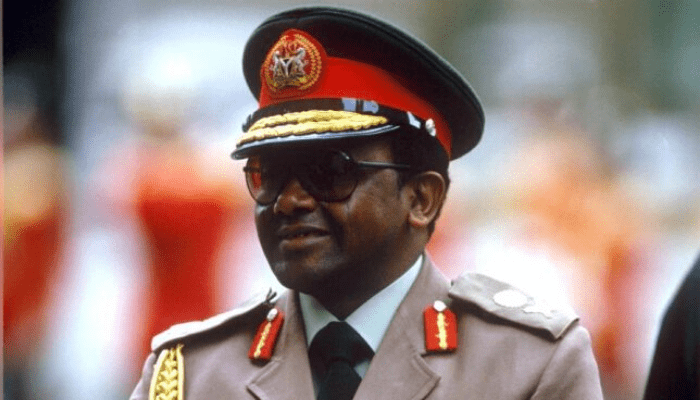
…Troops repel attacks, kill terrorists in Malam Fatori
…CSO decries, says incessant killing of senior officers is dangerous
Troops of Sector 3, Joint Task Force (North East), Operation Hadin Kai, have repelled an attempted terrorist infiltration at a military position when a convoy of the Commanding Officer stepped on landmines planted by terrorists to prevent reinforcements of soldiers in Monguno Local Government Area of Borno State on Sunday night.
This is coming four days after Boko-Haram terrorists attacked Benesheikh town and the 15 Brigade Task Force, killing Brigadier General Oseni Braimoh along with other soldiers.
In a statement issued on April 13, 2026, the Media Information Officer of Operation Hadin Kai, Sani Uba, said the troops engaged the attackers in a fierce gun battle, forcing them to retreat while maintaining full control of the location.
However, the operation recorded a tragic loss as the Commanding Officer and six other soldiers were killed after their vehicle struck an Improvised Explosive Device (IED).
According to Uba, the incident occurred when the Commanding Officer moved towards the frontline to personally assess the situation after the immediate threat had been neutralised.
“Troops of Sector 3, Joint Task Force (North East) Operation HADIN KAI (OPHK) came under an isolated Tango terrorist attack on Charlie 13 location in Monguno, in the late hours of 12 April 2026. Following intense fire exchanges, the terrorists were put to flight, with troops maintaining control of the location.
“Regrettably, the Commanding Officer, while courageously proceeding to the troops’ location to personally assess the situation, encountered an Improvised Explosive Device (IED) which severely affected his vehicle, leading to his death alongside 6 other gallant personnel”, Uba noted.
He described the late officer’s actions as a demonstration of exceptional leadership, courage, and selfless service, noting that his decision to lead from the front, despite the risks, underscored his commitment to the welfare of his troops and operational effectiveness.
The source added that the attack was carried out from multiple locations, indicating a strategic, well-planned infiltration by the armed group. Affected areas include the Church vicinity, GGSS axis, and extending towards C:3 and C:7. Heavy gunfire (RVG) was reported throughout the engagement.
The affected Colonel, I.A. Muhammad, and his men were attached to the 242 Battalion in Borno State.
“Col I.A Mohammed was reportedly killed last night in an IED incident while reinforcing troops in Monguno. Four soldiers were also killed when a fighter jet, in repelling an ISWAP attack, hit the vehicle laden with bombs they ran in,” the source said.
Similarly, ISWAP suffered one of their heaviest defeats at the hands of the Nigerian military during a failed attempt on Malam Fatori in the Abadam Local Government Area of the State.
It was gathered that the operation was successful, and the terrorists, who came to inflict maximum casualties on the military, left in disarray, leaving behind their dead, which is unusual.
Malam Fatori is one of the most formidable military bases in Borno, particularly in the State’s Northern part. There have been several attempts in the past by the terrorists to overrun the town, all of which have always failed.
In March, ISWAP/Boko Haram attacked military bases in Ngoshe (Gwoza), Bama, Kawuri (Konduga) and Kukawa. The attacks were spread across five local governments. In all these attacks, the commanding officers were killed.
Ahmed Shehu, the Chairman of Civil Society Organisations in North-East and Lake Chad, condemned in the strongest terms the recent killing of military commanders in operations against Boko Haram, noting that it has adverse effects on the troops’ morale in counter-insurgency operations.
“We must not return to those days. The government must ensure accountability for operational lapses, provide psychological and welfare support for troops, and ensure the real protection of civilians.
“These killings damage troops’ psychology. Commanders provide leadership and morale, so the loss of commanders creates fear and uncertainty, weakening discipline and operational effectiveness on the front lines”, he said.
According to him, every life lost to this insurgency is a tragedy, saying, “We cannot normalise bloodshed. We mourn every Nigerian lost and urge decisive action now to protect both our troops and communities.
He warned, “I fear we are seeing warning signs of the 2012-2014 period, when Boko Haram exploited gaps to escalate attacks. With commanders being killed and millions still displaced, we risk sliding back if action is not taken.”

Join BusinessDay whatsapp Channel, to stay up to date
Open In Whatsapp