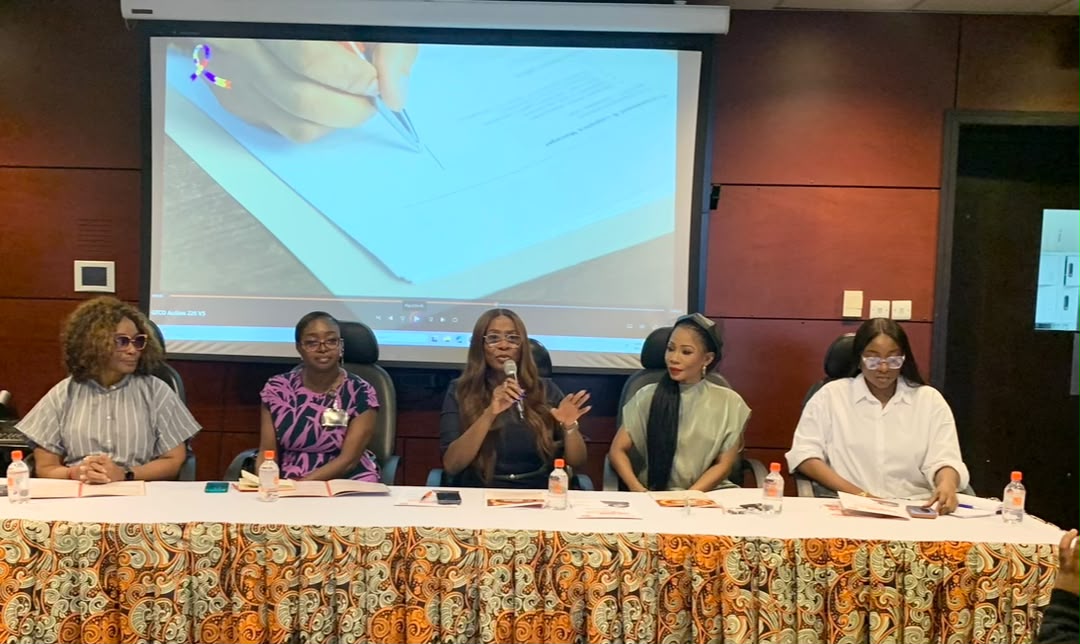
After nearly two decades of leading autism awareness campaigns, Guaranty Trust Holding Company Plc (GTCO) says Nigeria must move beyond awareness towards creating environments where individuals on the Autism spectrum are supported, and empowered at home, in school, in workplace, and public spaces.
This is even as autism specialists, parents and advocates, at the launch of its 16th Annual Autism Conference on Wednesday, argued that while awareness has improved significantly in recent years, many Nigerians still respond to autistic children and adults with fear, stigma or misunderstanding because they do not know how to support them.
Read also: Over 10,000 gather in Lagos as ARISE Conference demands ‘Shift’ in enterprise, leadership
This year’s conference, themed “Acceptance in Action: From Family to Classroom to Workplace to Public Spaces,” signals what organisers describe as a deliberate shift from simply educating people about autism to encouraging practical inclusion in everyday life.
“Awareness is important, but acceptance is what truly changes lives. Acceptance is not a complicated idea. Sometimes it simply means creating space for someone else,” said Oyinade Adegite, chief communications officer, GTCO Plc.
The conference will hold on July 27 and 28 at the Muson Centre in Lagos, followed by four days of free one-on-one consultations with local and international specialists from July 29 to August 1 at the Adeyemi Bero Auditorium, Alausa, Ikeja.
The consultations will provide developmental assessments, behavioural guidance and counselling for families raising children on the autism spectrum.
Experts said Nigeria’s biggest challenge is no longer explaining what autism is, but helping society understand how autistic people experience the world differently. They argued that acceptance begins at home before extending into classrooms, offices and public institutions.
For many families, the greatest burden is not the diagnosis itself but the judgment they encounter whenever they leave their homes, they affirmed.
Parents described everyday situations in restaurants, airports, schools and shopping centres where children on the autism spectrum are stared at, shouted at or treated as though they are intentionally misbehaving.
Advocates said such experiences demonstrate why continuous training is needed across public institutions.
Speaking on what true acceptance looks like within the family, Solape Azazi, an international behaviour analyst and founder of Cradle Lounge Special Needs Initiative, said acceptance begins when parents stop seeing the diagnosis before seeing the child.
She said many families spend months searching for treatments and answers after receiving a diagnosis, but often overlook the need to first accept their child unconditionally.
According to Azazi, parents must move away from blame, myths and stigma, adding that understanding autism enables families to educate neighbours, relatives and communities, gradually replacing fear with knowledge.
She said genuine acceptance starts at home before extending into schools, workplaces and society.
Osezusi Bolodeoku, an international behaviour analyst, said Nigeria has made progress in autism awareness, but awareness alone is no longer enough.
Bolodeoku explained that acceptance is demonstrated through everyday actions, such as creating safe spaces for autistic children and adults, showing patience in public places and ensuring they are treated with dignity.
According to her, inclusion is measured not by policies alone but by how people respond when they encounter autistic individuals in their daily lives.
She urged communities to move beyond sympathy and begin intentionally creating environments where people living with autism feel welcomed, respected and supported.
The discussion also turned to workplaces, where Eziafakaku Nwokolo, a board-certified behaviour analyst, said many autistic adults remain misunderstood because autism is an invisible disability.
She noted that many individuals on the autism spectrum successfully complete university education and secure jobs, but differences in communication and social interaction are frequently misinterpreted as poor attitude, incompetence or stubbornness.
Nwokolo urged employers to educate themselves on neurodiversity, communicate more clearly and make reasonable workplace adjustments that allow autistic employees to perform effectively.
She added that inclusion begins with empathy, patience and a willingness to understand that people process information and communicate differently.
“The first response should not be judgment. It should be understanding,” she said.
The discussion also turned to government policy. Advocates said Nigeria’s disability framework has made important progress in addressing physical disabilities but has paid less attention to invisible conditions such as autism.
They urged policymakers to involve parents, clinicians and advocacy groups directly when designing autism-related policies instead of developing programmes without consulting those affected.
“Policies written without the people who use them rarely succeed. The systems that work in other countries were built by end users working together with government,” they posited.
Read also: NPO commends Tinubu on investigation of big tech, AI platforms’ content exploitation
Segun Agbaje, GTCO group chief executive officer said the bank’s autism programme, now in its sixteenth year, has evolved into one of West Africa’s largest platforms for autism advocacy.
He said the goal is no longer only to increase awareness but to encourage practical inclusion across every part of society.
“No single institution can build an inclusive society alone. It takes families willing to advocate, educators willing to adapt, employers willing to open doors and policymakers willing to act,” Agbaje said.
For autism advocates, that message captures the next phase of Nigeria’s journey. The challenge is no longer ensuring people have heard the word autism, it is ensuring that when they encounter an autistic child in a classroom, an employee in an office or a family in a restaurant, they respond with patience, understanding and acceptance rather than judgment.

Join BusinessDay whatsapp Channel, to stay up to date
Open In Whatsapp