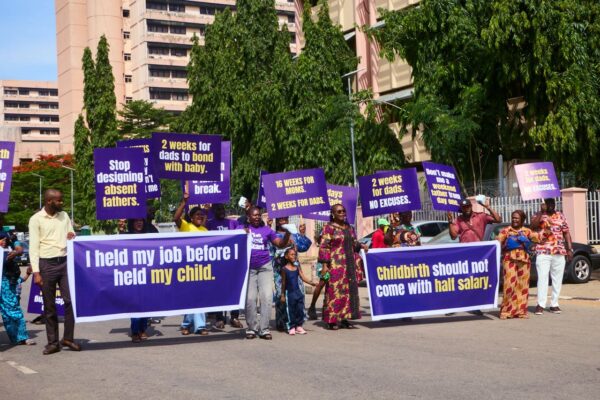
…as Nigerian parents, stakeholders rally in Abuja, demand urgent leave reforms
The Nigerian Governors’ Forum is pushing for the adoption of a 16-week maternity and two-week paternity leave policy across states, warning that imadequate postnatal support is impacting on maternal health and workforce productivity.
Tolu Abdul, represnetative from the Nigerian Governors Forum Secretariat, speaking at a rally convened by parents,
advocates, and policy stakeholders under the Nigerian Women in Leadership Coalition (WIL Coalition)informed that 14 states have so far adopted the 16-week maternity, and two-week paternity leave, which leaves 22 states yet to comply.
The WIL coalition convened by Gatefeild launched the Best Start campaign calling for the adoption of a national parental leave framework, guaranteeing a minimum of 16 weeks of fully paid maternity leave and two weeks of fully paid
paternity leave across all sectors.
Abdul listed states including Abia, Bauchi, Cross River, Enugu, Ekiti, Kaduna, Ondo, Oyo and Plateau among state that have adopted the policy, but said more states need to come on board ,which the Forum is currently championing.
She regretted that some women do not fully recover before they are required to resume work, a situation that impact on their mental health and well-being of their child.
Abdul argued that the policy would not only ensure adequate postnatal support for parents, but would have direct implications for productivity across both the public and private sectors.
“We’re pushing for this policy, because when a woman has the support, she is more productive and this basically feeds into the growth and the productivity of her organisation,” she said.
Advocates at the rally, highlighted that Nigeria’s current leave policies leaves mothers with only 12 weeks of maternity leave with half salary, and zero days of paternity leave for fathers, besides those working in the Federal civil service and a few states.
“ Nigeria does not have a functioning parental leave system. There is no national standard for paternity
leave. And maternity leave provisions are inadequate. We have fragmented rules across states and employers.” Ekimini Akpapan Executive Secretary, Women in Successful Careers, WISCAR said.
The proposed reform seeks to establish a unified national standard applicable across federal, state, and private sector employers, supported by clear enforcement mechanisms to ensure compliance and end the
existing patchwork of inconsistent policies.
Citing economic evidence, advocates noted that Nigeria could unlock up to $23 billion in economic value by closing gender gaps in workforce participation, while also improving productivity, retention, and long-term child health outcomes through stronger parental support systems.
Priscilla Shinshima, a business owner, said the absence of adequate leave provisions places pressure on families and undermines workplace performance, particularly for women in the private sector who often return to work before full recovery.
Read also: Terrorists kill 29 in attack on Adamawa community
“When a woman resumes work 12 weeks after delivery, she has not recovered,” she said.
“Some organisations even pay half salaries during maternity leave. We are asking for full pay 16 weeks for mothers and two weeks for fathers, so families can properly support newborns,” she urged.
Benson Itua, a doctor, argued early return to work among nursing mothers has contributed to rising cases of underweight and malnourished infants.
“These babies need their mothers in the early stages. Sixteen weeks may not be the full six months recommended for exclusive breastfeeding, but it is a critical window that can significantly improve outcomes,” he said.

Join BusinessDay whatsapp Channel, to stay up to date
Open In Whatsapp