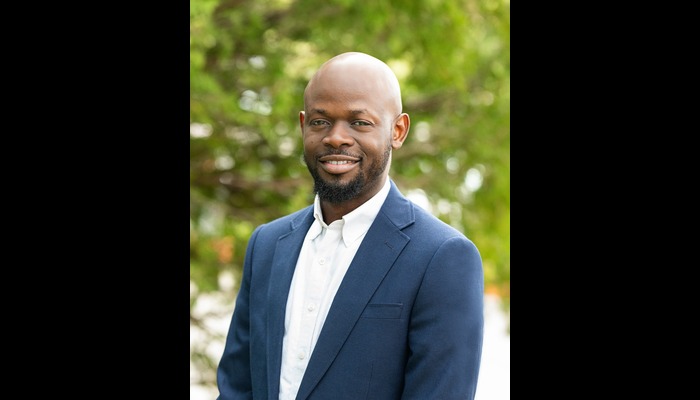
Pike Industries has been building American infrastructure for over 150 years. Established in 1872, the company operates 24 asphalt plants and 20 aggregates facilities across Vermont, New Hampshire, and Maine, employing more than 700 workers on projects that form the backbone of Northern New England’s transportation network. In February 2025, the company was named a finalist for the Sheldon G. Hayes Award, an honour recognising the highest quality highway pavements in the United States. Leading the financial strategy behind this 152-year-old institution is Olaniyi Oladepo, Vice President of Finance and Secretary to the Board of Directors, whose career spans from Shell’s multi-billion-dollar deepwater operations to the asphalt plants and highway projects of rural America.
Oladepo oversees 27 finance professionals across six teams at Pike Industries: Financial Accounting and Reporting, Billing, Accounts Receivable, Purchasing and Accounts Payable, and Financial Planning and Analysis. The scope covers five business lines, more than 40 locations, and approximately $700 million in annual revenue. As Board Secretary, he holds authority to review and approve contracts up to $10 million.
The transition from global energy to American infrastructure might appear dramatic. Shell operates in more than 70 countries with 86,000 employees. Pike Industries operates in three states with 700. Yet the financial management fundamentals remain constant.
“People assume energy and infrastructure are different industries requiring different skills,” Oladepo says. “Both require disciplined budgeting, accurate forecasting, rigorous cost control, and managing working capital with government and commercial customers who pay on their own timelines. The scale differs. The fundamentals do not.”
At Shell, Oladepo served as Finance Manager for Deepwater Projects, leading a team of eight finance and engineering professionals responsible for $450 million in annual operating and capital expenditures. The Bonga Southwest Aparo project, designed to produce 110,000 barrels of crude oil daily and generate over $7 million in daily revenue, demanded financial models capable of integrating technical feasibility, commercial risk, and regulatory exposure into coherent investment proposals.
He developed valuation models for more than 30 project cases exceeding $5 billion in total value. He prepared and presented investment proposals of $300 million or more to Shell’s investment committee. And during a period of significant currency volatility, he created foreign exchange risk management strategies that reduced project costs by 12%, delivering savings exceeding $600 million. The work earned the Shell Finance Award for Business Impact.
“Currency risk in deepwater projects can eliminate margins overnight,” Oladepo says. “When you are managing $450 million in annual expenditures across multiple currencies, the hedging framework matters. The strategies we developed became Shell’s corporate standard because they worked.”
The foreign exchange framework he created was subsequently adopted by other companies engaged in similar deepwater developments throughout West Africa. He also structured $1.3 billion in export credit agency funding and led the execution of a $1.7 billion production-based financing deal with Nigeria’s National Oil Company using an innovative securitisation structure.
At Pike Industries, the financial management challenges differ in form but not in substance. State departments of transportation across New Hampshire, Vermont, and Maine operate on procurement cycles tied to legislative appropriations and seasonal construction windows. Asphalt production depends on commodity prices for liquid asphalt and aggregates that fluctuate with energy markets. Equipment decisions involve a lease-versus-buy analysis affecting capital allocation across a 40-location footprint.
“Infrastructure finance operates in cycles,” Oladepo says. “The Infrastructure Investment and Jobs Act of 2021 created $1.2 trillion in federal funding flowing through state DOTs over five years. Our strategic planning must align with how that funding reaches the projects we bid on. That requires understanding federal appropriations, state matching requirements, and local procurement processes.”
His market and competitor analysis has driven pricing strategies that delivered more than 10% improvement in EBITDA. He led the investment appraisal for the $2.6 million expansion of Pike’s aggregates plant in Sidney, Maine, ensuring the investment met customer demand projections while satisfying return thresholds and environmental sustainability requirements. He oversaw the financial risk assessment and contract execution for the $13.6 million paving project on Interstate 89 from Milton to St. Albans Town for the Vermont Agency of Transportation.
The $27.6 million VT-9 resurfacing project between Wilmington and Brattleboro demonstrates the scale of Pike’s operations. The 12.6-mile rehabilitation addressed road conditions rated “very poor,” installing 11-foot travel lanes and 4-5 foot shoulders on infrastructure originally constructed in the mid-1930s. The road carries approximately 6,800 vehicles daily.
“Highway infrastructure may not be glamorous, but it is essential,” Oladepo says. “Every road we pave connects communities. Every bridge we build enables commerce. Financial management in infrastructure creates the framework that allows road builders to do their best work.”
The lease-versus-buy analysis he conducted for CRH PLC, Pike’s parent company listed on the New York Stock Exchange, influenced major equipment investment decisions at both subsidiary and corporate levels. His financial models translated complex acquisition scenarios into recommendations that shaped capital allocation across the broader CRH portfolio.
Working capital management presents particular challenges in government contracting. State DOTs pay on cycles determined by legislative processes rather than commercial terms. Managing receivables from government customers while maintaining vendor relationships requires forecasting that accounts for payment timing beyond the company’s control.
“At Shell, we managed crude oil receivables involving millions of barrels valued at hundreds of millions of dollars,” Oladepo says. “At Pike, we manage receivables from state agencies operating on fiscal year appropriations. The mechanics differ. The discipline of forecasting cash flows and managing working capital is identical. You cannot run either business without it.”
His Shell experience included managing crude oil planning and reporting operations involving approximately 5 million barrels valued at $350 million. He achieved a 4% improvement in operational cash flow through strategic timing of cargo liftings, vendor payment term renegotiation, and partner cash call management. He supervised the preparation of annual financial statements for seven Shell entities managing cash holdings exceeding $1 billion and assets of approximately $7 billion.
The implementation of new IFRS standards at Shell required coordination across asset owners, contract and procurement teams, and external auditors. Tax matters he led resulted in $54 million reduction in liability. Payment system transformations he oversaw affected 6,000 employees across more than 30 corporate entities.
“Financial management at scale requires integration,” Oladepo says. “You cannot manage reporting separately from budgeting, or budgeting separately from cost control, or cost control separately from working capital. The functions connect. The best financial managers see the connections and manage across them.”
Industry recognition has followed performance. Pike Industries received the 2023 Larry H. Lemon Quality in Construction Award for work on VT 113 from Chelsea to Thetford, an award recognising excellence in asphalt pavement construction using less than 50,000 tons. The Sheldon G. Hayes Award finalist recognition in 2025 placed Pike among the top three highway contractors in the nation for pavement quality.
“Awards follow execution,” Oladepo says. “When the field crews deliver quality pavement, it is because the project was properly bid, properly resourced, and properly managed from the start. Financial management creates the conditions for operational excellence.”
His professional credentials span Nigerian, British, and American accounting standards. Fellowship in the Institute of Chartered Accountants of Nigeria, the highest professional designation achieved after 11 years of progressive qualification, certifies competence in accounting, auditing, taxation, and financial management. The Chartered Institute of Management Accountants designation from the UK adds international validation in management accounting. The Chartered Global Management Accountant credential, jointly awarded by CIMA and the American Institute of CPAs, bridges UK and US professional recognition.
An MBA from Babson College, completed with Magna Cum Laude distinction and a full fellowship scholarship in the STEM-designated Quantitative Finance concentration, adds academic rigour to professional credentials. Beta Gamma Sigma membership recognises academic achievement among the top tier of business school graduates internationally.
As American infrastructure faces a generational reinvestment cycle under the Infrastructure Investment and Jobs Act, organisations like Pike Industries require financial leadership capable of translating federal funding into completed projects that serve communities. Oladepo’s trajectory from Shell’s deepwater operations to Pike’s highway projects demonstrates that financial management excellence transfers across sectors when the fundamentals are sound. The discipline built managing $450 million in annual expenditures and $5 billion in project valuations now serves a 152-year-old company building the roads that connect Northern New England.

Join BusinessDay whatsapp Channel, to stay up to date
Open In Whatsapp