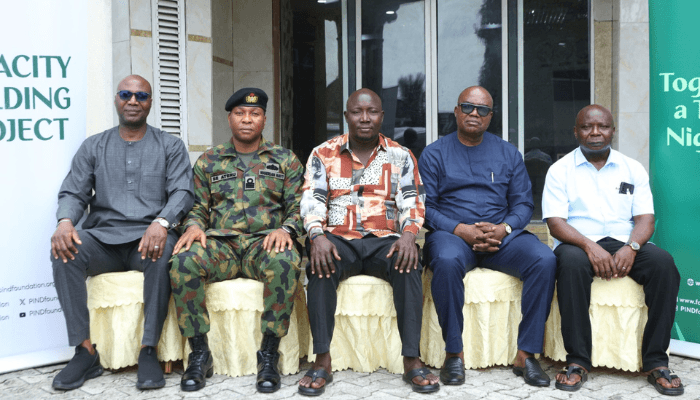
The Foundation for Partnership Initiatives in the Niger Delta (PIND), Nigerian Navy, and the National Inland Waterways Authority (NIWA) have taken steps to improve marine safety and standards across the Niger Delta waterways.
This is so as development activities expand across hard-to-reach riverine communities, with water transportation being the means to deliver programmes and access vulnerable populations.
Unlike road transport systems, where safety can be directly controlled, marine operations rely largely on third-party operators, creating critical gaps in safety practices, emergency response, and accountability.
To address this, PIND convened a two-day Boat Safety, Security and Risk Management Training in Warri for boat operators and jetty personnel drawn from Delta, Bayelsa, and Ondo States. The training represents a shift from reactive safety measures to a more proactive, system-level approach — targeting risks at their source by strengthening the capacity of those directly responsible for marine operations.
Speaking on behalf of Sam Ogbemi Daibo, executive director of PIND, Abdulfatai Mohammed (retired), PIND’s security manager, said: “This intervention is about protecting lives — both for those who work on the waterways and the communities we serve. By strengthening the skills, awareness, and accountability of boat operators, we are addressing one of the most critical risk points in riverine operations.”
The training combined technical sessions, practical demonstrations, and simulation exercises covering marine safety protocols, emergency response, navigation risks, maritime security awareness, and incident reporting. Participants were also trained on professional conduct and conflict sensitivity, reinforcing the role of safe and responsible engagement within riverine communities.
Facilitators from the Nigerian Navy and NIWA provided expert guidance aligned with national maritime safety standards, ensuring that participants received credible, context-specific knowledge grounded in real-world operational conditions.
A representative of the Nigerian Navy commended the initiative, noting that improved safety awareness and compliance among operators are critical to reducing avoidable incidents on inland waterways. “Safety on the waterways is a shared responsibility. Trainings like this strengthen preparedness, improve operational discipline, and support safer navigation across riverine communities,” he stated.
Also speaking, Rufus Ogbonlato, area manager, NIWA, emphasised the importance of standardising operational practices among boat operators to improve safety outcomes and protect lives. “Regular training and adherence to safety procedures are essential to reducing marine accidents. We commend PIND for creating a platform that promotes professionalism and responsible marine transport operations,” he said.
By strengthening operator competence and standardising safety practices, the initiative is expected to reduce the likelihood of marine incidents, improve emergency response outcomes, and enhance overall safety across waterways used by development actors and local communities.
Beyond the training, PIND will continue to engage operators through structured follow-up, monitoring compliance with safety standards and integrating key requirements into vendor management processes. This approach ensures that the intervention extends beyond a one-off activity to become part of a broader system for safer marine operations.
This effort underscores PIND’s commitment to strengthening the duty of care, improving operational safety, and supporting more reliable access to communities across the Niger Delta. By working with national institutions and local operators, the organisation is contributing to safer waterways — where reduced risk translates directly into protected lives and more effective development delivery.

Join BusinessDay whatsapp Channel, to stay up to date
Open In Whatsapp