…plans to raise UBEC allocation from 2% to 4%
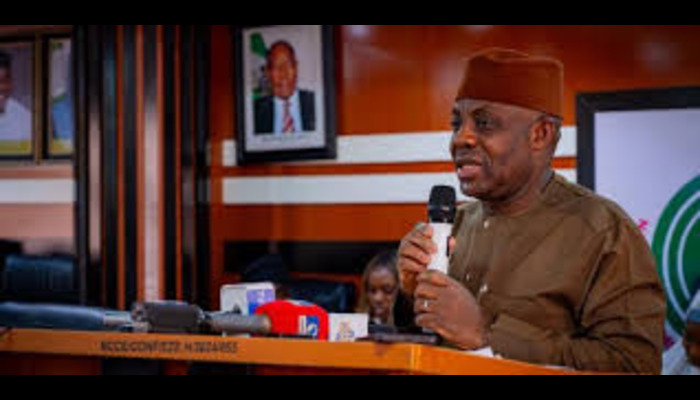
Tunji Alausa, Minister of Education, has said the Federal Government is scaling up foundational learning programmes across 15 states as part of efforts to tackle learning poverty and improve basic education outcomes nationwide.
The minister disclosed this on Monday during a special roundtable session at the Education World Forum in London, United Kingdom, where he engaged education ministers and global stakeholders on Nigeria’s foundational learning reforms.
According to a statement by Ikharo Attah, Special Adviser on Media and Communications to the Minister of Education, Alausa said Nigeria had successfully unified foundational literacy delivery under a single national standard covering both formal and non-formal education systems.
“We’re scaling RANA for Primary 1 to 3 and Teaching at the Right Level for Primary 4 to 6 across 15 states through UBEC. This uses structured lesson plans, weekly teacher coaching and regular assessments,” the minister said.
He explained that the Accelerated Basic Education Programme, developed by the Nigerian Educational Research and Development Council, delivers the same foundational literacy and numeracy outcomes for out-of-school children and adolescents within three years.
According to him, both formal and non-formal education tracks now report into the National Education Data Initiative, enabling the government to monitor learning coverage through a unified dashboard for the first time.
Alausa highlighted several state-led reforms already delivering measurable outcomes, including EKOEXCEL, KwaraLEARN and BayelsaPRIME, which he described as successful technology-driven teaching models.
“The impact is measurable. KwaraLEARN halved foundational learning deficiencies in less than two years, while BayelsaPRIME improved literacy by 20 percentage points in just 19 weeks. The model is working, and we are now scaling it nationally,” he said.
The minister further stated that foundational literacy and numeracy had become central to President Bola Tinubu’s Renewed Hope Agenda and the National Foundational Literacy and Numeracy Programme.
He revealed that the Federal Government was finalising a National Policy on Foundational Literacy and Numeracy to provide a sustainable legal and institutional framework for reforms across federal, state and non-formal education systems.
Alausa also disclosed plans to increase the Universal Basic Education Commission’s share of the Consolidated Revenue Fund from two per cent to four per cent, a move expected to double federal funding for basic education.
Speaking on efforts to address Nigeria’s out-of-school children crisis, the minister said the Accelerated Basic Education Programme provides a recognised pathway for children outside the formal school system to transition into Junior Secondary School.
“ABEP centres and formal schools now use the same coaching tools and learning materials, with SUBEB officers supervising both systems across 15 states. There are no parallel systems, lower costs and consistent quality,” he added.
The minister maintained that Nigeria had shifted its focus from educational inputs to measurable learning outcomes, expressing confidence that the ongoing reforms would significantly reduce learning poverty nationwide.
“With the National Policy on FLN nearly finalised and one standard across formal and non-formal systems, we are building a foundation that will outlast any single programme cycle. That is how we will end learning poverty at scale,” he said.

Join BusinessDay whatsapp Channel, to stay up to date
Open In Whatsapp