The Nigerian government and Germany have concluded negotiations on the renewed framework for bilateral cooperation, signing a partnership agreement to boost economic transformation, mobilisation of private capital, sustainable infrastructure, among others.
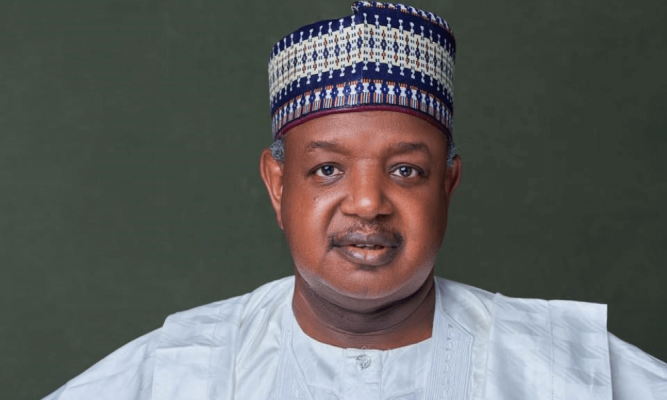
Speaking at the opening of the negotiations, Abubakar Bagudu, Minister of Budget and Economic Planning, who led the Nigerian delegation, said that Nigeria’s partnership with Germany was entering a new phase.
Bagudu, described Germany as one of Nigeria’s most trusted and enduring development partners, noting that more than five decades of cooperation had delivered measurable impact across agriculture, healthcare, renewable energy, vocational education, migration governance, and enterprise development.
He stated that both countries were repositioning the partnership to respond to emerging global realities by prioritising innovation, enterprise, investment, and economic competitiveness.
“The global development landscape is becoming increasingly complex, shaped by economic pressures, geopolitical uncertainties, climate-related challenges, and shrinking development finance. These realities make strong, trusted partnerships even more important,” the minister said.
Bagudu highlighted the importance of the successful Nigeria–Germany Binational Commission held in Berlin in November 2025, describing it as a defining moment that strengthened bilateral cooperation across foreign policy, security, energy, trade, migration, culture, and development.
He also praised the recently concluded Nigeria–Germany Business Forum in Lagos, which brought together leading Nigerian and German business executives to unlock new commercial opportunities and deepen investment ties between the two economies.
According to Bagudu, President Bola Tinubu’s administration is implementing bold structural reforms under the Renewed Hope Agenda to reposition Nigeria’s economy for sustainable growth and long-term macroeconomic stability.
The reforms, he explained, include foreign exchange liberalisation, enhanced domestic revenue mobilisation, strategic investments in infrastructure and human capital, and expanded fiscal decentralisation, all of which have significantly strengthened the financial capacity of state governments.
He disclosed that improved fiscal allocations and reform-driven economic restructuring had expanded opportunities for subnational investment partnerships and enhanced States’ creditworthiness across the federation.
The minister further revealed that the Federal Government, through the National Economic Council chaired by Vice President Kashim Shettima, had reached key agreements with state governments to coordinate reforms, sustain economic momentum, improve security collaboration, eliminate illegal economic activities, expand infrastructure financing through private capital, and strengthen social inclusion initiatives.
He also reaffirmed Nigeria’s commitment to advancing a just and inclusive energy transition through expanded electricity access, decentralised energy markets, and renewable energy investments, citing ongoing collaboration with Germany through initiatives such as the Nigeria Energy Support Programme and the Energy Transition Challenge Fund, implemented by GIZ and KfW.
In her remarks, Annett Günther, Germany’s Ambassador to Nigeria, described Nigeria as a strategic African partner, noting that its leadership within ECOWAS and the African Union remains critical to regional peace, economic integration, and democratic stability.
The ambassador, who was accompanied by the Deputy Director-General of Germany’s Federal Ministry for Economic Cooperation and Development (BMZ), Mr Philip Knill, said that recent engagements in Lagos and Abeokuta showcased the growing depth of Nigeria–Germany cooperation, particularly through the Siemens AG Presidential Power Initiative and the Siemens Energy Education Development (SEED) Programme.
She noted that Germany regarded Nigeria as a vital partner across climate action, economic transformation, energy transition, food security, and sustainable industrial development. “Nigeria is a giant in Africa, just as Germany plays a central role in Europe. Together, we can drive meaningful progress,” said Ambassador Günther.
She reaffirmed Germany’s commitment to supporting Nigeria’s reform agenda through coordinated bilateral and European Union engagement, while acknowledging the growing fiscal pressures on global development financing.
According to her, Germany’s development cooperation priorities now focus on four strategic pillars: poverty reduction and food security; peace and security; climate-friendly economic cooperation; and the protection of global public goods, including health, biodiversity, and resilience.
Also speaking, Philip Knill, Deputy Director General of Germany’s Federal Ministry for Economic Cooperation and Development (BMZ), described the negotiations as a critical platform for reviewing achievements, strengthening institutional collaboration, and aligning future priorities.
He emphasised that Germany remained firmly committed to multilateralism, international law, peacebuilding, and long-term cooperation with Nigeria, particularly amid global instability and shrinking development resources.
Knill stated that Germany’s future cooperation model would increasingly focus on mobilising private-sector participation, financing innovation, and strategic investment partnerships capable of delivering sustainable economic impact.

Join BusinessDay whatsapp Channel, to stay up to date
Open In Whatsapp