The federal government has denied claims that it spent more than N8 trillion outside the approved budget, pushing back against interpretations of remarks by the International Monetary Fund’s (IMF) resident representative that reignited debate over the transparency of the country’s public finances.
The government’s response follows comments made last week in Lagos by Christian Ebeke, the IMF’s Resident Representative for Nigeria, who said about 2% of Nigeria’s gross domestic product—equivalent to more than N8 trillion—was “underreported” in the government’s fiscal accounts.
The remarks, made during a public event, were widely interpreted by commentators as suggesting the government had incurred spending outside the budget.
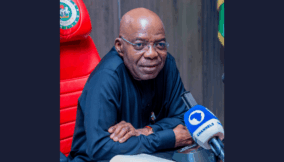
In a statement personally signed on sunday, Taiwo Oyedele, Minister of Finance and Coordinating Minister of the Economy said those interpretations were incorrect and misrepresented the IMF’s findings.
Read also: Oyedele refutes Obi’s grand corruption claims, insists expenditure incurred follow duly enacted laws
“The Federal Government does not operate a ‘shadow budget’ or expend public funds outside the constitutional and statutory framework established for public finance,” Oyedele said.
He said all federal spending is undertaken in accordance with sections 80 to 83 and 162 of the constitution through Appropriation Acts, Supplementary Appropriation Acts and other statutory authorities approved by the National Assembly.
Oyedele said suggestions that over N8 trillion had been secretly spent without legislative approval were unfounded, adding that critics had failed to identify any specific projects allegedly executed without appropriation or legal authority.
“It is inaccurate to suggest that trillions of naira have been secretly spent outside legislative approval,” he said. “Such allegations should have identified the specific projects purportedly executed without appropriation or legal authority and present credible evidence in support of the claim.”
The minister said confusion had arisen from the distinction between budget appropriations, expenditure authorisation, financing arrangements and fiscal reporting standards.
According to him, Nigeria’s public finance framework includes statutory transfers, first-line charges and intervention mechanisms created by Acts of the National Assembly.
These include allocations to development commissions, debt service obligations, revenue collection costs retained by designated agencies, separately approved capital budgets for some institutions and the Federal Capital Territory, and legally authorised interventions for security, infrastructure and emergency response.
“These expenditures are neither secret nor illegal,” Oyedele said. “They are established by law, disclosed in various fiscal reports, and subject to applicable oversight, audit and accountability mechanisms.”
He added that while some expenditures may be classified differently under international statistical reporting standards than in the annual Appropriation Act, such differences should not be interpreted as evidence of unlawful or off-budget spending.
Read also: Atiku asks EFCC, ICPC to probe IMF’s claim of N8.8trn off-budget spending
Oyedele also rejected claims that the reported N8 trillion represented an increase in Nigeria’s fiscal deficit.
“Whether a capital project is financed through annual appropriations, supplementary appropriations, statutory transfers, approved intervention mechanisms, or other lawful financing arrangements does not, by itself, increase the fiscal deficit,” he said.
The minister said the IMF’s observations related primarily to the comprehensiveness, timing and presentation of Nigeria’s fiscal reporting rather than the legality of government expenditure. He noted that the Tinubu administration was already implementing reforms to align budget presentation with international fiscal reporting standards.
As part of those efforts, Oyedele recalled that President Bola Tinubu had asked the National Assembly during the presentation of the 2026 Appropriation Bill in December to end the practice of operating multiple and overlapping budgets in favour of a single, harmonised framework.
The finance minister said recent reforms had strengthened budget credibility, revenue administration, treasury management and the digitalisation of government financial processes, developments he said had been acknowledged by the IMF, international credit rating agencies and investors.
“The Federal Government will continue to uphold the rule of law, maintain transparency in the management of public resources, and work with the National Assembly, oversight institutions, development partners and the Nigerian people to further strengthen fiscal governance in line with international best practices,” Oyedele said.

Join BusinessDay whatsapp Channel, to stay up to date
Open In Whatsapp