Experts have called for the urgent passage of a what they termed a “comprehensive organic” budget law to address Nigeria’s persistent failure to translate development plans into effective budget implementation.
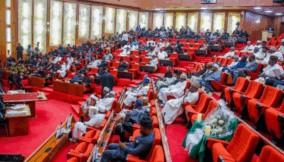
Speaking at a National Policy Dialogue on effective budgeting on Tuesday orgnaised by the Joint National Assembly Committees on National Planning and Economic Development, Ben Akabueze, an Economic Expert at BIA Consulting Ltd, argued that Nigeria’s budgeting system lacks the legal structure needed to ensure that national development plans are properly implemented.
He said the budget process is currently not governed by clear and binding rules that define roles, empower institutions, and enforce a direct linkage between national development plans and annual budget allocations.
He noted that the gap has contributed to over 56,000 abandoned projects across the country.
According to him, this absence of a strong legal framework is at the core of Nigeria’s weak implementation record.
Akabueze stressed that without a budget law, Nigeria’s budget cannot effectively function as a tool for development, noting that it should serve as a “compass” that directs public resources towards agreed national priorities.
According to him, a budget law that would clearly define institutional responsibilities, strengthen budget institutions, and legally mandate stronger alignment between development plans and annual budgets.
He said the current system makes it difficult to guarantee that budgetary allocations consistently reflect development plans, leading to fragmented implementation and abandoned projects.
He warned that the absence of such a law has also weakened institutional coordination in the budgeting process, leaving room for inconsistent execution of priorities and repeated breakdowns in implementation.
Beyond the legal gap, he identified weak linkage between national development plans and annual budgets as a structural problem, saying that priorities set in medium-term development plans, including the RHMTP 2026–2030 framework, are often not fully reflected in annual spending decisions.
He also pointed to revenue underperformance as a major constraint, noting that persistent shortfalls in projected revenues continue to limit capital expenditure execution.
He called for improvements in the development planning process to ensure that implementation considerations are fully integrated from the design stage, while urging stronger Medium-Term Expenditure Framework (MTEF) and Medium-Term Sector Strategy (MTSS) processes to improve project costing and alignment.
Akabueze further recommended a shift towards prioritising capital expenditure over recurrent spending, advocating a more investment-driven budgeting approach to support long-term growth.
He stressed that effective budgeting depends on political will, transparency, and the use of technology to ensure better outcomes.
In her presentation, Antonia Simbine, Director General,
Nigerian Institute of Social and Economic Research (NISER)said Nigerias challenge is not absence of development planning and budgeting but weak implementation discipline.
To bridge the implementation gap and achieve sustainable, inclusive growth, she said teh country must move beyond traditional budgeting toward a more adaptive, technology-driven, and efficient fiscal framework
She recommended that Nigeria enforce alignment between capital projects and MTNDP priorities, introduce performance-based fiscal transfers, transform MTEF into a flexible, continuously updated framework, and adaptive reallocations within approved ceilings .

Join BusinessDay whatsapp Channel, to stay up to date
Open In Whatsapp