Robert Oloyede, an oil and gas expert, has proposed a six-dimensional framework aimed at improving physical asset management in Nigeria’s upstream petroleum sector, urging operators to invest in human capital, knowledge transfer and security to maximise value from ageing oil and gas assets.
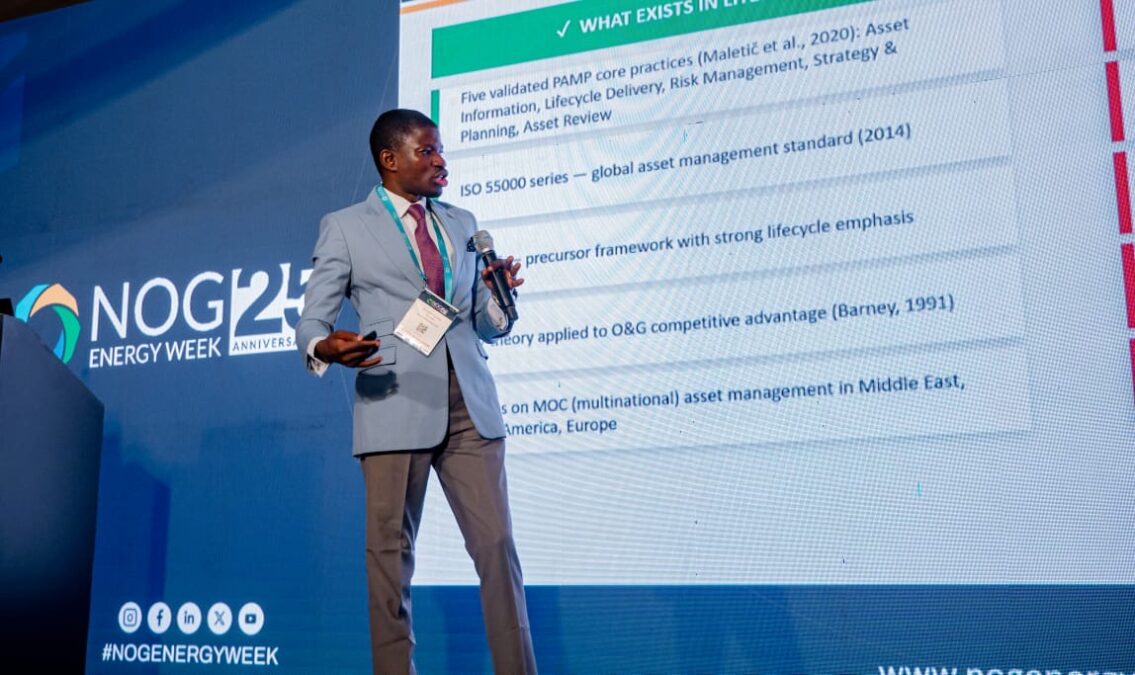
Oloyede, deputy group managing director of Divcon Engineering Limited, presented the research paper titled “Enhancing Physical Asset Management in Nigeria’s Upstream Oil & Gas Sector: A Six-Dimensional Framework for Indigenous and Multinational Operators” at the ongoing Technical Seminar marking the 25th anniversary of the NOG Energy Week Conference and Exhibition in Abuja.
The NOG Energy Week Technical Seminar, a Continuing Professional Development-certified programme, brought together engineering and technical professionals to discuss research findings, emerging technologies and industry practices in the energy sector.
Presenting the study, Oloyede said indigenous operators have continued to adapt despite inheriting ageing infrastructure and operational challenges following asset divestments by multinational oil companies.
“Nigeria’s indigenous operators demonstrate remarkable necessity-driven innovation despite inheriting 40 to 60-year-old infrastructure, capability gaps and operating complexity. The greatest asset is not physical—it is human. Tacit knowledge of veteran engineers and organisational resilience constitute more valuable resources than equipment itself.”
He said the proposed Six-Dimensional Physical Asset Management Practices Enhancement Framework provides a roadmap for sustainable asset management across Nigeria’s upstream industry.
According to him, while multinational oil companies offer useful operational benchmarks, their asset management models cannot be copied directly because indigenous firms operate under different financial, infrastructural and security conditions.
The study identified seven major challenges confronting operators, including ageing infrastructure, security disruptions, financial constraints, weak knowledge management systems, technology integration gaps, implementation challenges and socio-environmental concerns.
Oloyede said many indigenous operators lose between 40 and 97 percent of production to pipeline vandalism, crude oil theft, sabotage and illegal bunkering. He added that many firms are also burdened by obsolete facilities acquired through asset transfers.
To address the challenges, he recommended that the Nigerian Upstream Petroleum Regulatory Commission (NUPRC) tie licence renewals to phased compliance with ISO 55000 asset management standards.
He also urged multinational operators to transfer technical documentation, operational history and mentorship programmes to indigenous companies during divestment processes.
In addition, he called on the Nigerian National Petroleum Company Limited (NNPC Ltd.) to standardise asset management protocols during asset handovers and advised indigenous operators to begin implementation of the framework by strengthening knowledge management and security systems.
Oloyede noted that long-term productivity and resilience in Nigeria’s oil and gas industry would depend on sustained investment in human capital and institutional knowledge.
Also speaking at the event, Ekperikpe Ekpo, minister of state for petroleum resources (gas), said the Federal Government is leveraging Nigeria’s more than 215 trillion cubic feet of proven gas reserves to support industrialisation, strengthen energy security and diversify the economy under the Decade of Gas Initiative.
Ekpo said the government’s gas development agenda is designed to unlock value across the energy value chain while supporting economic growth and domestic energy access.

Join BusinessDay whatsapp Channel, to stay up to date
Open In Whatsapp