
In a move that could reshape the commercial future of Aba’s thriving fashion cluster, Ethnocentrique has pushed intellectual property (IP) reform onto the policy agenda, securing commitments from the Abia State Government to strengthen protection for local producers.
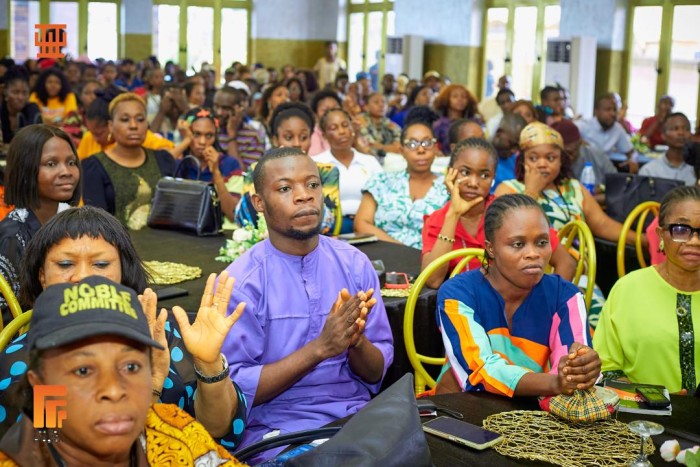
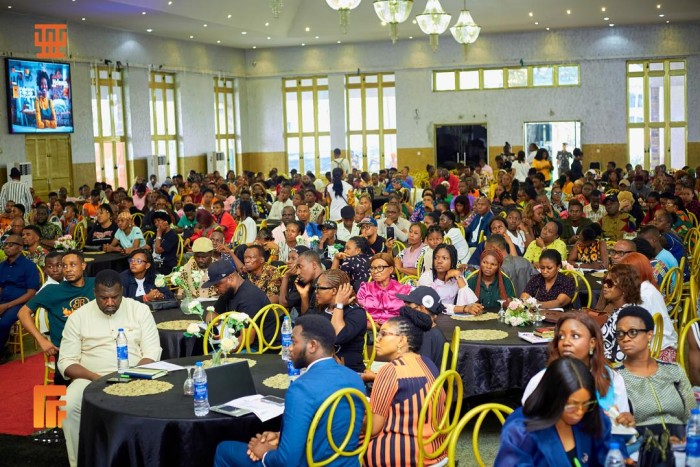
The intervention came through an Intellectual Property Rights (IPR) Advocacy Workshop held in Aba, where policymakers, designers, manufacturers and development partners converged to address what stakeholders described as a “structural and solvable” gap in the city’s fashion economy.
Hosted under the Fashion Future Program, the workshop, held at the Nobik Event Center, was themed “Protecting Creativity, Powering Exports: Intellectual Property as a Catalyst for Aba’s Fashion Economy.”
A market that rewards imitation
Discussions at the event highlighted a dual challenge constraining Aba’s producers. On one hand, many small and medium-scale manufacturers operate without registered trademarks or enforceable IP protections, leaving them vulnerable to copying and price undercutting.
On the other, entrenched market preferences across the value chain continue to favour imitation goods over authenticated originals, creating what stakeholders described as a commercial environment that penalises originality.
“The makers in Aba are not the problem. They have been producing quality work for decades. The problem is a market that has never been structured to reward them for it. What we are building is the infrastructure that changes that calculation — IP protection, brand development, market access, and the policy environment that makes selling under your own name the better business decision.” said Adedapo Adegboyega-Conde, Public Sector Lead for the Fashion Future Program.
Government steps in
In response, the Abia State Ministry of Justice, led by Attorney General Ikechukwu Uwanna, announced plans to establish a state-level IPR Advocacy Committee. The proposed body is expected to coordinate enforcement and institutionalise IP protection mechanisms across the cluster.
Uwanna noted that while Aba’s production capacity and ingenuity are widely recognised, weak IP systems risk limiting its economic potential.
“This moment calls for coordinated action across government, industry and consumers to protect creativity and unlock growth,” he said.
In a parallel move, the state’s education authorities also signalled a long-term shift. Uchechukwu Kalu, Commissioner for Basic and Secondary Education, committed to integrating IP education into school curricula, aimed at building early awareness of originality, ownership and value creation.
Export opportunity at stake
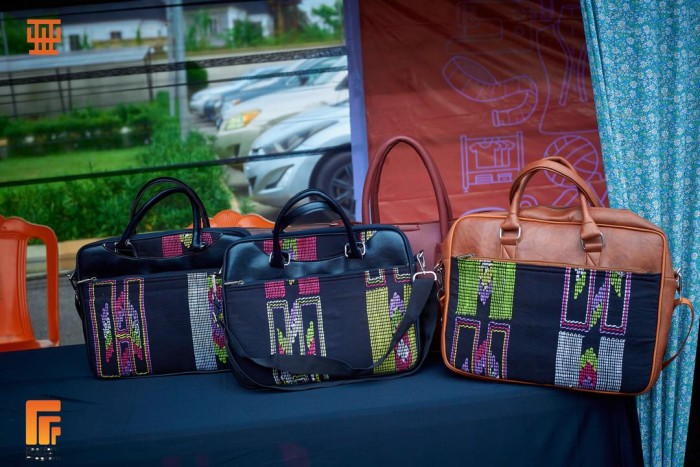
The policy push comes at a time when African markets are becoming more integrated under the African Continental Free Trade Area, which increasingly rewards traceable, IP-protected products in cross-border trade.
Ethnocentrique argues that without formal brand protection and identity systems, Aba’s producers risk being locked out of these emerging opportunities or forced to compete on unfavourable terms.
Data from the Fashion Future Program shows early traction: over 6,000 young people trained, more than 4,100 MSMEs supported, and over ₦200 million in orders facilitated through coordinated cluster activity. The programme has also helped more than 100 designers begin formal IP registration processes.
Building toward a larger market play
The IPR workshop forms part of a broader ecosystem-building strategy ahead of The Fashion Games 2026, AHỊA 360, a two-day industry and cultural showcase scheduled for late April in Aba.
The event, set to hold at Enyimba Stadium, is expected to convene buyers, producers, policymakers and creative entrepreneurs in what organisers describe as a “full-circle market experience,” combining trade, graduation ceremonies and cultural exhibitions.
For Ethnocentrique, the timing is deliberate. Strengthening IP systems now, stakeholders say, is critical to ensuring that Aba’s producers can participate competitively in larger, more structured markets—both locally and across the continent.
As Adegboyega-Conde put it, the goal is to “make selling under your own name the better business decision.”

Join BusinessDay whatsapp Channel, to stay up to date
Open In Whatsapp