Civil society organisations under the European Union Support to Democratic Governance in Nigeria Phase Two (EU-SDGN II) programme have warned that delays in election funding and low operational preparedness by the Independent National Electoral Commission (INEC) could undermine the credibility of the June 20, Ekiti State governorship election.
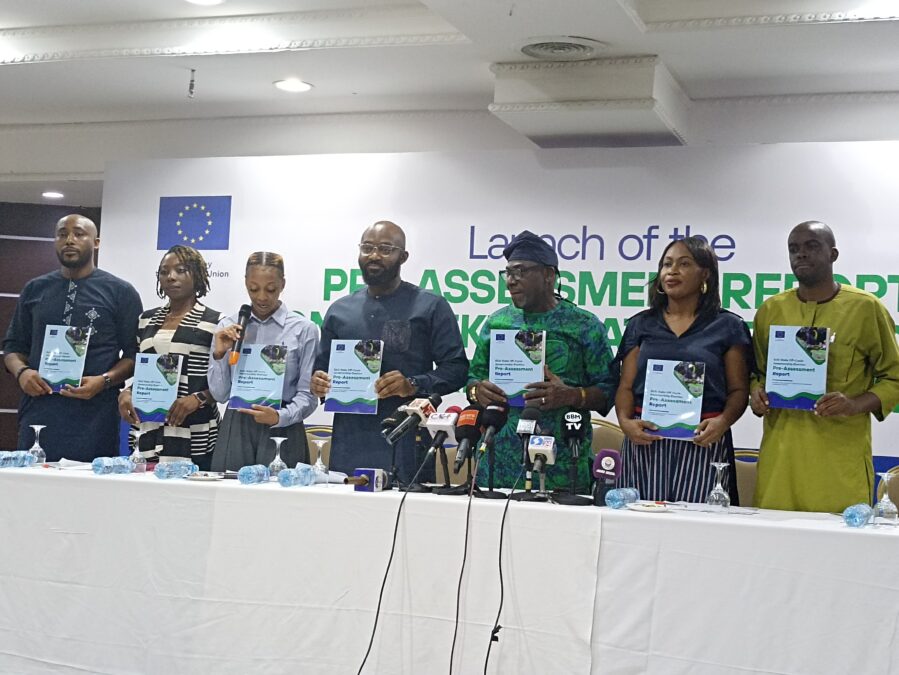
The warning was contained in a pre-election assessment report presented during a media briefing on Thursday in Abuja by members of the Election Observation Hub, including the Centre for Media and Society (CEMESO), ElectHER, International Press Centre (IPC), Nigerian Women Trust Fund (NWTF), TAF Africa, The Kukah Centre and Yiaga Africa.
The groups described the Ekiti governorship poll as a critical test case for the implementation of the new Electoral Act 2026 and a major indicator of Nigeria’s preparedness ahead of the 2027 general elections.
According to the report, INEC’s preparedness across the 16 local government offices in Ekiti State stood at only 34 per cent as of April 14, 2026, despite ongoing activities such as Continuous Voter Registration, BVAS inventory checks, network mapping and stakeholder engagements.
The organisations noted that the INEC state office had yet to receive election funding, while several state and local government offices, operational vehicles and collation centres required urgent rehabilitation.
“With 36 days to polling day, a one-third preparedness rate is structurally incompatible with the conduct of a credible election on the current trajectory
“A 34% INEC preparedness rate, delayed election funding, an effectively uncontested political space, zero female candidates across 13 parties, and a media environment partially suppressed by a punitive levy are not the markers of a conducive electoral environment. They are warning signs and this report names them as such,” the report stated.
The assessment further noted that although the pre-election atmosphere in the state has remained relatively peaceful, the election is widely perceived as non-competitive due to the residual advantage of incumbency, resource imbalance between ruling and opposition parties and internal divisions within opposition platforms.
The groups cautioned that peaceful conditions alone should not be mistaken for democratic credibility.
“A peaceful and non-competitive election is not automatically a democratic one,” the group added.
The civil society organisations also identified a layered risk environment in parts of the state, citing concerns over vote buying, political thuggery, misinformation campaigns and possible excessive deployment of security personnel.
Ado-Ekiti was classified as a high-risk area for urban violence, while Ikole, Moba and Ilejemeje local government areas were flagged for kidnapping exposure.
The report disclosed that the Nigeria Police Force had developed Operation Order 08/2026, proposing the deployment of 9,780 conventional police officers, 25 mobile police units, 200 patrol vehicles, 12 Armoured Personnel Carriers and three helicopters for the election.
However, the groups expressed concerns over potential politicisation, perceived bias and excessive use of force during the exercise.
On the media environment, the organisations observed that although Ekiti has a vibrant mix of state-owned and private media platforms, journalists continue to face threats ranging from physical intimidation and legal harassment to self-censorship caused by economic pressures.
They also criticised the N5 million campaign signage levy imposed by the Ekiti State Signage and Advertisement Agency, describing it as a burden that disproportionately affects opposition parties.
The report highlighted serious inclusion gaps in the electoral process, revealing that none of the 13 political parties participating in the election fielded a female governorship candidate, while no candidate publicly identified as a person with disability.
According to the report, high nomination fees, entrenched patronage networks and informal political barriers continue to limit the participation of women, youths and persons with disabilities in governance despite existing inclusion laws in the state.
The Election Observation Hub urged INEC to ensure the immediate release and effective utilisation of election funds, complete the rehabilitation of electoral facilities and thoroughly test the Bimodal Voter Accreditation System (BVAS) and INEC Result Viewing Portal (IReV).
The groups also called on security agencies to maintain professionalism and neutrality, while urging political parties to reject vote buying, intimidation and inflammatory rhetoric.
The media was encouraged to strengthen fact-checking mechanisms and uphold balanced, conflict-sensitive reporting throughout the electoral process.
The organisations stressed that the credibility of the election would ultimately be determined not by the absence of violence alone, but by the transparency, inclusiveness and public acceptance of the outcome.
“The 20 June 2026 Ekiti State Governorship Election is a critical milestone in Nigeria’s democratic journey and a forerunner to the 2027 General Election. The election faces structural vulnerabilities serious enough to challenge its credibility if left unaddressed,” the group added

Join BusinessDay whatsapp Channel, to stay up to date
Open In Whatsapp