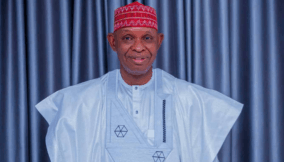
Tunji Disu, Nigeria’s Inspector-General of Police, has formally presented a comprehensive framework for the establishment of State Police to the Nigerian Senate, marking a significant step in ongoing efforts to reform Nigeria’s security architecture and decentralise policing across the country.
The 75-page document was submitted on Thursday to the Deputy President of the Senate, Barau Jibrin, who also chairs the Senate Committee on the Review of the 1999 Constitution, during a meeting at the National Assembly in Abuja.
Titled “A Comprehensive Framework for the Establishment, Governance and Coordination of Federal and State Police,” the document outlines proposed structures, operational procedures and governance mechanisms that would guide the creation and coordination of state-controlled police formations alongside the federal police system.
Read also: Nigeria urges EU to extend Gulf of Guinea security support
The framework was delivered on behalf of the police chief by Professor Olu Ogunsakin, who chaired the committee tasked with examining modalities for the establishment of State Police in Nigeria.
According to the police leadership, the report is the outcome of extensive consultations and strategic assessments undertaken by the Nigeria Police Force to address emerging security challenges and improve the responsiveness of law enforcement at the grassroots level.
In a message accompanying the submission, Disu explained that the framework reflects the professional insights and recommendations of security experts within the Force, as well as lessons drawn from policing systems in other federal countries.
He noted that the proposal was designed to support informed and pragmatic decision-making by lawmakers currently reviewing constitutional provisions relating to policing and national security.
“The report captures a wide range of operational, legal and administrative considerations that will be essential in establishing an effective and accountable State Police system,” the police chief said.
Receiving the document, Senator Jibrin commended the police leadership for taking a proactive step in contributing to the national conversation on security sector reform.
He said the Senate committee would carefully review the submission alongside other memoranda received as part of the ongoing constitutional amendment process.
Jibrin noted that the initiative aligns with the security reform agenda of President Bola Ahmed Tinubu, who recently urged the National Assembly to put in place the legal and institutional frameworks required for the creation of State Police.
“The Senate Committee on Constitution Review will study the recommendations thoroughly as we work toward strengthening the country’s security architecture,” he said.
The renewed push for State Police has drawn support from civil society groups and security analysts who argue that decentralised policing could significantly improve response to crime and insecurity, particularly in rural communities.
Speaking on the development, Mercy Musa, Executive Director of the Frontier for Peace Advocacy and Governance Initiative, said the creation of State Police would bring security closer to the people and enable faster response to emerging threats.
She explained that locally controlled police forces would have a better understanding of community dynamics, language and cultural contexts, which are often critical in intelligence gathering and crime prevention.
“State Police will enhance community-based policing because officers recruited within the states understand the terrain and local realities better,” Musa said. “This familiarity can strengthen trust between citizens and law enforcement while improving early detection of security threats.”
Read also: FG’s textile revival plan doubtful as policy failure, insecurity threaten rollout
Similarly, Salisu Indabawa, a Kano-based civil society activist said decentralised policing would reduce the operational burden on federal security agencies and improve coordination in tackling crimes such as banditry, kidnapping and urban criminality.
Indabawa argued that Nigeria’s growing population and complex security environment require a more flexible policing structure that allows states to take greater responsibility for maintaining internal security.
“State Police will allow quicker decision-making and deployment of personnel during emergencies,” he said. “It will also ensure that security strategies are tailored to the specific challenges faced by each state.”
However, both activists stressed that adequate legal safeguards, clear oversight mechanisms and professional standards must be embedded in the framework to prevent abuse or political interference.
As the constitutional review process continues, security experts say the debate over the State Police is likely to remain central to discussions on how best to address Nigeria’s persistent security challenges while strengthening democratic governance.

Join BusinessDay whatsapp Channel, to stay up to date
Open In Whatsapp