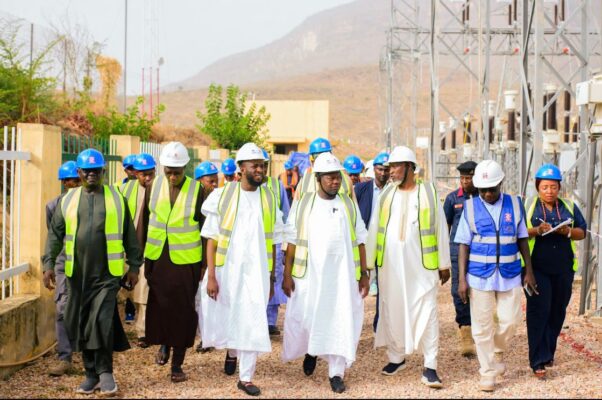
The House of Representatives Ad-Hoc Committee on Power has described the Dadin Kowa Hydropower Plant as credible evidence that private sector investment in power infrastructure can help stabilise the country’s fragile electricity grid.
The panel stated this following an oversight visit that highlighted the facility’s performance and role in improving power quality in the North-East.
During the oversight visit the Ad Hoc Committee highlighted the facility’s strong operational performance and its growing importance in supporting power quality and reliability across Nigeria’s electricity network.
According to the committee, since commencing commercial operations in December 2021, the plant has delivered over 750 million kilowatt-hours of clean energy to the national grid, positioning it as a significant privately developed renewable power asset in Nigeria.
The Committee noted that the 40MW hydropower facility, developed and operated by Mabon Limited under a Built Operated & Transfer – BoT model, is currently generating approximately 17MW, consistent with prevailing seasonal water levels.
It added that the plant continues to operate at approximately 98% availability, with output determined primarily by hydrological conditions rather than any technical or operational constraints.
“This is typical of reservoir-based hydropower assets globally, generation increases significantly during periods of higher water inflow, enabling the plant to operate at full installed capacity,” it stated.
Beyond generation, the Committee further said Dadin Kowa has contributed to improved voltage stability and overall grid performance across the North-East region.
“Its location and dependable output have supported enhanced power quality and reliability, which are important enablers of industrial and economic activity in the region, including developments such as the nearby Muhammadu Buhari Industrial Park.
“The plant has also demonstrated operational resilience during periods of wider grid instability. In certain scenarios, it is capable of supporting localised supply, helping to sustain critical economic activity when the broader transmission network is disrupted,” the Committee added.
Committee members further noted the supporting infrastructure delivered alongside the project, including transmission and evacuation systems that facilitate efficient power delivery.
Join BusinessDay whatsapp Channel, to stay up to date
Open In Whatsapp