Schools and autism care stakeholders have called for stronger inclusion of children on the autism spectrum and increased government support to subsidise the rising cost of care, as part of efforts to deepen awareness in Nigeria.
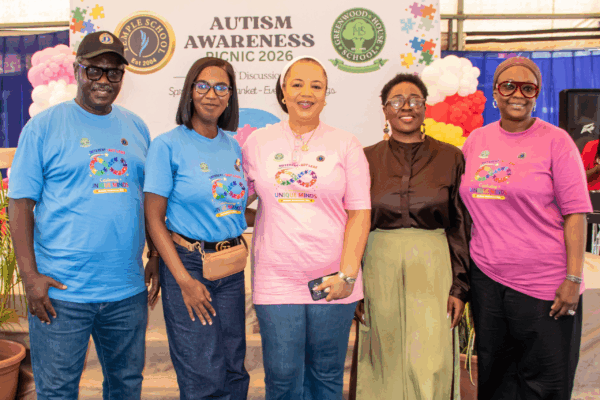
They made the call during the Autism Awareness Picnic held at the Temple School field in Lagos on 4th April, where educators, medical professionals, parents, and advocates stressed the need for societal acceptance and policy support.
Oseri Oweye, head, Exceptional Learners Department at Temple School/Greenwood House School, said inclusion must become a societal norm, stressing that every child deserves equal opportunity regardless of ability.
“Everybody is different, so we must embrace this diversity because people don’t get to choose how they are. And just because you are someone on the spectrum doesn’t mean that you don’t get to be among something,” Oweye said.
She added that schools must go beyond celebrating academic excellence to accommodate all learners.
“Most schools like children who are the smartest because they make their schools look great, and they have the highest grades. But how can you really measure your school’s worth if your children are all extremely smart? … our school focuses on making sure that everybody is seen, everybody is cheered on, and they have a voice,” Oweye said.
Oweye explained that the awareness initiative was targeted more at the general public rather than children with special needs, noting that a broader understanding would foster inclusion.
“It’s more for the wider community that they need to know that this is how I am; so it’s more for the neurotypical people to be educated and understand really what autism is and how they can include them in their society,” she said.
Olufowobi Gbadegbo, a psychiatrist at Zerenity Wellness, called for increased social support systems and government-backed subsidies to ease the financial burden on families.
“There is a lot of financial obligation that comes with raising a child or an adult with autism; being able to provide a social network for families, individuals, and subsidies to the schools that cater for these children will go a long way,” Gbadegbo said.
He urged the government to extend the kind of attention given to other critical medical conditions to autism.
“I hope we get to a point where autism also gets highly recognised so that our government can begin to provide the social services and network that people need; in terms of financial need, school funding, housing funding, job funding,” Gbadegbo added.
On awareness, he noted that while progress has been made, more work remains. “We’ve gone from people not even knowing what this is to people talking about it widely and accepting. But we still have a long way to go,” Gbadegbo remarked.
Damilola Adedeji, a psychotherapist and founder of The Birthing Co and Kids Life Club, highlighted the financial strain on parents and called for targeted government grants and improved professional capacity.
“It’s very expensive to navigate through these children. I pray and plead with the government to introduce grants for children who have been diagnosed. This grant reduces the burden that the parents have to carry,” Adedeji said.
She also identified a shortage of trained specialists as a key challenge, noting, “It takes a lot to find a good speech therapist, a good occupational therapist. It’s time for more training, upskilling, and bringing more people into the field to support these children.”
Adedeji further emphasised the need for increased awareness to tackle stigma and misunderstanding. “When people don’t understand a thing, they persecute it. It’s time for people to know the depth of what these children are all about,” she stressed.
Similarly, Shirley Okharedia, founding director, Temple Schools and director at Greenwood House School, urged Nigerians to end stigma and embrace inclusivity.
“Stop stigmatising such children. Embrace them. They’re unique. We should make the effort to understand them, support them, include them,” Okharedia advised.
She noted that while awareness efforts have improved, sustained engagement across schools, government and communities remains critical.
“We’re trying, but we’re not there. We’re all learning to adapt and to sensitise people on how best to support children with special needs,” Okharedia added.
The stakeholders maintained that expanding awareness, improving access to specialised care, and introducing financial support mechanisms would be crucial to building an inclusive society for children on the autism spectrum in Nigeria.

Join BusinessDay whatsapp Channel, to stay up to date
Open In Whatsapp