…Roadmap projects 15m new users, 40% cash ratio, faster digital transactions
…Seeks deeper regional integration, cross-border payments.
The Central Bank of Nigeria (CBN) has unveiled an ambitious payments strategy aimed at expanding financial inclusion to 95% of adults, accelerating digital transactions and positioning Africa’s most populous economy as a leading hub for regional and cross-border payments by 2028.
The Nigeria Payments System Vision 2028 (PSV 2028), launched Monday in Abuja, forms part of the CBN’s broader reform agenda and seeks to modernise the country’s financial infrastructure amid growing digital commerce and increasing regional economic integration.
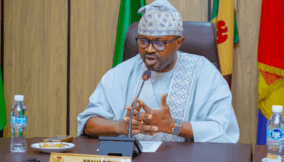
Olayemi Cardoso, CBN Governor, said the initiative goes beyond upgrading payment channels and is intended to strengthen economic growth, improve financial inclusion and enhance Nigeria’s competitiveness in the global digital economy.
“Today, we unveil more than a payment strategy. We unveil a vision for how Nigerians will transact, trade, save, invest and participate in an increasingly digital economy,” Cardoso said at the launch.
Nigeria already operates one of Africa’s most active digital payments ecosystems, driven by rapid fintech adoption and instant payment infrastructure. Cardoso said the country must now build on that foundation to ensure its achievements translate into broader economic gains and international recognition.
The strategy sets a target of raising financial inclusion to 95% by 2028, potentially bringing an additional 15 million Nigerians into the formal financial system. The plan also seeks to deepen digital payment adoption, reduce reliance on cash, improve cross-border payment capabilities and strengthen cybersecurity protections.
Cardoso said payment systems should be viewed as strategic national infrastructure rather than merely financial utilities.
“In a modern economy, payment infrastructure is not simply a financial utility. It is a strategic asset. It is a strategic national asset,” he said.
The governor linked the payments roadmap to efforts to stabilise the economy, facilitate trade and remittance flows, strengthen investor confidence and improve Nigeria’s external sector position over time.
He also emphasised the role of payment systems in supporting small businesses and expanding economic opportunities across the country.
“For the entrepreneur in Aba, the trader in Zaria, the fashion designer in Ilesa, or the small business owner in Kano, efficient and interoperable payment systems can mean access to new markets, faster settlement of transactions, and greater participation in regional and global commerce,” Cardoso said.
The CBN chief outlined several measurable targets under the vision. By 2028, the bank wants digital payments to become the dominant means of transaction, cash held outside the banking system to fall below 40% of money in circulation, and fraud losses to decline to less than 0.001% of transaction values.
The strategy also envisions wider deployment of QR-code payments and contactless technologies across markets, transport hubs and rural communities, alongside greater adoption of open banking services and application programming interfaces (APIs).
Cardoso stressed that success would depend on implementation rather than policy design.
“The success of PSV 2028 will not be measured by the quality of this document. It will be measured by execution,” he said.
Muhammad Sani Abdullahi, deputy governor for economic policy at the CBN, said the initiative was designed to support Nigeria’s long-term economic transformation by improving how money moves across households, businesses, governments and borders.
“As economies become increasingly digital and interconnected, the efficient movement of value across households, businesses, governments, and borders has become a critical determinant of competitiveness and growth,” Abdullahi said.
He described modern payment systems as essential economic infrastructure that support trade, investment, productivity and innovation.
According to Abdullahi, PSV 2028 is built around five strategic priorities: strengthening payment infrastructure, expanding financial inclusion, encouraging innovation, improving cross-border transactions and maintaining the integrity and security of the financial system.
The framework embraces emerging technologies including artificial intelligence, blockchain applications, digital assets and open banking capabilities.
It also seeks to position Nigeria as a regional payments hub by leveraging the Pan-African Payment and Settlement System and opportunities arising from the African Continental Free Trade Area (AfCFTA).
Abdullahi said reducing payment frictions and settlement costs would help improve export competitiveness and deepen regional integration.
“PSV 2028 is more than a policy document; it is a call to collective action in shaping the infrastructure of Nigeria’s economic future,” he said.
The vision’s milestone targets include digital payments dominance, expanded eNaira use cases, fintech growth through regulatory sandboxes, wider contactless payment adoption, stronger cybersecurity safeguards and enhanced interoperability with regional and global payment networks.
The CBN said collaboration among banks, fintech firms, regulators, technology providers and consumers would be critical to achieving the goals.
“If we implement this Vision with purpose and commitment, Nigeria will not only build one of Africa’s most advanced payment ecosystems, but also strengthen its position as a hub for trade, innovation, and economic growth,” Abdullahi said.
Various policymakers and stakeholders who spoke at the launch agreed with Cardoso and Abdullahi’s position that the success of the initiative will ultimately be measured not by transaction volumes alone, but by its impact on investment, job creation, productivity and economic prosperity.
Premier Oiwoh, Managing Director/CEO of the Nigeria Inter-Bank Settlement System (NIBSS), said the success of the new vision will not be measured by its quality, but by execution.
“Technology is only 20 percent of the solution; implementation accounts for 80 percent,” he said.
He also called for zero-cost financial transactions to support the vision’s financial inclusion goals and other expected outcomes.

Join BusinessDay whatsapp Channel, to stay up to date
Open In Whatsapp