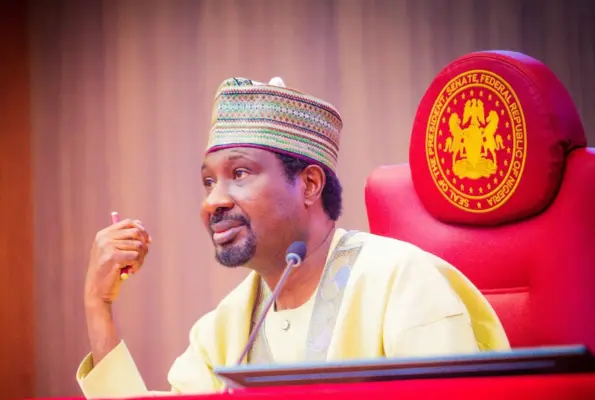
Barau Jibrin, Nigeria’s Deputy President of the Senate, has called for urgent and coordinated action to address power, energy and infrastructure deficits across West Africa, warning that without a reliable electricity supply, the region’s goods and services will remain uncompetitive in the global marketplace.
Barau made the call while speaking with journalists at the First Extraordinary Session of the ECOWAS Parliament in Abuja, themed “Deepening Regional Integration through Infrastructure Development and Trade Facilitation.”
He stressed that fragmented national approaches to energy development would not deliver the level of competitiveness required to drive industrialisation and economic integration across the sub-region.
Describing energy as the most critical challenge facing industrial growth in West Africa, the lawmaker said meaningful economic progress could not be achieved without decisively tackling power shortages at both national and regional levels.
According to him, an interconnected regional power strategy would significantly lower production costs, strengthen manufacturing capacity and enhance the region’s position in global trade.
Read Also: N58.47trn federal budget cannot fix a fundamentally flawed economic strategy — Sam Amadi
He noted that despite West Africa’s abundant human capital and natural resources, infrastructure gaps — particularly in electricity supply — continue to constrain productivity and limit industrial expansion. Addressing these structural weaknesses, he argued, would place the sub-region on a sustainable path towards long-term industrialisation and shared prosperity.
Barau, who also serves as First Deputy Speaker of the ECOWAS Parliament, expressed concern over persistently low levels of intra-regional trade within the Economic Community of West African States.
He revealed that trade among member states remains between 11 and 16 per cent, far below its potential and significantly lower than trade volumes with external partners.
He attributed the weak trade performance largely to poor infrastructure, inefficient border processes and regulatory bottlenecks.
According to him, bureaucratic red tape at border posts continues to frustrate the free movement of goods, with trucks often subjected to prolonged delays that inflate transaction costs and discourage cross-border commerce.
He urged ECOWAS leaders to prioritise the opening, rehabilitation and maintenance of key trade corridors to ease logistics and stimulate regional trade flows.
Barau also proposed that the region should prioritise digital payment platforms over the long-debated single common currency.
He argued that digital systems could bypass many of the political and technical challenges that have stalled efforts towards monetary union.
He said digital payment solutions would drastically reduce transaction costs, particularly dollar-denominated charges, which he noted are costing the region billions of dollars annually.
On concerns about inflation and currency convergence, the senator maintained that strengthening intra-regional trade and expanding domestic production would naturally ease inflationary pressures.
He pointed out that Africa’s heavy reliance on imports remains a major driver of price instability, adding that boosting local manufacturing and processing capacity would help stabilise currencies and reduce vulnerability to external shocks.
Drawing examples from the cocoa and lithium sectors, Barau advocated nearshoring and value addition within Africa.
Rather than exporting raw cocoa and lithium, he said countries in the region should process cocoa into chocolate and refine lithium into batteries locally.
Such value-chain development, he argued, would create jobs, enhance productivity and significantly deepen regional trade integration.
He noted that addressing infrastructure deficits, modernising payment systems and stimulating local production are essential to transforming the African Continental Free Trade Area from a policy framework into tangible economic outcomes.
With coordinated reforms, he expressed optimism that West Africa could unlock stronger trade volumes, greater competitiveness and accelerated economic integration across the sub-region.

Join BusinessDay whatsapp Channel, to stay up to date
Open In Whatsapp