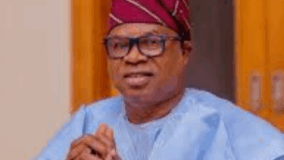
The unreported stocks of Asset Management Corporation of Nigeria (AMCON), the Central Bank of Nigeria’s (CBN) Ways and Means, and some state governments’ debt are driving Nigeria’s rising debt profile, Taiwo Oyedele, fiscal policy partner and Africa tax leader, PwC, said at the weekend.
Reported debt of Africa’s largest economy stood at N35.5 trillion as of the first half of 2021 according to the Debt Management Office (DMO).
The International Monetary Fund (IMF) projected that Nigeria’s public debt would reach N65.2 trillion at full year 2021.
“Anecdotally, ways and means have risen to N15.5 trillion as at the first half of 2021,” Oyedele said at the 2021 investiture of the Chartered Institute of Bankers of Nigeria (CIBN) in Lagos.
He said despite the low debt to GDP ratio at 35 percent (IMF), the debt service burden has become quite high for Nigeria as debt service to revenue inches close to 100 percent.
This implies that Nigeria spends actual government revenue on payment of interest on debts and barely anything left to finance development.
This, he said has been the crux of public debt sustainability as well as other ECOWAS countries as debt can only be serviced with revenue and not GDP or export.
Read also: PenCom directs PFAs to create, maintain non-interest funds for account holders
Among the fellowship awardees at the event were Kingsley Obiora, deputy governor, Central Bank of Nigeria, and Ngozi Okonjo-Iweala, director-general of the World Trade Organisation (WTO).
Speaking after being conferred with the Fellowship Award, Obiora said, “We have reflected on the values of CIBN. E Naira scoring historic first. It’s not a mean feat. It positions Nigeria as a global leader in payment system.
“We have to be excellent in all we do. This attribute will help us to grow. He thanked the CBN governor for giving him the opportunity to work and be recognised by the CIBN, he said.
Okonjo-Iweala, who spoke virtually during the investiture said, “I’m honoured to be made a fellow of a prestigious Chartered Institute of Bankers of Nigeria (CIBN).”
She said the Nigerian banking sector has greatly contributed to the development of the country and the African continent, adding, however, that there is still a lot to be done.
“Our financial services industry including the emerging FinTech sector has a strong role to play,’’ she said.
The WTO director-general said the theme chosen by CIBN for deliberation at the event, “Nigeria’s rising debt profile: Issues and implications for sustainable economic development was an important one.
Welcoming the participants at the event, Bayo Olugbemi, president/chairman of council, CIBN, said the choice of this topic stems from the growing concerns of Nigerians about the rising debt profile of the country and the need to educate the public on this issue as well as proffer sustainable management strategies.
“As professional bankers whose remit includes lending, we are mindful of the fact that there is nothing wrong with borrowing. Public borrowing, public debt and public debt management are normal features of a modern economy,” he said.
He said high debt levels cannot be overlooked. Historical accounts show that high debt ratios could negatively impact or worse still, reverse economic growth. For example, research by the World Bank confirms that a public debt-to-GDP ratio of 77 percent and over would result in an adverse impact on economic growth. Over the past 10 years, Nigeria’s debt to GDP ratio rose from 17.4 percent in 2010 to approximately 35 percent in 2020. (tradingeconomics.com).
“I encourage all stakeholders in the banking and finance industry to continually support the efforts and initiatives of the government aimed at improving the economy towards inclusive growth and development. Let us keep hope alive as a people and as a nation. Though things may be tough, remember “tough times never last but tough people do,” Olugbemi said.
About 237 individuals were conferred with awards at the event: 14 honorary fellows, 77 elected fellows, and 146 honorary senior members.

Join BusinessDay whatsapp Channel, to stay up to date
Open In Whatsapp