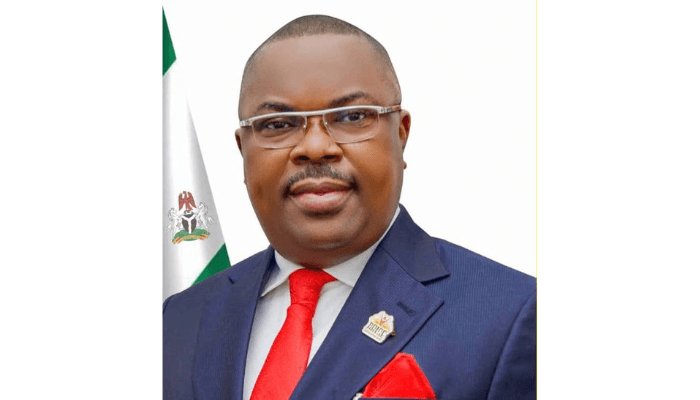
Linus Nkan, Akwa Ibom State Commissioner for Budget and Economic Planning, has said that the N1.390 trillion budget proposal for the 2026 fiscal year will deepen rural economic participation, expand support for Micro, Small and Medium Enterprises (MSMEs), and consolidate developmental strides in agriculture, healthcare, and infrastructure.
He made the disclosure recently during a budget briefing and public hearing organised by the State House of Assembly Committee on Appropriation and Finance at Luton Park, Uyo.
Nkan maintained that the government’s approach aligns with Governor Umo Eno’s economic development blueprint. He described the total budget size as both “ambitious and realistic,” given current revenue indicators. The proposal allocates a dominant N1.035 trillion to capital expenditure, while N354.8 billion is set aside for recurrent obligations.
According to him, the overwhelming shift toward capital spending underscores the administration’s resolve to channel resources into projects that expand economic infrastructure, improve social services, and stimulate long-term productivity.
Read also: Budget 2026: Rivers targets increased spending on education, infrastructure and healthcare
The Commissioner disclosed that the budget’s sectoral spread reflects the outcome of recently concluded Town Hall meetings across the State’s constituencies. A significant chunk of the capital envelope is directed to infrastructure development, with N387.5 billion projected for roads, bridges, and related works across urban and rural communities. The health sector is set to receive a N136.1 billion investment, while education gets N31.6 billion for school upgrades, teacher development, and learning facilities.
Nkan stressed that the 2026 fiscal plan is anchored on the state’s Medium-Term Expenditure Framework, guided by realistic revenue forecasts and a commitment to avoid waste. He assured the Committee of the budget’s prudence and transparency, emphasising that every figure was carefully reviewed to ensure alignment with the state’s financial capacity.
In a keynote presentation, the Commissioner for Finance, Emem Bob, stated that the budget proposal reflects the collective aspirations of the people and will lay a solid foundation for a more prosperous, inclusive, and resilient Akwa Ibom.
He highlighted the Ministry of Finance’s preparedness to fund the budget through enhanced electronic revenue collection for the Treasury Single Account (TSA), prudent financial management, and fiscal discipline. Bob revealed that the administration had, as of November 2025, fully cleared the N39.831 billion commercial banks’ debt inherited from previous administrations.
He noted that the budget, entitled ‘The People’s Budget for Expansion and Growth,’ is a compendium of stakeholders’ inputs gathered during Governor Eno’s public consultations across the ten federal constituencies.
Read also: State budgets, big ambitions: Are Nigeria’s governors finally getting serious about development?
Earlier, Itorobong Etimn, Chairman of the House Committee on Appropriation and Finance, Itm, in her opening remarks, outlined the objectives of the public hearing.
These include ensuring citizens’ participation in the budget process, allowing the executive arm to present its scorecard, briefing the people on the state’s affairs and future outlook, obtaining feedback on government projects, mobilising the people for budget implementation, providing an economic health check, and engendering good governance, accountability, and transparency.
Declaring the hearing open, Udeme Otong, Speaker of the Akwa Ibom State House of Assembly, restated the legislature’s commitment to an inclusive, transparent, and participatory budgeting process.
Represented by Otobong Bob, the House Leader, emphasised that public contributions remain vital in shaping a people-centred fiscal plan and commended stakeholders for their inputs towards the budget’s quick passage.

Join BusinessDay whatsapp Channel, to stay up to date
Open In Whatsapp