…As govts urged to invest in doctors to reverse brain drain, medical tourism
A 12-year shortage of specialist training is emerging as one of the biggest threats to Africa’s expanding hospital infrastructure, with Aga Khan University Hospital, Nairobi, warning that the continent’s healthcare construction boom will not deliver better outcomes unless governments invest as aggressively in people as they do in buildings.
Africa’s drive to build more hospitals will do little to improve healthcare unless governments invest just as heavily in training, retaining, and rewarding doctors, nurses, and specialists, according to Aga Khan University Hospital, Nairobi.
The hospital warned that while new medical facilities can be built within months, developing a medical specialist takes 12 years to 14 years, leaving the continent with a widening talent gap that threatens to undermine billions of dollars invested in healthcare infrastructure and limit access to quality.
While modern healthcare infrastructure remains essential, the continent’s growing shortage of skilled medical professionals threatens to leave many new facilities unable to provide the quality care they were built to deliver, the hospital affirmed.
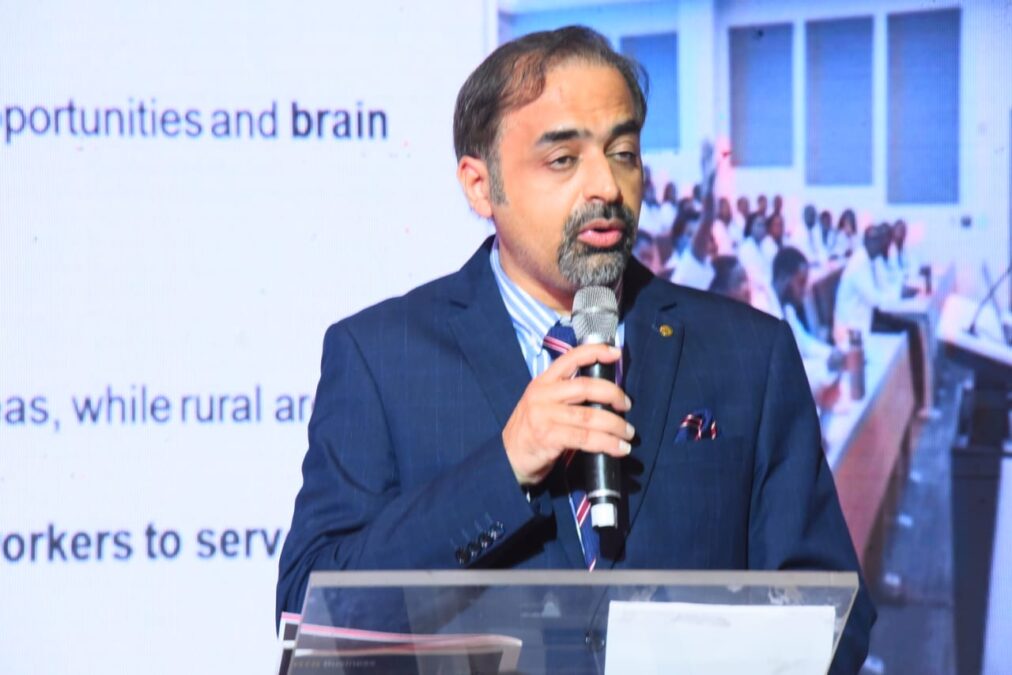
Rashid Khalani, the CEO of the Aga Khan University Hospital in Nairobi, Kenya, disclosed this at the BusinessDay CEO Forum on Thursday in Lagos.
Khalani, who was represented by Khurram Jamal, the chief operating officer of Aga Khan University Hospital, Nairobi, argued that hospitals alone cannot solve the continent’s healthcare challenges if they are not matched with sustained investments in medical education, specialist training, and better working conditions.
“A building cannot heal a patient. A state-of-the-art operating theatre is simply an expensive storage room without a trained specialist inside it,” the CEO said.
The warning comes as many African countries continue expanding hospital infrastructure to improve access to healthcare, even as thousands of doctors, nurses and specialists leave the continent each year in search of better pay, working conditions and career opportunities abroad.
The hospital said Africa’s healthcare crisis is fundamentally a human capital problem rather than an infrastructure problem.
Training a medical specialist takes between 12 years and 14 years, from undergraduate studies through residency and fellowship programmes, it noted. By contrast, governments can construct hospitals or purchase sophisticated medical equipment in a matter of months.
Without long-term investment in healthcare workers, the next generation could inherit new hospitals that lack qualified professionals to operate intensive care units, perform complex surgeries or use advanced diagnostic equipment.
Khalani said this imbalance has fuelled a worsening brain drain across Africa.
A cardiologist in Lagos, for instance, may earn several times more in the United Kingdom while enjoying better-equipped hospitals and safer working conditions. Faced with such disparities, migration becomes an economic decision rather than simply a career choice.
Even within African countries, specialists often concentrate in major cities, leaving rural communities with little or no access to advanced healthcare services because of poor infrastructure, limited equipment and lower compensation.
The result is a widening healthcare inequality that leaves millions without specialist care.
Beyond workforce shortages, the hospital said Africa continues to lose enormous financial resources because patients increasingly seek treatment overseas.
According to the African Export-Import Bank (Afreximbank), the continent loses about $7 billion annually to outbound medical tourism, with more than 300,000 Africans travelling to India every year for treatment.
The CEO attributed this trend to inconsistent quality of care, shortages of highly trained specialists and a widespread perception that hospitals in Europe and Asia offer better healthcare outcomes.
The numbers illustrate the scale of the challenge. Africa has only about 2,000 registered cardiologists serving a population of more than 1.2 billion people, equivalent to one cardiologist for roughly 600,000 people.
For patients diagnosed with complex heart conditions, travelling abroad is often viewed as their best chance of survival rather than a luxury.
Healthcare leaders say this creates a vicious cycle. Weak investment in medical professionals reduces confidence in African health systems, forcing patients overseas. The money spent abroad could instead be invested in expanding specialist services, upgrading hospitals and strengthening local healthcare systems.
The hospital also stressed that improving healthcare quality requires internationally recognised accreditation and standardised clinical practices.
Independent accreditation, it argued, would help hospitals demonstrate that patients can receive world-class treatment within Africa while improving patient safety and reducing variations in the quality of care.
Changing the narrative
To help reverse these trends, Aga Khan University Hospital says it is building an integrated healthcare ecosystem focused on treatment, education, research and regional collaboration rather than simply expanding hospital infrastructure.
The hospital currently employs about 200 full-time specialists who combine clinical care with teaching and research.
It has established 16 fellowship programmes, residency training across nine medical specialities, undergraduate medical education and nursing programmes aimed at producing more African specialists locally.
Since 2020, its clinical research unit has conducted 17 clinical studies and trials, with three approved for use in Kenya, as part of efforts to strengthen locally generated medical evidence and reduce Africa’s dependence on imported healthcare innovations.
The hospital noted that Africa bears about 25 percent of the global disease burden despite accounting for only four of global clinical trials, a gap it said became painfully evident during the COVID-19 pandemic when the continent depended almost entirely on imported vaccines.
To improve access to specialised care across the continent, Aga Khan University Hospital has also partnered with Kenya Airways to create an integrated medical travel network linking Nairobi with 34 African destinations.
The initiative provides patients with coordinated referrals, telemedicine consultations before travel, specialised medical flights, airport-to-hospital transfers, accommodation support and follow-up care after returning home.
The hospital believes the model can position Nairobi as a regional healthcare hub while keeping African patients, medical talent and healthcare spending within the continent.
“Our goal is not just to build hospitals. It is to build an ecosystem that trains specialists, generates research, delivers internationally accredited care and gives Africans confidence that they can receive world-class treatment without leaving the continent,” Khalani affirmed.

Join BusinessDay whatsapp Channel, to stay up to date
Open In Whatsapp