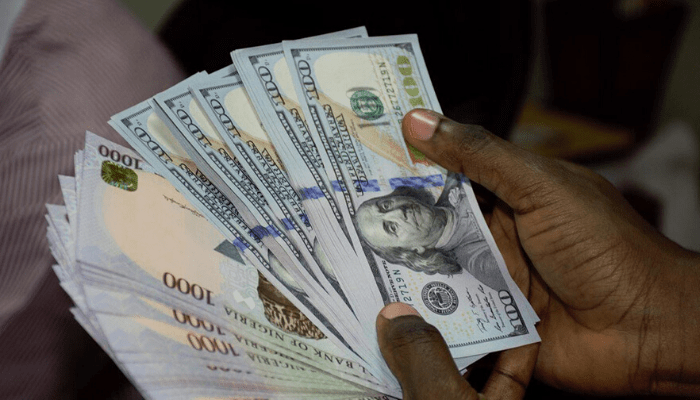
Nigeria’s currency appreciated to N445 per dollar on Friday gaining N16 from the peak of N461, at which the dollar was sold on Friday last week on the black market.
Against the previous day trading, Naira gained N5 over the dollar which traded at N450 on Thursday.
Investigation shows that there is dollar liquidity in the market as hoarders are bringing out dollars on hearing that the Central Bank of Nigeria (CBN) is set to resume sales to Bureau De Change (BDCs).
The CBN on April 29, 2020 resumed dollar sales for school fees and Small and Medium Enterprises (SMEs).
Also, the regulator has made complete arrangements to resume foreign exchange sales to the BDC segment of the market for business travels, personal travels, and other designated retail uses, as soon as international flights resume.
The Apex bank on March 26, suspended foreign exchange sales to the Bureau De Change (BDC) operators until further notice due to the Covid-19 lockdown as requested by the operators. The suspension notwithstanding, some BDCs are still active in the market.
At the Investors and Exporters (I&E) forex window, the foreign exchange market opened with an indicative rate of N387.25 per dollar on Friday. This indicates a marginal gain of N0.35k when compared with N387.60k opened with on Thursday, data from FMDQ revealed.
The CBN on Thursday cut its benchmark interest rate to 12.5 percent from 13.5 percent. The move is to spur lending to the economy which faces imminent recession on twin pressures of COVID-19 pandemic and low oil prices.
Taiwo Oyedele, head of Tax and Corporate Advisory Services at PwC, said the cut in monetary policy rate by 100 basis points is a welcome development.
“The move is desirable at this time to fuel the desperately needed growth and slowdown the imminent economic decline due to COVID-19. Hopefully the rate cut will filter through to lending rates,” he said.


Join BusinessDay whatsapp Channel, to stay up to date
Open In Whatsapp