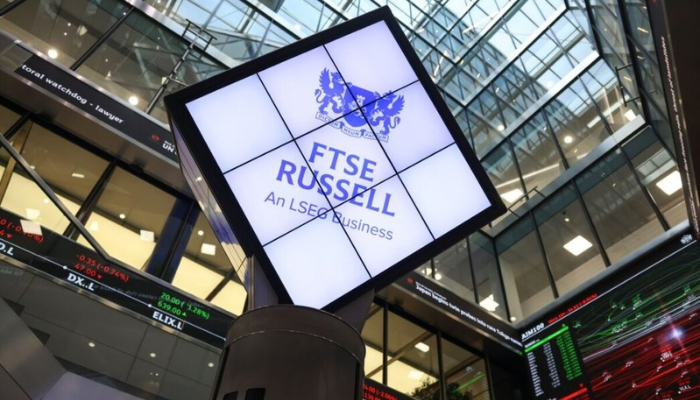
Global index provider FTSE Russell has placed its planned reclassification of Nigeria back to Frontier Market status under “further review.”
Nigeria was upgraded from “Unclassified” back to “Frontier Market” status during the March 2026 interim review—with an effective implementation date set for September 2026.
FTSE Russell noted this on Tuesday, saying that the decision is to allow the index provider to thoroughly assess how Nigeria’s recent transition to a shortened T+1 settlement cycle (clearing and settling trades one business day after execution) affects international institutional investors.
The global index provider said it will provide a definitive update on Nigeria’s potential return to the Frontier Market index by the end of August 2026.
This move is coming amid a correction period for the Nigerian Stock Exchange which suffered a N10 trillion wipeoff in value this month as investors rushed to lock in profits after a prolonged rally.
“The market has appreciated significantly since the beginning of the year, so profit-taking, valuation adjustments and selective portfolio rebalancing were expected,” said David Adonri, vice president of Highcap Securities. “The recent movement is consistent with a consolidation of gains after a strong run, rather than a sign of structural weakness.”
The correction has weighed on some of Nigeria’s biggest listed companies, including Dangote Cement and BUA Cement, and erased almost $4 billion in less than three weeks from the paper wealth of the country’s richest businessmen. However, analysts argue that the sell-off reflects healthy market consolidation rather than deteriorating fundamentals.
Yet, in a striking show of resilience, the correction has failed to knock Nigeria off the top of Africa’s equity rankings.
Till date, the Nigerian Exchange Limited (NGX) has delivered a 59.5 percent return in US dollar terms year-to-date as of June 24, 2026, the highest among 17 African stock exchanges tracked from African Markets, a real-time market intelligence platform,.
Ghana ranked second with a 57.7 percent dollar return, followed by Zimbabwe (40.5 percent), Rwanda (38.8 percent), Tunisia (35.8 percent) and Tanzania (32.7 percent). In local currency terms, Nigeria also remains one of the continent’s strongest performers, posting a 51.1 percent gain, second only to Ghana’s 69.2 percent.
The performance extends Nigeria’s lead for a third consecutive week and highlights how macroeconomic reforms and a more stable naira are reshaping the country’s investment story.


Join BusinessDay whatsapp Channel, to stay up to date
Open In Whatsapp