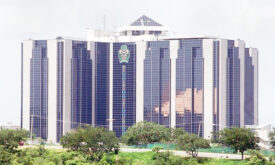
The Central Bank of Nigeria yesterday directed that, with effect from August 1, 2015, all transactions consummated by all licensed Bureaux de Change (BDCs) in Nigeria, must have the Bank Verification Number (BVN) of customers, a policy analysts say paves way for the long awaited transparency in the parallel market.
“The information must must be included in the Returns to the CBN, and in the case of corporate customers, the BVN of a director or an authorised signatory of the entity must be provided,” the apex bank said in a circular signed by Kevin Amugo, its director, Financial Policy and Regulation Department.
BusinessDay has exclusively reported of CBN plans to automate foreign exchange (FX) market, which would ensure real time report on transactions, especially at the BDC market and enable better tracking of FX demand, supply and usage.
The CBN said to ensure a hitch-free of this directive, the list of all licensed BDCs would be provided by the apex bank, to the Nigerian Interbank Settlement System (NIBBS), to enable the company provide the necessary hardware token that would be used by the BDC in accessing NIBSS website.
In the circular to licensed BDCs in the country, the CBN said the NIBSS had been directed to make a portal on its website to facilitate access for the confirmation/validation of the BVN number of the BDCs’ customers.
“This is to ensure that the correct BVN is recorded by the BDC and included in the returns to the CBN,” he said.
However, a token transaction fee of N100 would be paid for each access on the portal. NIBSS will also provide the necessary training manual for an “easy to use” operation of the system.
Furthermore, all licenced BDCs are required to provide the BVN of all their Directors before August 15, 2015 as failure to meet this requirement may affect their continued participation in the foreign exchange market.
The CBN further warned that any BDC operator that fails to provide the required information in its returns, or provides a wrong BVN, would be penalised.
The first offenders would be required to pay a fine of N1million, while any subsequent violation of the requirement may lead to the revocation of the operating licence of the BDC.
The CBN has taken several immediate measures to chase speculators out of the local foreign exchange market and drive stability of the naira, the two most recent being the closure of its RDAS and then a warning to exporters that their export proceeds just only be used for eligible transactions or face sanctions.
Just recently, CBN also shut out importers of the 41 items, including tooth picks and wheel barrows from accessing FX to tame undue pressure on the nation’s foreign reserves.
The policy has raised more FX demand at the parallel market where the naira exchange rate to the dollar has significantly shut up to as a high as N240/$, although there had been relative stability at the interbank market.

Join BusinessDay whatsapp Channel, to stay up to date
Open In Whatsapp