Nigeria is asking the global maritime community for fairness and support for developing economies in its push toward net-zero emissions in international shipping.
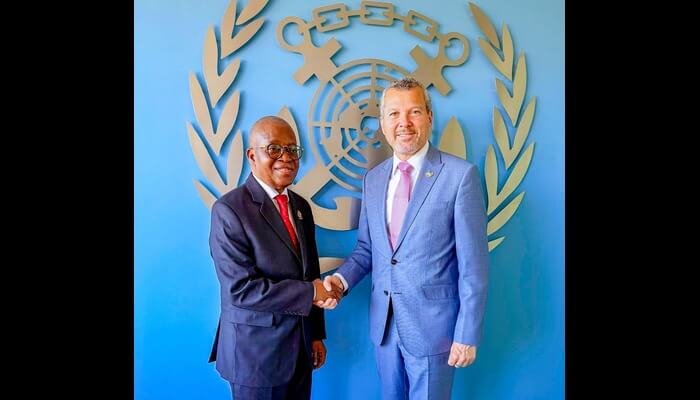
Adegboyega Oyetola, Nigeria’s minister of marine and blue economy, at the 84th session of the Marine Environment Protection Committee (MEPC 84) of the International Maritime Organisation (IMO) in London, reaffirmed Nigeria’s support for decarbonisation, but noted that the support depends on frameworks that reflect the economic realities of developing nations.
It will represent one of the country’s first appearances since returning to the International Maritime Council last year after winning a seat on Category C of the IMO Council.
The IMO is asking countries to hit net-zero greenhouse gas emissions by or around 2050 through a series of binding regulations. In its 2023 IMO GHG Strategy, countries must ensure ships follow the Carbon Intensity Indicator (CII) and the Energy Efficiency Existing Ship Index (EEXI) which means monitoring and rating ships on how efficiently they transport goods.
Wealthier nations are asked to provide technical cooperation and transfer green technology to Small Island Developing States (SIDS) and Least Developed Countries (LDCs) to ensure no one is left behind in the transition.
Nigeria’s marine minister also spoke with Arsenio Dominguez, the Secretary-General of the IMO, and Fawaz Al Sehali, president of Saudi Arabia’s transport general authority. According to the minister’s envoy, Oyetola reiterated Nigeria’s commitment to a constructive and mutually beneficial partnership with the IMO citing maritime safety, institutional capacity development, and sustainable blue economy growth.
Dominguez commended Nigeria for improved maritime security in the Gulf of Guinea as valuable lessons for other regions.

Join BusinessDay whatsapp Channel, to stay up to date
Open In Whatsapp