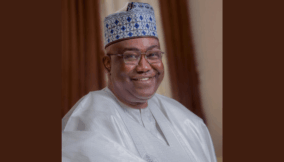
Ismail Bukar is co-founder, and head of operations, Caerphilly Farms in Abuja. In this interview, with JOSEPHINE OKOJIE and MABEL DIMMA, he highlights the challenges and limitations faced by poultry farmers in the country.
What are the issues around the recurrence of bird flu and how can government address this?
A weak veterinary system as well as an inadequate safety and hygiene practices by many farmers are the main reasons why we experience the recurrence of bird flu in Nigeria. Bird Flu is a viral disease that does not have a known cure yet. However, it can be prevented to a large extent by good hygiene practices. In some cases, good hygiene measures have been taken, yet the disease still manages to sip through somehow. This may be due to the importation of infected poultry birds from other countries, but with a good veterinary system in place, it can be mopped up quickly if the origin can be traced. In Nigeria, it is different because whenever bird flu is detected in the country, it is extremely hard to find the source of the virus. So, if the ‘patient zero’ cannot be traced and found, we won’t be able to quickly catch up with all the footprints of ‘patient zero’ and quickly terminate its spread. Our inability to do this is largely due to the weak veterinary system we have in the country. The country has always played catch up game with the bird flu disease. Whenever a farm is infected, the farmland is depopulated without appropriate institutions making enquiry on recent activities in the farmlands. Such enquiries will enable us to quickly tackle the disease, when it surfaces again. The government needs to enforce proper citing and management of poultry farms. Also, poultry farms of any kind, even backyard farms, should be mandated to have a regular veterinary visit to ensure best practices. In order to do this, the government needs to re-organise the veterinary structure of the country. More importantly though, rather than wait for the government to be on our necks before we can do the right thing, we the citizens need to teach ourselves and adopt best practices when it comes to poultry farming.
Are there challenges peculiar to poultry farming in the country?
There are quite a number of challenges. Investment in poultry farming requires a large capital to set up the farm on a commercial level. Inadequate infrastructure is also a major challenge. Our roads are very bad and most of the poultry farms are located in remote areas that are not easily accessible. We need to transport eggs and birds in and out of the poultry; with the state of many roads, birds and eggs won’t survive the bumpy journey. Poor power supply is also another problem, and this has increased our production cost.
How can government stop the smuggling of poultry products into the country?
To stop the smuggling of poultry products, government needs to introduce severe punishment on smugglers, which will deter a few more from smuggling. The government should encourage local production and make our poultry products more competitive with the imported poultry products. When the consumer can get fresh and tastier locally produced chicken at a cheaper rate, then, there would be no reason for them to choose the more expensive, yet not entirely safe for consumption imported poultry products. Nigerians now prefer the imported poultry products because it is cheaper than the local produced products, despite the possible harmful substances they contain.
Can local production meet demand? If not, why?
Local production is not even close to meeting the current demand. With an increasing population, demand will only keep rising. Due to the challenges I highlighted earlier, especially the high set up costs (capital) and no access to land, which is quite possibly one of the most expensive commodities in the country, the number of small-scale poultry farmers are very little. The big players alone in the industry also, are not producing enough to meet demand. So, unless some drastic changes occur soon, for the next few years at least, demand will still be higher than what local production can supply. A starting point could be giving the many unemployed youths in Nigeria access to land and capital, to enable them venture into agriculture.
Are poultry feeds, medication and birds/chicks readily accessible?
The producers of feeds, chicks and medications have through the adoption of distributors and agents, helped to make these products easily accessible. Many of the distributors even operate in neighbourhood shop centres that are close to farming areas. I will say it’s very easy to access distributors and agents of poultry feeds. In fact, this is one aspect of poultry farming that is hitch free.
How can the government attract youth to engage in agriculture?
In all fairness, I think the government is already doing a lot to make agriculture attractive to all, including the youth. The Agricultural sector is one of the most subsidised sectors in the country as it is. I think the main issue is the willingness of the youth to venture into agric. For some reason, despite how visibly lucrative the sector is, a lot of the youth still see it as a profession for rural dwellers. Though, I must agree that there’s increasing youth participation but it is very small compared to the number of unemployed youth, who would rather remain jobless in the city than go back to their hometowns where they can get lands for free, to farm. This does not mean that the government should not do more. For starters, the government should initiate a policy aimed at getting many youths to the farm, by providing them with lands, resources and tools required for farming in return for a certain percentage of the produce harvested. This will go a long way in assisting those who genuinely want to farm but have no means to as well as motivate those who aren’t considering agriculture yet, to look into it.
Are there skilled agricultural workers in the poultry sector? Do you have any in your employ?
There are a few. The current education and employment structure in the country makes it such that what you study in school doesn’t really affect where you work. In most sectors today, what a person studies is not a requisite in employment, as most employers seek to employ sharp minds, regardless of their field of study and train them in this new field. Many farmers are not trained in the universities or college of agriculture; they are those who picked it up along the way; took it upon themselves to learn both practically and theoretically and with the passion they have for it, drove themselves to excel at it. At Caerphilly Farms, one of our partners is a graduate of agricultural economics. We also have on our payroll, a skilled veterinary doctor.
What role can agriculture play in the process of diversification?
Agriculture will play the biggest role in the diversification process that the government is talking about. Before oil, Agriculture was Nigeria’s main contributor to GDP and foreign exchange earner. Even when we had oil, Agriculture was still second in term of GDP contributor, despite the neglect the sector suffered. It is the sector that can gracefully employ up to 50 percent of our population across its value chain and if this happens, Nigeria will go from importing food worth $32billion annually to exporting both raw materials and processed/manufactured food products.
What impact is the Central Bank of Nigeria’s, (CBN) double digit Monetary Policy Rate (MPR) stance, having on poultry farmers’ ability to get loans from deposit money banks?
Government need to relax some of the requirements in getting loans from the money deposit banks and create a better transmission mechanism for farmers to easily access government funds. The CBN double-digit interest rate has not affected farmers’ ability to get loans from money deposit banks, though.
What’s your view on the future for agriculture in 2016 and beyond?
Nigeria has received a wake-up call. We now know that depending on one source of income, as a nation is not the way forward. With oil losing ground and with the need to reduce dependence on it, Agriculture is the leading sector to diversify the economy. Nigeria can regain its glory days of having the groundnut pyramids, truckloads of cocoa and barrels of oil palm, heading to the seaport. My outlook for agriculture in 2016 is that farmers will increase production and there will be more food for local consumption. The country will reduce its food import bill. Beyond 2016, this trend will continue till we meet local demand and begin to export greatly again. The future is bright.

Join BusinessDay whatsapp Channel, to stay up to date
Open In Whatsapp