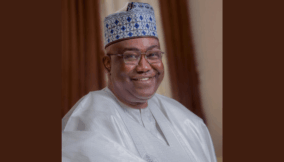
Governor Alex Otti of Abia State has dismissed claims of discord within the South-East Governors’ Forum, explaining that differences in priorities are often shaped, by varying local realities.
The governor made the assertion, Friday at the South-East Traditional Rulers Council meeting hosted at the JAAC Building, Umuahia, the Abia State capital.
He said that sometimes, people create in their imagination differences that do not exist, noting that they are all working together.
According to Governor Otti, “but what one state requires may differ from another. So, comparing governors is like comparing apples and oranges.”
He called for greater unity, justice, fairness, and collaboration among leaders across the South-East and South-South geopolitical zones of Nigeria, emphasising that collective effort remains the surest path to sustainable development.
Governor Otti reminded traditional rulers of their enduring responsibility to uphold justice and fairness in their communities, noting that unlike political offices, their roles are lifelong.
He stressed the importance of working together across political and traditional divides, noting that progress is best achieved through unity.
“If you want to go fast, you go alone, but if you want to go far, you go together. The message is clear, from now henceforth, we should all go together,” Governor Otti stated.
The governor highlighted his administration’s development approach, noting that interventions in Abia are guided by prevailing needs, including road infrastructure, healthcare delivery, and education.
He further underscored the importance of justice as the cornerstone of leadership, describing it as a divine responsibility.
“Power belongs to God. Anytime you are given the opportunity to lead, it is a gift from God and you must not disappoint Him. If there is anything you take away today, it is justice, justice is fairness, equity, and righteousness,” the governor emphasised.
Governor Otti, who had demonstrated his commitment to fairness with the appointment of a non-indigene as Head of Service, explained that merit and due process guided the decision.
“You cannot deny someone an opportunity, because of where he comes from. That is not justice. Justice must be seen and must be done,” Governir Otti added.
He acknowledged and celebrated the Obi of Onitsha, Nnaemeka Achebe, describing him as a mentor and father figure, while announcing plans to host his 85th birthday celebration in Abia State on May 15.
Uzor Nwachukwu, Abia State commissioner for Local Government and Chieftaincy Affairs, in his welcome address, described the gathering as a convergence of “wisdom, tradition, and collective responsibility,” noting that traditional institutions remain vital to grassroots governance, peace, and development.
He conveyed the goodwill of the state and highlighted key achievements of the administration, including massive infrastructural development, such as the reconstruction of Port Harcourt Road, revitalisation of over 200 primary healthcare centres, recruitment of nearly 10,000 teachers, and sweeping institutional reforms to promote transparency and accountability.
The commissioner also outlined several grassroots-focused initiatives, including the Abia TechRise programme, youth empowerment schemes, agricultural training, solar-powered evening markets, and conflict resolution mechanisms.
He urged traditional rulers to deepen collaboration with government in tackling insecurity, youth unemployment, and other regional challenges.
Eze Linus Nto Mbah, chairman of the Abia State Council of Traditional Rulers, commended the state government for its developmental strides, particularly in security, infrastructure, healthcare, and education, as well as improved welfare for traditional rulers.
He, however, expressed concern over the erosion of cultural values and increasing communal conflicts, calling on traditional rulers to remain steadfast as custodians of culture and promoters of unity.
Sergeant Chidi Awuse, chairman of the South-South Monarchs Forum, emphasised the need for unity, cooperation, and support for constituted authorities.
He advocated stronger regional integration between the South-East and South-South, noting that collective action, would deliver greater results than isolated efforts, while urging traditional rulers to continue partnering with government to sustain peace and development.
The meeting reaffirmed the critical role of traditional institutions in fostering peace, security, and development, with stakeholders calling for sustained collaboration between government and royal fathers to build resilient and prosperous communities.

Join BusinessDay whatsapp Channel, to stay up to date
Open In Whatsapp