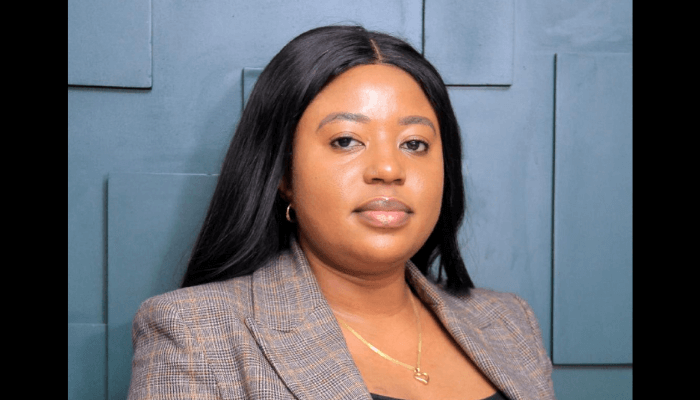
Linda Etta, is the senior blue economy adviser to the African Union and consultant for the UN Food and Agriculture Organization (FAO) on developing the fisheries management plan for Cameroon. In this interview, the marine and maritime specialist with 10 years’ experience of providing adaptive policy and technical support to public and private institutions on ocean-based and blue economy issues, reflects on championing an inclusive and resilient blue economy in line with the Agenda 2063 of the Africa Union (AU). She also spoke about incorporating ecosystem-based approaches to safeguard marine biodiversity in AU-led initiatives. Excerpts by JOHN SALAU:
Coastlines across Africa are pressured between economic growth and environmental sustainability. In practical terms, how can Africa balance these priorities?
Balancing economic growth and environmental sustainability along Africa’s coastlines has been a central challenge in my work with AU-led initiatives. In practical terms, my role focused on translating high-level policy frameworks into actionable strategies that could be implemented at both regional and national levels. For instance, in my support to countries like Malawi and Cameroon, I facilitated the development of fisheries management plans that not only optimized economic returns from industrial and artisanal fishing but also incorporated ecosystem-based approaches to safeguard marine biodiversity. In the context of port development projects in East and Southern Africa, I worked closely with governments and regional economic communities to integrate environmental safeguards, including pollution control measures, sustainable dredging practices, and habitat restoration, into infrastructure expansion plans. By linking these technical measures to economic performance indicators, I helped ensure that growth initiatives did not compromise the long-term health of the ecosystem. My contribution lay in creating mechanisms that enabled policymakers and stakeholders to make informed decisions, aligning economic development with sustainability goals. This approach not only minimized environmental risks but also strengthened the resilience of coastal communities whose livelihoods depend on healthy marine ecosystems.
Ocean governance is a complex challenge given Africa’s overlapping jurisdictions. What strategies or frameworks can be adopted to strengthen regional cooperation?
Ocean governance in Africa is indeed a complex challenge due to the multiplicity of jurisdictions, the diversity of marine resources, and the varying capacities of coastal states. To address these challenges, I consistently advocated for a multi-layered, regionally coordinated approach grounded in collaboration, transparency, and evidence-based decision-making. One of the key strategies I developed is the Africa Ocean Governance Strategy (AOGS), which provides a continental framework for sustainable, integrated, and equitable management of Africa’s ocean and coastal resources. It strengthens the capacity of African Union Member States and Regional Economic Communities (RECs) to ensure that ocean-based activities contribute to economic development, environmental sustainability, and social well-being, in line with Agenda 2063, the Africa Blue Economy Strategy, and international ocean governance frameworks such as UNCLOS, SDG 14, and the BBNJ Agreement. In practical terms, I emphasized strengthening Regional Economic Communities (RECs) as platforms for coordination, enabling countries to develop joint monitoring systems, shared maritime spatial plans, and coordinated enforcement against illegal fishing and marine pollution. For instance, in collaboration with SADC and ECOWAS, we facilitated training workshops to countries on the Biodiversity Beyond National Jurisdiction (BBNJ). The approach is to blend legal frameworks, institutional capacity building, and innovative knowledge-sharing mechanisms to create resilient and cooperative ocean governance structures that transcend national borders, ensuring sustainable use of Africa’s marine resources.
Looking back on your work with AU-led initiatives, what would you say motivated you to focus on Africa’s blue economy and sustainable maritime development?
My motivation to focus on Africa’s blue economy and sustainable maritime development stems from a combination of personal passion and professional conviction. Growing up in the Niger-Delta (a coastal community), this petroleum-rich region stands out as one of the most polluted areas in West Africa due to excess oil spills caused by multinational companies. I witnessed firsthand the depletion of fish populations and the overexploitation of aquatic life and resources caused by oil spillage pollution and the vulnerability of marine ecosystems to overexploitation and environmental stressors. This early exposure sparked a deep interest in marine sciences and the sustainable use of ocean resources. Professionally, I recognized that Africa’s vast maritime domain ranging from fisheries and ports to renewable energy and marine biodiversity is a largely untapped engine for sustainable development particularly in Africa. The African Union’s vision to harness the blue economy as a driver for inclusive growth, climate resilience, and continental integration provides a compelling framework to channel my expertise. Being able to contribute to AU-led initiatives, such as the implementation of the Africa Blue Economy Strategy, the Africa Ocean Governance Strategy, and the Blue Economy Dashboard, allowed me to translate this passion into tangible impact. I was able to support member states and regional economic communities to adopt policies, build capacity, and implement projects that secure long-term environmental, social, and economic benefits for the continent, which are the three main drivers of the blue economy. Ultimately, my goal is driven by a belief that sustainable maritime development is not just an economic opportunity, but a pathway for Africa to achieve resilient, equitable, and blue climate-smart growth.
Given you grew up in the Niger-Delta; what should Nigeria prioritize to address maritime security threats and environmental degradation, especially in the Niger-Delta, given the direct impact on both local livelihoods and the nation’s economic development?
There is an urgent need to strengthen Nigeria’s legal and institutional frameworks for maritime security.
The integration of digital technologies such as satellite data and artificial intelligence can significantly enhance vessel tracking and early threat detection.Nigeria must also reinforce its monitoring, control, and surveillance (MCS) efforts across the Niger Delta. Collaborating with neighboring countries in the Gulf of Guinea will be essential to curb piracy and other maritime-related crimes that continue to fuel regional insecurity.Equally important is empowering local communities whose socio-economic challenges often contribute to maritime threats. The government should prioritize creating employment opportunities for young people in the coastal areas to promote stability and sustainable development.
What initiatives did you see sustaining progress, especially in building local capacity along coastal communities?
Building local capacity has always been at the heart of my work with the African Union, because progress requires communities and institutions to own solutions long after external support ends. One of the flagship initiatives I led in this regard is the African Small Island Developing States (SIDS) Blue Economy Project. It focused on Cabo Verde, Guinea-Bissau, São Tomé & Príncipe, Comoros, Mauritius, and Seychelles. Through this project, I designed and implemented a multi-layered capacity-building approach targeting coastal communities and government agencies. For coastal communities, I facilitated training programs on fisheries management and value-added processing of fisheries products, ensuring livelihoods were linked to ecosystem stewardship. At the governmental level, we supported the development of national blue economy strategies and policy frameworks, enabling ministries and local authorities to plan and manage marine resources effectively. The impact of these initiatives has been significant. For example, participating communities in São Tomé & Príncipe reported improved fish stock management and increased incomes through the adoption of sustainable fisheries practices.
Combining community engagement, institutional training, and policy support demonstrated that empowering local actors is not just about knowledge transfer; it’s about creating resilient systems where coastal communities, governments, and ports can sustain progress independently.
Could you share one or two case studies from specific countries where your interventions in port development or marine resource management brought measurable impact?
One example is my work in Cameroon, where I led the development of the Fisheries Management Plan and Zoning Map for both industrial and artisanal sectors. Through a comprehensive Political, Economic, Social, Technological, Legal, and Environmental factors (PESTEL) analysis, risk assessment, and stakeholder consultations, team members and I identified overfishing hotspots and established spatial zoning regulations that balance ecological sustainability with community livelihoods. The result was a clear, actionable plan adopted by the Ministry of Fisheries, which has since guided fishing activities, improved compliance, and contributed to early indicators of stock recovery in targeted areas. Another example is Nigeria, where I contributed to the validation of the National Blue Economy Strategy. My role involved integrating environmental sustainability, gender inclusion, and blue growth opportunities into national planning. This work helped catalyze government investments in sustainable port development and marine protected areas while providing a framework for monitoring and evaluation. Several states have already begun implementing the recommendations, with measurable improvements in coastal resource governance and alignment with continental blue economy objectives. Both cases illustrate how structured policy advice, coupled with stakeholder engagement, can translate into tangible improvements in marine resource management and ocean governance, benefiting both ecosystems and coastal communities.
The blue economy holds promise for job creation and innovation; from your experience, what sectors or opportunities stand out as Africa’s most promising for inclusive growth?
The African blue economy is brimming with opportunities for inclusive growth, particularly in sectors that directly touch coastal and maritime communities. Fisheries and aquaculture remain foundational and traditional, not only for food security but also as engines for employment, especially for women and young people in artisanal fisheries. When managed sustainably, these sectors can create jobs along the entire value chain, from harvesting to processing, packaging through to market distribution. Emerging maritime sectors, such as offshore renewable energy, sustainable port development, and maritime logistics, also hold significant promise. For instance, investments in green ports and efficient maritime transport systems can generate high-skilled jobs, foster innovation in digital solutions for shipping, and strengthen Africa’s connectivity for trade. Also, ocean-based tourism and aquaculture-linked agritech solutions provide pathways for local entrepreneurship while preserving environmental integrity. The blue economy’s potential for innovation lies in technology-driven solutions like marine spatial planning tools, sustainable aquaculture practices, and circular economy approaches to marine pollution, which can be scaled across the continent. By aligning investment, policy frameworks, and capacity-building efforts, Africa can leverage these sectors to create inclusive, sustainable, and resilient economic growth for coastal populations while safeguarding marine ecosystems.
Looking ahead, what do you see as the next big test for African nations in harnessing the blue economy while protecting fragile marine ecosystems?
The next big test for African nations will be striking a genuine balance between unlocking the economic potential of the blue economy and safeguarding our fragile marine ecosystems. Many African coastal states are under pressure to rapidly develop ports, fisheries, and offshore energy sectors to drive growth and create jobs. While these developments are essential, without robust governance frameworks, environmental safeguards, and science-based management, the very resources that underpin this growth—fish stocks, coral reefs, mangroves, and coastal wetlands will risk irreversible degradation. I see the challenge as twofold: first, African nations must integrate sustainable marine resource management into national and regional planning, leveraging technology, data, and monitoring systems to ensure that exploitation does not outpace regeneration. Secondly, there is a need to secure innovative financing and partnerships that reward sustainability, not just short-term economic gain. Success will depend on strategic collaboration across governments, regional bodies, private sector actors, and local communities to implement policies that ensure economic development and environmental protection are complementary, rather than conflicting. May I also add that nations that get this balance right will not only grow their blue economies but will also safeguard Africa’s oceans for generations to come.

Join BusinessDay whatsapp Channel, to stay up to date
Open In Whatsapp