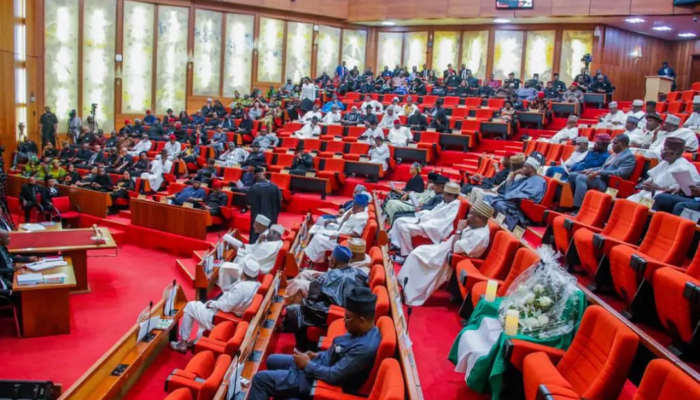
The passage of the State Police Bill by the Senate reflects a growing national consensus that Nigeria needs decentralised policing to tackle worsening insecurity across the country.
While the bill empowers governors to oversee State Police operations, it also includes safeguards prohibiting the use of State Police against political opponents or government critics except in accordance with the law.
However, stakeholders have called for institutional safeguards to prevent the misuse of the law by state governors and enforcement agencies.
It is also argued that without strong constitutional and administrative protections, State Police could potentially be influenced by local political actors, thereby undermining their neutrality and the rule of law.
The federal structure currently being practised in Nigeria is characterised by wide disparities in fiscal strength, administrative capability, and institutional maturity.
These imbalances present a situation where some states may have the capacity to maintain professional security institutions, while others may struggle to fund, train, and properly supervise their state police.
Hence, it is argued that introducing State Police under these conditions risks creating an uneven and fragmented security architecture.
Accordingly, Nigeria must, along with the introduction of State Police, confront the reality of ungoverned or weakly governed spaces across the country. BusinessDay’s JOHN SALAU & KENNETH ATHEKAME spoke with some Nigerians on the passage of the Bill on State Police and what it means for the country’s security architecture. Excerpts:
For many years, I have been a strong advocate of State Policing in Nigeria. You can then imagine my excitement as the bill is starting to get the needed momentum. If we must be honest with ourselves and devoid of retrogressive sentiments, this is something long overdue.
Firstly, almost all other countries in the world practising federalism have a subnational policing system. Why do we delude ourselves that we would not do the same and expect our policing to be top-notch? Yet most of these countries have less cultural diversities and less security challenges than we do.
Have we wondered why semblance of state police like the CJTF in Borno State or the Amotekun in States of the South West have been recording successes? It is a simple case of local intelligence superiority and populace acceptability. There is no way an Efik man who has spent all his years in the Niger Delta will be sent to Maiduguri and you expect the majority local Kanuri populace to trust him with intelligence sharing, or him to have good knowledge of the physical and cultural terrain.
Secondly, let us look at it from the funding angle. We can use the April FAAC allocation as a yardstick. For the month of April, 2026, the sum of N2.257 trillion total distributable revenue was shared amongst the 3 tiers of government:
FG = N787.351 billion
State Governments = N772.360 billion.
Oil Producing States = N157.254 billion
(additional amount as 13% of mineral revenue)
LGAs = N540.152 billion
=========================
Total = N2.257 trillion
In percentages:
FG = 35%
States= 41% (13% derivation added)
LGAs = 24%
Now, looking at the figures, will it be out of place to ask the tier of government getting the most allocation to also formally get involved in policing? Have we been asking questions about security votes states have been getting, yet at the slightest crisis, only the FG is screamed at but the “Chief Security Officer” of the state getting the security vote is comfortably operating below the radar of responsibility, accountability, and scrutiny?
Kudos to some of the state governors who even without State Police, are actively and frontally tackling insecurity in their states. Lagos, Kogi, Borno, and Edo readily come to my mind. Meanwhile, in the same country, a governor getting the same vote will raise up his hands in the air and tell his citizens that he cannot be responsible for insecurity in his state. While technically such a governor might be right, morally he is inexcusable. Figuratively, while there might be no blood on his hands, he has blood on his soul! With State Police, the era of being a Chief Security Officer that gets paid to secure a state but will not be responsible for security (an aberration) will come to an end!
Thirdly and lastly, the police are better trained and suited for maintaining internal security than the military. The closer the policing structure is, the easier it is to manage security. All the present quasi police arrangements like CJTF, Amotekun, Neighborhood Watches/Vigilante Groups can be refined and fused into different state police architecture as might be suitable. Let them be the first line of defense, followed by the Federal Police, then the military.
– Moses Lawal, Lagos-based social commentator
………………………………………………………
The proposal for the establishment of state police in Nigeria is, in principle, a welcome development because effective policing is most successful when it is rooted in the community it serves. Nigeria’s growing security challenges have exposed the limitations of an overly centralised policing structure in a large and diverse federation like Nigeria. From both governance and communication perspectives, state policing has the potential to foster stronger relationships between the police and the people through better understanding of local languages, cultures, and security dynamics.
However, the success of state police will depend largely on the legal and institutional safeguards put in place to prevent political abuse. A legitimate concern is the possibility that some state governors may deploy state police as instruments to intimidate political opponents, suppress dissent, or influence electoral outcomes. To prevent this, the operational independence of state police must be guaranteed through clear constitutional provisions, independent oversight bodies, transparent recruitment processes, professional training, and effective judicial accountability. If these safeguards are firmly established, state police can become a valuable instrument for improving security without undermining democracy, the rule of law, or citizens’ fundamental rights.
– Chukwudinma Okoji, HoD, Department of Mass Communication, Federal Poly, Offa, Kwara State
………………………………………………………….
The call for the establishment of state and community policing has remained a subject of national debate for several years. Political leaders, media commentators, security experts, and members of the public have continued to express differing opinions on the issue. While some believe that community policing alone is the key to addressing the persistent challenges of killings, kidnapping, and other violent crimes, others advocate for a more comprehensive security framework that includes state policing coordinated alongside existing federal structures.
The reality is that the Nigeria Police Force, despite the dedication of its personnel, does not have sufficient manpower to effectively secure the country’s rapidly growing population. Although the Federal Government has sustained the recruitment of new officers, the gap between the available workforce and the nation’s security needs remains significant.
The recent surge in banditry, kidnapping, and other violent crimes has further strengthened the argument for state policing. This position has been reinforced by the concerns raised by several state governors who, despite being regarded as the Chief Security Officers of their respective states, have little or no authority over the deployment of police personnel during emergencies because policing is exclusively under the control of the Federal Government. In view of this reality, the establishment of state police has become increasingly necessary.
Opponents of state policing, however, have expressed legitimate concerns. Some fear that state governors may misuse the police as instruments of political oppression against perceived opponents. Others question whether state governments possess the financial capacity to adequately fund their own police forces. There are also concerns about possible duplication of intelligence, jurisdictional conflicts, and operational clashes between federal and state security agencies.
While these concerns deserve careful consideration, they should not overshadow the urgent need to confront the rising wave of insecurity across the country. The increasing rate of violent crime demands practical, innovative, and collaborative solutions.
This is, therefore, a call to every patriotic Nigerian to support the adoption and effective implementation of state and community policing. Recruitment into such security agencies should be strictly merit-based, while officers must be thoroughly trained to uphold the rule of law, respect human rights, and protect the dignity of every citizen. With appropriate legal safeguards, adequate funding, and effective oversight mechanisms, state policing can complement the efforts of the federal police and significantly enhance security across the nation.
– Badru Saleh Abiona, proprietor, The Source Schools, Alakuko, Lagos
………………………………………………………………
Yes, Nigeria can benefit from state police, but only if there are strong legal safeguards, proper funding, accountability systems, and protection against political abuse. The current centralised force, the Nigeria Police Force, has struggled with manpower shortages, slow response times, and limited local intelligence in many communities.
Can State Governors Fund and Manage It Effectively? It depends on the state.
Some economically stronger states, such as Lagos State, Rivers State, and Kano State, may have the revenue base to fund a professional police structure.
However, many states depend heavily on federal allocations and may struggle to sustain.
Salaries and welfare packages, modern equipment and vehicles, training and professional development, intelligence gathering systems, operational logistics, and without stable funding, state police could become weak and ineffective.
Will it improve crime-fighting? Potentially, yes. Advantages include: better local intelligence officers understand local languages, terrain, and community networks.
Faster response time, less dependence on commands from Abuja.
Improved community trust, Citizens may cooperate more with locally accountable officers.
More focused crime prevention – better handling of kidnapping, banditry, cultism, and communal conflicts.
Nigeria’s current security challenges, such as kidnapping and insurgency, have exposed the limits of a purely centralised model.
Major risks of State Police – The biggest concern is political misuse by governors.
Possible dangers: Using the police against political opponents during elections
Harassment of journalists and critics
Ethnic or partisan favouritism in recruitment. Turning police into a tool of personal political power; Nigeria’s democratic institutions are still evolving, so this concern is significant.
Will It Make Policing Reputable Again?
Not automatically. State police alone will not restore trust. Reputation improves when there is professional training and independent oversight bodies. Better salaries and welfare;
strict punishment for corruption and abuse; respect for citizens’ rights and the rule of law. If corruption simply moves from the federal level to the state level, public trust will not improve.
A strong argument can be made that Nigeria needs state police, but success depends on structure, not just creation. A good model would be:
Federal police handling national security and interstate crimes
State police are handling local security and community policing. Independent oversight commissions prevent abuse by governors.
The real problem is not the absence of state police; it is the lack of accountability at the state level and the absence of genuine political will.
In a country where many politicians appear more focused on political manoeuvring than on governance, state police risk becoming instruments of political intimidation and repression rather than agencies dedicated to protecting lives and property.
– Julius Ayoola, Lagos-based lawyer.
………………………………………………….
The renewed conversation on the establishment of state police in Nigeria is a welcome development and, indeed, long overdue.
The worsening insecurity across the country is not something we can continue to watch while hoping that things will somehow improve on their own.
Every day, communities are attacked, lives are lost, and citizens are increasingly living in fear. It is therefore necessary to adopt practical solutions that can strengthen our security architecture.
There are concerns being raised by some Nigerians about the possible abuse of state police by governors and political leaders.
While these fears should not be ignored, they should also not prevent the nation from embracing a system that has the potential to improve security.
In several northern states, there are already security outfits operating along religious lines and carrying out functions similar to those of state policing.
These outfits have existed for years without creating major constitutional crises.
Likewise, many states across the country already maintain various security agencies and vigilante groups that work closely with conventional security agencies.
In reality, these are forms of indirect state policing.
I believe that states willing and prepared to establish state police should be allowed to do so, while those that are not ready can wait until they have the necessary capacity and framework in place.
A gradual implementation process may even be the best approach.
The situation can be compared to the introduction of telephones in Nigeria.
There was a time when telephone services were reserved only for the elite.
However, when the need arose to make communication accessible to the masses, the government created policies that made it possible.
In the same way, the necessity of state police has become increasingly evident as a way out of the nation’s current security challenges.
There is no reason for Nigerians to be afraid of state police.
We already have various federal and state agencies doing the same thing, including transport authorities and other government institutions. Having federal and state police will not be totally different.
Furthermore, state governors should be encouraged to channel their security votes into strengthening the state police and supporting the judiciary and other mechanisms that ensure justice and the rule of law.
The establishment of state police is not a threat to Nigeria’s unity; rather, it is an opportunity to bring security closer to the people, improve intelligence gathering, and ensure quicker responses to local security challenges.
The time has come for Nigeria to embrace state police as part of a broader strategy to restore peace and security across the country.
— Stanley Ihedigbo, publisher & Editor-in-Chief, The Mirror Newspapers
………………………………………………………..
Let the communities and state government take responsibility for their people… This will increase our overall capacity. Let the states come together and source funds from their wealthy citizens, just like Lagos is doing, and be accountable for such funds.
– Eyo Rita
………………………………………..
That is one of the best things that has happened to Nigeria and exactly what many of us have been advocating for. Various state governments should now take ownership of their security responsibilities. A governor who cannot generate enough revenue to pay workers’ salaries will inevitably struggle to recruit, train, equip, and sustain a state police force. Establishing state police goes beyond creating a security outfit; it requires substantial and consistent investment in personnel training, welfare, logistics, and operational capacity.”
– Ayobami Adeyemi, Lagos-based lawyer

Join BusinessDay whatsapp Channel, to stay up to date
Open In Whatsapp