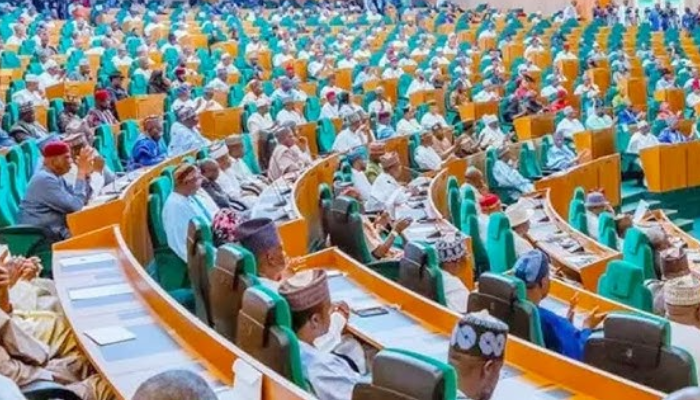
27 years after Nigeria returned to democratic rule and decades after the country abandoned regional policing, the National Assembly has finally pushed the country to the threshold of one of its most consequential constitutional reforms.
But the passage of the Constitution Alteration (State Police) Bill may have ended the legislative battle only to begin a far more contentious political one.
The debate has quickly shifted from whether Nigeria needs state police to whether Nigeria’s governors can be trusted with them.
That question has dominated public discourse since the Senate approved the bill on Wednesday, despite the legislation containing multiple constitutional safeguards designed to prevent abuse.
The bill represents a dramatic departure from Nigeria’s long-standing centralised policing structure.
Once ratified by at least 24 State Houses of Assembly, states will, for the first time since the First Republic, have constitutional authority to establish and fund their own police services alongside the Federal Police Service.
Ironically, Nigeria is not introducing an entirely new idea.
Before the military centralised policing in 1966, regional governments operated local police forces.
Those forces were eventually scrapped after they became notorious for political intimidation, election manipulation and victimisation of opponents by regional premiers.
That historical experience has continued to haunt every attempt to revive state policing.
Successive National Assemblies struggled unsuccessfully with the proposal.
During the Eighth Assembly, lawmakers led by Ike Ekweremadu secured passage of constitutional amendments creating state police, only for the proposal to collapse after failing to receive approval from the required number of State Houses of Assembly.
Read also: Parties divided over proposed state police as debate intensifies
The Ninth Assembly equally failed to make meaningful progress amid opposition from Muhammadu Buhari, whose administration consistently expressed reservations that governors would weaponise state police against political opponents.
Ironically, it is worsening insecurity, rather than politics that eventually revived the proposal.
Years of terrorism, banditry, kidnapping, communal violence, farmer-herder clashes and organised crime have exposed the limitations of a police force controlled almost exclusively from Abuja.
Governors have repeatedly complained that although they are constitutionally designated as chief security officers of their states, they possess little operational authority over security agencies deployed within their territories.
The legislation seeks to address that imbalance by allowing every state to establish its own police service while preserving a federal police structure for national security responsibilities.
Yet the lawmakers who drafted the bill appear fully aware of Nigeria’s political history.
Rather than handing governors unrestricted powers, the legislation erects multiple constitutional guardrails intended to prevent abuse.
Although governors will appoint State Commissioners of Police, they cannot simply handpick loyalists.
Appointments must first be recommended by the National Police Council before receiving confirmation by the State House of Assembly.
Removal is even more difficult.
A commissioner cannot be suspended or dismissed except for stated reasons, following fair hearing, on the recommendation of the National Police Council and approval by two-thirds of members of the State House of Assembly.
Perhaps even more significantly, governors are expressly prohibited from directing commissioners to arrest, investigate, detain or deploy force against political opponents, parties or critics outside the law.
The bill specifically bars state police from being used for partisan, ethnic, religious or sectional purposes.
These provisions directly respond to perhaps the biggest criticism that has trailed state police for decades, that governors would simply convert police officers into armed political aides.
Yet even these safeguards have failed to convince many observers.
Retired police officers argue that abuse may not necessarily begin with unlawful directives but with control over recruitment, promotions, logistics and funding.
Opposition parties are equally uneasy.
Their fear is heightened by the timing.
With the 2027 general elections approaching, critics worry that governors could quietly recruit political loyalists into state police formations long before voters head to the polls.
Those concerns explain why the legislation gives the Federal Police Service extraordinary powers to intervene whenever state police become instruments of political oppression.
Unlike the current constitutional arrangement, federal intervention is carefully defined.
The Federal Police Service may assume temporary operational control where a state police service becomes incapable of maintaining public order, where governors request assistance, where financial or administrative collapse threatens public safety or where there is substantial evidence that state police are being used for partisan intimidation, electoral manipulation or systematic violations of fundamental rights.
Importantly, intervention cannot be indefinite.
It must be temporary, proportionate and authorised in writing by the President, with notification to the governor, State House of Assembly, National Police Council and National Assembly within 48 hours.
Even then, courts retain powers to review the legality of every intervention.
These provisions illustrate the delicate balancing act attempted by lawmakers, granting states greater security autonomy while ensuring the Federal Government retains constitutional authority to prevent abuse.
However, politics may not ultimately determine whether state police succeed.
Money probably will.
The legislation deliberately avoids creating any federal funding arrangement.
Instead, every state wishing to establish its own police service must enact its own law and shoulder the entire financial burden.
That requirement immediately creates two different categories of states, those capable of sustaining modern policing and those that may struggle to pay salaries.
Several security experts already fear that poorly funded police formations could become breeding grounds for corruption.
States already battling salary arrears and struggling to implement the national minimum wage may find it difficult to finance recruitment, training, equipment, intelligence gathering and welfare for thousands of police officers.
Without sustainable funding, the constitutional reform could produce poorly equipped officers vulnerable to political influence and corruption, the very outcome the legislation seeks to prevent.
Another significant feature of the bill is what it does not permit.
Popular regional security outfits such as Amotekun, Ebube Agu and Hisbah will not automatically become state police.
Instead, every state must establish entirely new institutions that satisfy national recruitment, training, operational and accountability standards prescribed by the National Assembly.
This effectively prevents existing vigilante organisations from simply changing their names and acquiring police powers overnight.
The Senate’s passage of the bill therefore marks neither the beginning nor the end of Nigeria’s state policing journey.
Twenty-four state Houses of Assembly must still ratify the constitutional amendment before it becomes law.
Even after ratification, individual states must enact their own legislation, establish police commissions, recruit personnel, provide funding and meet national certification standards before operations can commence.
For Nigeria, therefore, the constitutional amendment answers only one question that decentralised policing is now politically acceptable.
The more difficult question remains unanswered.
Can Nigeria create state police without repeating the mistakes that led to the abolition of regional police forces more than half a century ago?
The answer will determine whether the country’s biggest security reform becomes its greatest policing success or its most expensive constitutional experiment.

Join BusinessDay whatsapp Channel, to stay up to date
Open In Whatsapp