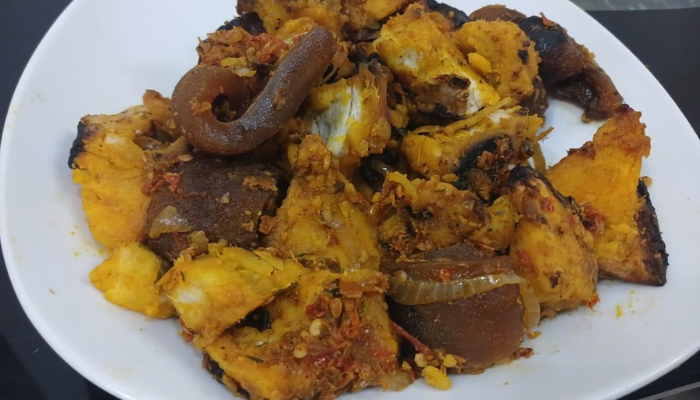
Roasted yam is one of Nigeria’s most treasured indigenous foods, that occupies a special place in the cultural and traditional life of communities across South Eastern Nigeria, particularly during the celebration of the famous New Yam Festival.
Known among the Igbo people as a sacred celebration of harvest, thanksgiving, and community unity, the festival marks the beginning of a new farming season and symbolises gratitude to God for a successful yam harvest.
At the center of this celebration is yam itself, prepared in several traditional ways, with the roasted yam standing out as one of the most symbolic and cherished delicacies.
Roasted yam is a versatile, sweet, and savory side dish that can be prepared by cutting yams into uniform pieces, seasoning it and roasting or baking it until tender and caramelised.
This root vegetable is a popular African, particularly Nigerian, street food staple, featuring thick slices or whole tubers roasted until soft inside with a smoky, charred exterior. It is commonly prepared using a roasting stove, broiler, oven, or stovetop.
For centuries, yam has represented prosperity, diligence, determination, fertility, honour, and wealth in many Nigerian societies. In Igbo culture especially, the cultivation of yam was historically regarded as a mark of diligence and social status. Families gathered during festive periods to roast fresh yam over open charcoal fires, sharing meals in village squares, compounds, and cultural gatherings.
The aroma of roasting yam, often accompanied by palm oil, spicy pepper sauce, plenty of spiced onions and some bitter vegetables [Utazzi].
Roasted yam, wrapped in rouge palm oil is a culinary experience that has evolved into a cultural identity passed down through generations.
Beyond its cultural symbolism, roasted yam also possesses remarkable nutritional value and health benefits.
Yyam is a very healthy, nutrient-dense food. It is rich in complex carbohydrates for sustained energy, packed with dietary fiber for digestion, and high in potassium, and manganese. As a low-fat cooking method, roasting makes yam a great choice for heart health, weight management, and stable blood sugar levels. This made it particularly important in agrarian communities where physical labour dominated everyday life. It is rich in Vitamin C that helps strengthen the immune system, Vitamin B6 which contributes to healthy brain function, and potassium that supports heart health and blood pressure regulation. Unlike heavily processed foods, roasted yam remains natural, minimally processed, and highly nutritious, making it one of Nigeria’s healthiest traditional street foods.
The preparation of roasted yam itself reflects indigenous culinary knowledge and sustainable traditional cooking practices. Across many Nigerian cities and villages, roadsides, markets, campuses, and local communities in the country, food vendors skillfully roast yam over open flames using techniques inherited from older generations. This simple but culturally significant method of cooking preserves the authentic taste and texture of the yam while strengthening communal interaction and local food traditions. In many Nigerian communities, eating roasted yam is associated with friendship, hospitality, storytelling, evening relaxation, and social bonding.
Roasted yam also tells a larger story about Nigeria’s agricultural heritage. Nigeria remains one of the world’s leading producers of yam, and the crop continues to play an important role in food security, rural livelihoods, and indigenous food systems. The continued popularity of roasted yam across generations demonstrates the resilience of Nigerian culinary traditions despite modernization and the growing influence of foreign fast-food culture.
As conversations around food heritage and cultural preservation continue globally, roasted yam deserves recognition beyond Nigeria’s borders. The food represents a living cultural tradition that embodies history, identity, agriculture, indigenous knowledge, and communal values. It is for this reason that roasted yam should be considered for inclusion on the Intangible Cultural Heritage list of UNESCO.
UNESCO’s Intangible Cultural Heritage framework seeks to preserve traditions, practices, and cultural expressions that define communities and connect generations and roasted yam fits perfectly within this vision because it represents more than nourishment, it reflects centuries of traditional knowledge, food practices, social rituals, and cultural continuity. Recognition would help preserve indigenous Nigerian culinary traditions while promoting African food heritage on the global stage.
Adding roasted yam to the UNESCO Intangible Cultural Heritage list would also create opportunities for food journalism, cultural tourism, economic empowerment for local food vendors and yam farmers, and increased global appreciation for Nigerian cuisine. Such recognition would encourage younger generations to value and preserve traditional foods while strengthening Nigeria’s cultural diplomacy internationally.
In many ways, roasted yam is not merely a roadside snack or local delicacy. It is a cultural symbol deeply rooted in the history and identity of Nigerian people, especially within the traditions of South Eastern Nigeria. From the vibrant celebrations of the New Yam Festival to busy roadside grills across the country, roasted yam continues to unite communities, preserve ancestral traditions, and tell the story of Nigeria’s rich culinary heritage to the world.

Join BusinessDay whatsapp Channel, to stay up to date
Open In Whatsapp