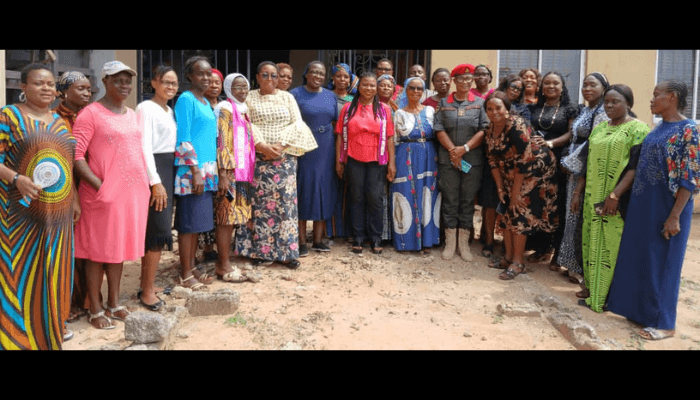
Rural women in parts of Rivers State have stirred and joined clamour by African women demanding for climate justice.
Many environmental organisations in the oil region backed by foreign funders have worked to raise consciousness of citizens of the region to own environment activities.
The farming communities have also been made to realise the harms being done to the environment by climate change made worse by third parties causing damage and spills.
Groups such as African Initiative for Transparency, Accountability, and Responsible Leadership (AFRITAL) led by Brown Egbeifun, have carried out activities on methane emission to show non-gas activities and agents that destroy the environment.
There have been efforts to curtail methane emissions to the barest minimum, and realize the objectives of the methane action plan, helping stakeholders in agriculture, health, environment, Civil Society Organizations (CSOs) and the oil and gas sectors to reiterate the criticality of partnership. They have also emphasized the place of mind-reengineering as the way forward to mitigating methane emissions in Nigeria.
Mfon Utin is one of the resource persons in Rivers State with her organization, Healthy Life Development Initiative (HELDi) working hard to raise the awareness of Rivers rural women to environment, health, and sexual and gender-based violence (SGBV).
As African Women’s Climate Justice Day 2026 came and went, the struggle seemed to demand for more commitment.
A statement by Utin said: “The African Women’s Climate Justice Day is observed annually on April 15, and the theme for 2026 is: ‘Our Lands, Our Voices: African Women United for Reparations and Climate Justice!’ This day serves as a powerful reminder of the lived realities of African women and girls, who continue to bear the heaviest burden of climate change, environmental degradation, structural inequalities, and systemic injustices that deeply affect their wellbeing, dignity, and livelihoods.
“Across many communities, deeply rooted patriarchal systems and harmful cultural norms continue to silence women’s voices and restrict their access to land ownership, leadership positions, participation, and meaningful decision-making spaces, despite the fact that women play a central role in sustaining families, communities, and local economies.”
Utin said in many households, women are the primary breadwinners, responsible for providing food, care, education, and financial support, yet they continue to face multiple layers of exclusion and discrimination that limit their opportunities for advancement and empowerment.
“At the same time, the destruction of lands, water sources, forests, and other natural resources due to pollution, oil exploration, and extractive activities has worsened their vulnerability, resulting in increased poverty, forced displacement, food insecurity, and in many cases, heightened risks of gender-based violence (SGBV).
“The lands of inheritance, identity, and livelihood for many women and girls have been severely degraded, while compensation, restoration, and justice remain insufficient or entirely absent. These environmental challenges are further compounded by limited access to essential services, including quality healthcare facilities, which has tragically contributed to the loss of many women’s lives, particularly during childbirth and maternal health emergencies, especially in rural and underserved communities. In addition, limited access to education continues to trap many girls in cycles of poverty and dependence, while lack of economic opportunities, clean water, safe housing, and social protection services further deepen their marginalization.”
She said this is why the call for climate justice and reparations is urgent and non-negotiable. “African women are not only demanding recognition of the harms done, but also fair and adequate compensation, restoration of degraded ecosystems, and accountability from all actors responsible for environmental destruction and social inequality. Reparations must go beyond financial compensation to include justice, restoration of dignity, and structural reforms that ensure women’s rights are fully protected and upheld.
“We also call on international organizations, development partners, governments, and civil society actors to strengthen their commitment to gender-responsive climate action, ensuring that African women and girls are not left behind but are meaningfully included in all stages of decision-making, policy formulation, and implementation processes at local, national, and international levels.”
Furthermore, she stated, “We recognize the critical role of men and boys as allies in this struggle. As sons, brothers, fathers, and leaders, they were nurtured by women, and therefore have a responsibility to stand in solidarity, support justice, and actively challenge systems and practices that continue to oppress women and girls. Through shared responsibility, mutual respect, and collective action, a more just and inclusive society can be built.
“Finally, this is also a call for women to continue supporting, uplifting, and empowering one another, as unity among women and girls remains essential for strengthening collective voices and driving meaningful change in our societies.
“Together, we envision an Africa where women’s rights are fully protected and respected, where women have equal access to land, leadership, education, healthcare, and economic opportunities, where environmental justice and reparations are fully realized, and where future generations inherit a safer, fairer, and more sustainable continent.
“We rise for justice, we rise for reparations, and we rise for Africa.”

Join BusinessDay whatsapp Channel, to stay up to date
Open In Whatsapp