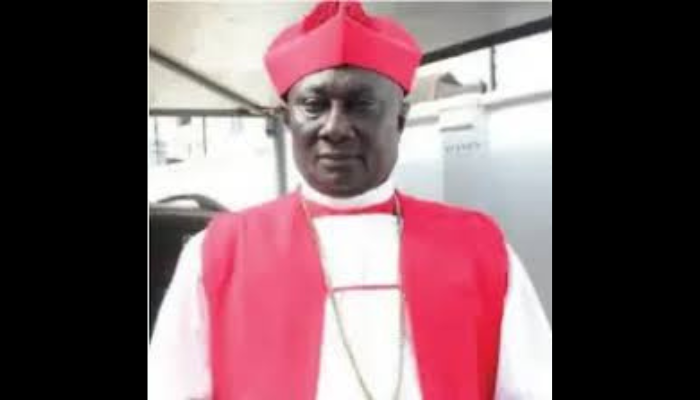
For many years, young pastors across Nigeria have struggled with maintaining a balance between ministry and socioeconomic realities of the country, which forces some to want to quit altogether. Recently an Abuja-based pastor was in the news after announcing the closure of his church; alleged to have said that continuing to lead the church and preach the word of God had become a waste of his time because the ministry was no longer providing enough income to support his family. Chidi Anthony, founder, Kings in Christ Power Ministries International and president of the Pentecostal Ministers’ Forum (PMF) speaks on the possible implications of abandoning the flock in pursuit of political/economic gains, and what the Church can do to help young ministers. Excerpts by JOHN SALAU
The stories of pastors abandoning their church or ministry for a better life are common among young pastors across the country. As president of PMF, should pastors/church leaders abandon their flock in pursuit of political relevance?
The straightforward biblical answer is No. The primary calling of a pastor is to shepherd the flock of God, not to pursue political power, influence, or public recognition. While Christians, including pastors, may positively influence government and society, no shepherd should neglect or abandon the flock entrusted to him simply to attain political relevance. Our Lord Jesus Christ clearly distinguished between a true shepherd and a hireling: The hired hand is not the shepherd and does not own the sheep. So when he sees the wolf coming, he abandons the sheep and runs away’ (John 10:12–13). Likewise, the Apostle Paul charged the elders of the church: Keep watch over yourselves and all the flock of which the Holy Spirit has made you overseers. Be shepherds of the church of God, which He purchased with His own blood (Acts 20:28). A pastor’s calling is a sacred trust. It is not an office to be exchanged for political prominence or earthly influence.
This is not to say that God cannot call an individual into public service or political leadership. Throughout Scripture, God raised individuals to serve in governmental positions for His divine purposes. However, if a man is serving as a shepherd of God’s people, he must never abandon that divine assignment merely because politics appears more attractive, influential, or financially rewarding. The real question is not whether a pastor can enter politics, but whether God has released him from his pastoral assignment and specifically redirected him into another divine assignment. Until then, the flock remains his God-given responsibility. Faithfulness to God’s assignment must always take precedence over the pursuit of earthly relevance.
Should or can a pastor drop his ministerial calling because of financial challenges?
Financial hardship is a reality that many people face, including ministers of the Gospel. However, an important question confronts the Church today: Should a pastor abandon his God-given calling because of financial challenges? The biblical answer is No. A genuine ministerial calling is not based on financial comfort but on God’s sovereign purpose. When God calls a man into His service, the assignment remains valid regardless of economic circumstances. Difficult seasons may arise, but they do not cancel a divine commission. The prophet Jeremiah reminds us that God’s call originates with Him, not with human convenience: Before I formed you in the womb I knew you… I appointed you as a prophet to the nations (Jeremiah 1:5). Scripture never teaches that ministry will always be free from hardship. Many of God’s servants experienced lack, persecution, and adversity, yet they remained faithful to the work entrusted to them. The Apostle Paul stands as a remarkable example. During parts of his ministry, he worked as a tentmaker to support himself while continuing to preach the Gospel (Acts 18:3). Rather than abandoning his calling because of financial pressure, he combined honest labour with unwavering commitment to God’s work. This demonstrates an important biblical principle: there is nothing wrong with a pastor engaging in legitimate work or business to provide for personal and family needs, provided such activities do not replace or compromise the ministry to which God has called him. Financial challenges may require a minister to acquire additional skills, seek lawful employment, manage resources wisely, or pursue other legitimate means of income. These are practical responses to difficult circumstances, not evidence that God has withdrawn His calling. The Apostle Paul captured the heart of true ministry when he declared, “Woe to me if I do not preach the gospel!” (1 Corinthians 9:16). His commitment was driven by divine conviction, not financial reward.
In situations like this; what should the Church do to help young ministers?
The Church must therefore resist the growing notion that ministry should be abandoned whenever economic conditions become difficult. A calling from God is not a career to be discarded when challenges arises; it is a sacred trust to be faithfully fulfilled. The God who calls is able to sustain His servants. Though His provision may not always come according to human expectations, His faithfulness never fails. Faithful ministers may adapt to changing financial realities, but they must never forsake the assignment God has entrusted to them simply because of financial difficulties.
In practical terms, what is the PMF doing to help young pastors within its ranks?
The Pentecostal Ministers Forum (PMF) is committed to the growth, well-being, and sustainability of young pastors within its fold. The Forum recognizes that ministry is a lifelong calling that requires spiritual maturity, sound leadership, continuous learning, and a strong support system. To this end, PMF provides opportunities for mentorship, where seasoned ministers guide younger pastors in matters of doctrine, leadership, character, and effective ministry. Through conferences, seminars, retreats, and leadership development programmes, young ministers are equipped to meet the demands of contemporary ministry while remaining firmly rooted in biblical truth. Beyond training, PMF fosters genuine unity and fellowship among ministers. It is a family of pastors who stand with one another in both seasons of celebration and seasons of challenge. The Forum encourages collaboration rather than competitions, creating an atmosphere where ministers can share experiences, learn from one another, pray together, and provide mutual encouragement and support. This sense of belonging helps to reduce the isolation many young ministers experience and strengthen them for long-term effectiveness in ministry. The Forum also emphasizes integrity, accountability, and holistic development. Young pastors are encouraged to grow spiritually, intellectually, emotionally, and administratively so they can lead healthy, impactful, and sustainable ministries. Ultimately, PMF is raising a generation of ministers who are spiritually sound, ethically grounded, united in purpose, and equipped to serve God faithfully. By investing in mentorship, leadership development, fellowship, and mutual support, the Pentecostal Ministers Forum is helping to ensure that young pastors not only begin well but remain steadfast, fruitful, and effective throughout their ministerial journey.

Join BusinessDay whatsapp Channel, to stay up to date
Open In Whatsapp