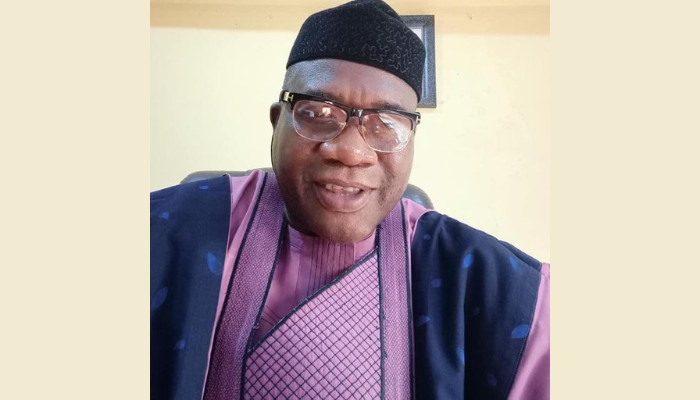
In Ogun State’s evolving political landscape, the Egba factor and the call for inclusive governance have once again taken centre stage. Senator Solomon Olamilekan Adeola (Yayi), maternally rooted in Abeokuta and currently representing Ogun West in the Senate, has emerged as a formidable contender whose achievements and progressive pedigree position him as the candidate to beat. In this interview, Kunle Somorin, a former Chief Press Secretary to the Governor of Ogun State, explores the realities of Ogun’s governorship race, the weight of history, and the promise of a politics of competence, capacity, and character over dynastic entitlement. BLESSING ADIMABUA brings the excerpts:
Since last weekend, the two leading contenders for Oke Mosan have been in Abeokuta consulting. How does the Egba bloc factor into this contest?
Since 1999, no governorship candidate has won Ogun State without Egba consolidation. Abeokuta South, Abeokuta North, Obafemi-Owode, Odeda, and the Egba fraction in Ifo together deliver over half a million votes. The Alake of Egbaland’s blessing carries symbolic and practical weight, signalling collective direction. Yayi’s maternal lineage ties him directly to Abeokuta, and his carnival-like homecoming capped by an audience with the Alake and all his principal was a reaffirmation of legitimacy.
Some critics call Yayi a “stranger” in Ogun politics. How valid is this narrative?
The “stranger” tag does not hold water. Yayi is maternally rooted in Abeokuta, and his carnival-like homecoming at Kemta and Ake reaffirmed his legitimacy. Anybody saying anything to the contrary is challenging the Oluwo of Kemta and the Alake-in-Council who have done their work in confirming the truth about his maternal ancestry and validated same. More importantly, his record as Senator for Ogun West speaks volumes. The paramount ruler of Yewa, Oba Olugbenle has done due process and reaffirmed that Senator Adeola is from Pahayi I Ilaro with homestead in Ishaga Orile, a settlement interesting located in Abeokuta North local government. The Olu honoured Yayi as his Aremo (prime son). He has delivered school blocks, helped upgrade a Polytechnic to University, built roads and street lights, boreholes, electrification projects, scholarships, and empowerment programmes across Yewa communities. His presence is tangible, his projects visible, and his consultations inclusive. A man who has toured all twenty local government areas, reconciling factions and delivering infrastructure, cannot be dismissed as an outsider.
But his arch-rival, Hon. Ladi Adebutu is also banking on Abeokuta and Egab votes. What distinguishes Yayi’s approach from rivals like Ladi Adebutu?
Again, and interestingly, I am from Agbo-Ile Loka in Oke Ijeun. Adebutu’s reliance on Ijeun endorsement is electorally narrow – a fraction of a fraction within Abeokuta South. By contrast, Yayi’s strategy is broad-based: touring all twenty local government areas, reconciling factions, consulting monarchs, and showcasing projects across Ogun. His inclusiveness reflects deliberate service, not dynastic entitlement. Within Abeokuta South, the quarters are Ake, Oke-Ona, Gbagura, Owu, and Ijeun.Except history changes, the Ijeun are aligned and integral part of the Ake section of Abeokuta. We have our villages outside of Abeokuta South, though. And of the roughly 180,000 registered voters in Abeokuta, Ijeun contributes perhaps 30,000–35,000 or less. Influential, yes; electorally dominant, no. The decisive Egba vote comes from the broader bloc, not from a single quarter. Beyond Abeokuta proper, Egba presence extends into Ifo Local Government, where a fraction of the population is Egba, alongside Awori. This adds another layer of Egba influence outside the traditional four quarters, and even there, the Egba vote tends to align with the broader consensus from Abeokuta. Were Adebutu’s endorsers in Ijeun “dyed-in-the-wool politicians” or merely “political animals” in the philosopher’s sense? Likely the latter. Chiefs in Ijeun may endorse for visibility or tactical advantage, but history shows Egba voters are not swayed by isolated endorsements. They vote with the collective, and the collective listens more to the Alake than to sub-quarter chiefs.
What is your take on Adebutu’s candidacy?
Adebutu hails from Iperu, the same town as the incumbent governor, Dapo Abiodun. For many, it is odious to expect the governorship to be turned into a family affair in an enlightened state of over seven million people. Ogun’s diversity demands rotation, inclusiveness, and balance – not concentration of power in one lineage. Moving to Odeda or Odogbolu as a constituency will not wash; the electorate sees through such manoeuvres. Names alone do not crown leaders in a democracy; capacity, competence, character, and goodwill of the people count more.
What about figures like Iyabo Obasanjo — do names alone sway the electorate?
Iyabo Obasanjo’s brief foray into Ogun politics showed that names alone do not crown leaders in a democracy. She was a pawn in the larger chess game, and her surname did not translate into enduring political capital. Ogun people are discerning; they value competence, capacity, character, and delivery over mere lineage.
What is Yayi’s promise to Ogun people?
Yayi pledges inclusive governance rooted in progressive ideals. His empowerment programmes, reconciliatory meetings, consultations with monarchs and stakeholders, and tours of all twenty local government areas show he is not just campaigning with promises but with deeds. His vision is for “no victor, no vanquished” — a politics of unity where every district feels represented. He has already demonstrated that even as Senator for Ogun West, he can deliver across Ogun Central and East. Ogun people’s solidarity with him is based on trust and proven delivery.
What achievements stand out from Yayi’s tenure as Senator for Ogun West?
Yayi has consistently prioritised grassroots development. He has been inclusive and cross-Senatorial in his churning out and facilitation of dividends of democracy. In Yewa North, he facilitated electrification schemes that lit up communities long neglected. In Sagamu, he awarded scholarships to hundreds of students, easing the burden on families. In Abeokuta, he built library, roads and school blocks, directly improving daily life. In Ijebu Ode, he launched empowerment programmes for traders and artisans, strengthening local economies. His legislative record reflects progressive ideals – supporting education, infrastructure, and inclusive policies. Even from the “narrow” position of representing Ogun West, he has delivered dividends of democracy across Ogun Central and East, proving his capacity to govern inclusively.
How does Yayi’s political pedigree shape his candidacy?
Yayi is a scion of Bola Tinubu’s political school, steeped in progressive (Awoist) ideology. He embodies the Action Group’s grassroots ethos and the APC’s modern progressive tradition. His politics is not about dynastic entitlement but about competence, capacity, and service. He campaigns with deeds, not promises, and his track record shows he can deliver inclusive governance across Ogun’s diverse districts.
What about Ogun East – can Yayi make inroads there?
Ogun East is already secured through his choice of a deputy – a woman of uncommon pedigree, respected across Ijebu and Remo, who can match Adebutu’s influence in Iperu and beyond. This strategic balance reflects inclusiveness across geography and demography. It signals that Yayi’s project is not Egba alone, but a pan-Ogun coalition that unites West, Central, and East.
How does Yoruba political philosophy frame Yayi’s rise?
In Yoruba imagination, Atobatele ko to j’oba — glorious as a king before mounting the throne — captures Yayi’s trajectory. His legitimacy is already affirmed by lineage, projects, and collective endorsement. His road to Oke Mosan is scripted not in jingles but in gestures, not in rallies but in reconciliations, not in promises but in projects.

Join BusinessDay whatsapp Channel, to stay up to date
Open In Whatsapp