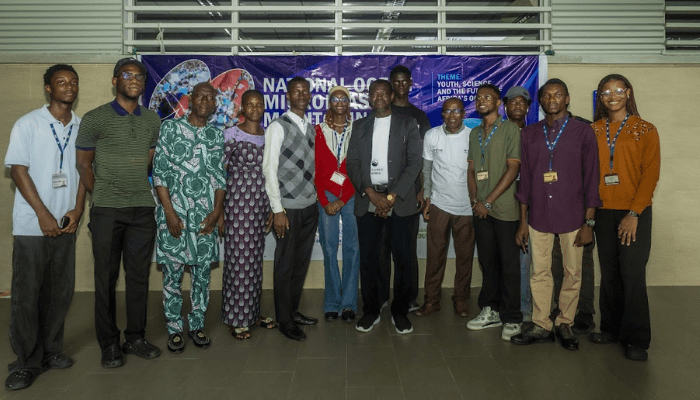
Youths of Africa are said to mobilise to join in the war against harms from the ocean and other water bodies, the most threatening being microplastics and nanoplastics.
Already, youths and some non-governmental organisations (NGOs) known as YOD-UNESCO have teamed forces to begin the war.
Microplastics are indicated as tiny plastic particles smaller than five millimetres that originate from the breakdown of larger plastic waste or are manufactured for products like cosmetics and textiles. They are said to be ubiquitous in the environment and are increasingly found in human blood, tissue, and vital organs.
Studies show that they come from secondary Microplastics (created when larger plastic items such as bottles, bags, and packaging degrade over time in the environment due to sun exposure and weathering. Primary microplastics are said to be intentionally manufactured particles, such as synthetic clothing fibres (e.g., polyester) and microbeads in personal care products.
They enter the body through diet and drinking water: They infiltrate the food chain, accumulating in fish and salt, and are present in bottled and tap water. Some are through inhalation.
The health impact is said to include toxicity, biological disruption and environmental accumulation (because plastics do not biodegrade in the open environment).
Now, Re-Cycleme Solutions, a youth-led climate tech startup solving the problem of plastic pollution in Africa through (Technology, Research and Youth-led Climate Activism) has launched the National Ocean Microplastics Monitoring Initiative (NOMMI) through a multi-stakeholder collaboration with YOD UNESCO (Youth Orientation for Development), The Living Green Club of Pan-Atlantic University, Anchor University Lagos, Caleb-British International Secondary School Lekki, OceanHUB Africa, Ocean Diagnostics and Fedrok AG.
The Launch ceremony with the CEO of Re-Cycleme Solutions, the 19-year old Chukwuleta Isaac Chukwuemeka enlightening 60 participants, students, faculty, teachers etc. on what Microplastics were, the effects of microplastics on public health, coastal ecosystems and economic activities.
Isaac highlighted that if according to western research, humans consumed about 550-880 microplastics a day, that the data and seeming effect in Africa would be double.
He however noted that the fact he stated was not to scare his audience but rather let them know that they are gathered there to mark the beginning of a solution that will mitigate this and position African Youths as active contributors to environmental pollution mitigation.
Through the National Ocean Microplastics Monitoring Initiative (NOMMI), a youth-driven citizen science network that provides accurate data on microplastics pollution, trends and hotspots, something can be done.
He said: “These data are compiled into a research output/paper and are conveyed to relevant government authorities to enact laws against plastic pollution.”
After his speech, Ibukunoluwa Afolabi, president of the Living Green Club, courtesy of Pan-Atlantic University, gave a speech on their activities on campus, highlighting projects like the Eco-Alchemy (a plastic art walk-through on campus), The Green Innovation Challenge (ECO-HACK) etc, and talked on the power of Youth engagement. He said, beyond advocacy, campaigns and sitting in rooms to discuss environmental sustainability.
He said African youths must be given a platform to scale, mentored, and seen. Re-affirming the commitment of Re-Cycleme Solutions that African Youths must be responsible for their present actions, inactions, thought, desire in order to protect their future.
There was a speech Imogen Napper (Scientific Lead of NOMMI), who is a marine scientist and researcher and is often called the “plastic detective”. She is the current Regional Blue Science and Business Manager at IUCN ESARO. Last year she was named among the world’s most influential researchers, as her research on micro-beads in cosmetics led to a nationwide ban on micro-beads in cosmetics all over Europe.
Imogen, enlightened the participants on plastic pollution and how it has changed the environmental landscape of the earth. She talked about her research and the importance of engaging in scientific activities. In her closing remark she urged everyone to make a difference, saying if they think being too small is an excuse, they should try sleeping with a mosquito.
Emmanuel Ejiogu, the president of YOD UNESCO, talked on the theme “Youth, Science and the Future of Africa’s Ocean”.
Ejiogu, and a UNESCO ambassador, said frica’s oceans and coastal ecosystems are among the continent’s most valuable environmental and economic assets. They support fisheries, transportation, tourism, biodiversity, climate regulation, and the livelihoods of millions of people across coastal communities.
Details:
Yet despite their importance, these ecosystems are facing increasing pressure from pollution, unmanaged waste, rising temperatures, habitat destruction, and the growing presence of plastics and micro-plastics within marine environments.
One of the major environmental realities confronting Africa today is that while these problems continue to grow, the systems required to properly monitor, understand, and respond to them remain limited across many parts of the continent.
Environmental science, particularly within areas such as marine research, ocean monitoring, and environmental data collection, is still developing within many African institutions and communities.
This is why the role of young people is becoming increasingly important.
Solution:
Africa possesses one of the youngest populations in the world. Within this generation exists enormous potential for scientific innovation, environmental leadership, technological development, and sustainability-driven problem solving.
Across universities, secondary schools, innovation hubs, and grassroots communities, young Africans are showing increasing interest in climate science, environmental sustainability, artificial intelligence, robotics, renewable systems, and data-driven innovation.
However, interest alone is not enough. The future of Africa’s ocean depends on creating practical systems that allow young people to actively participate in environmental science and solution-building.
Science must move beyond theory and become something young Africans experience directly through research, field activities, environmental observation, data collection, innovation programmes, and scientific collaboration.
When young people are given opportunities to participate in real scientific processes, they begin to see themselves not simply as students, but as contributors to national and continental development.
This is why initiatives such as the National Ocean Microplastics Monitoring Initiative (NOMMI) are significant. Through practical field sampling, environmental monitoring, scientific documentation, and public engagement, young people are being introduced to the realities affecting Africa’s marine ecosystems while also developing the skills required to respond to them.
The long-term importance of this approach extends beyond environmental awareness alone. It contributes to building localized environmental intelligence systems capable of generating African data for African realities. It also creates opportunities for future innovation in areas such as pollution monitoring technologies, AI-assisted environmental systems, waste recovery infrastructure, water quality intelligence, and scalable sustainability solutions designed specifically for African coastal conditions.
The future of Africa’s ocean will not only be determined by governments or international institutions. It will also be shaped by whether this generation of Africans chooses to build the scientific culture, environmental systems, and innovation capacity necessary to protect and sustain our ecosystems for decades to come.
If Africa is to solve its environmental challenges effectively, then African youth must become active participants in research, monitoring, innovation, and policy conversations surrounding sustainability and ocean protection.
Ultimately, the future of Africa’s ocean must be researched by Africans, monitored by Africans, and protected by Africans.

Join BusinessDay whatsapp Channel, to stay up to date
Open In Whatsapp