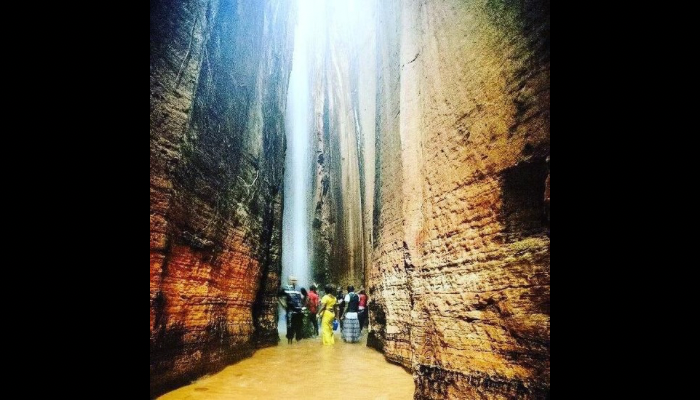
Away from the rich crude oil resources, Nigeria has huge tourism potential to brag of.
The country has over 850 colourful traditional festivals mapped out, boasts 1,400 kilometres of coastline, 12,000 hotel rooms and 37 airports and airstrips.
Despite the huge potential, the country, according to Obi Asika, director-general, National Council for Arts and Culture (NCAC), remains at the very beginning of unlocking a multi-billion-dollar cultural tourism economy.
Also, the director general insisted that the country’s tourism ecosystem is stronger than widely perceived and far beyond the festivals, coastline and hotels.
Asika, a creative, entertainment and content expert, who spoke recently at the Naija7Wonders conference, insisted that Nigeria’s creative and cultural assets could rival traditional revenue sources, especially oil, if properly packaged, digitised and monetised.
“We have indexed over 850 festivals already. If you brand them, merchandise them, build products around them, this is a multi-billion-dollar segment,” he said.
He added that beyond traditional festivals, Nigeria’s contemporary cultural events could push the total number of festivals above 3,000 when fully counted and structured.
According to him, Nigeria’s tourism ecosystem is stronger than widely perceived. “We have 37 airports and airstrips. We have 12,000 hotel rooms. We have 1,400 kilometres of virgin beach, less than 20 kilometres properly developed. The base assets are there,” he said.
Asika also revealed that hotel occupancy in major Nigerian cities averages between 75 and 80 percent, while an estimated 100 million Nigerians travel at least 100 kilometres annually — meeting the global definition of domestic tourism.
He announced that the Federal Executive Council has approved a national framework known as “Niger Season,” designed to calendarise cultural and tourism events across all 36 states and the Federal Capital Territory to position Nigeria as a 12-month destination.
The initiative, he said, seeks to integrate federal and subnational efforts while encouraging private sector investment in festivals, heritage sites and waterfront development.
“The biggest resource Nigeria has is the Nigerian,” Asika stated. “Once we back the Nigerian, we will win.”
In a related development, Asika also defended pricing spikes during Nigeria’s Detty December season, noting that hotel rates in global cities such as New York can rise by as much as 600 percent during peak events.
Asika, who aired these views while speaking at the Naija7Wonders conference, said that Nigerians should avoid excessive negativity about the festive season pricing.
“Anywhere in the world that becomes hot, prices go up. During the United Nations General Assembly in New York, prices can rise 600 percent. That is a global reality,” he said.
He maintained that Detty December did not emerge by accident but is the result of years of investment by both private promoters and state governments. He referenced the early “One Lagos” initiative launched in 2015 and longstanding events such as the Calabar Carnival, now over two decades old.
According to Asika, festive activity during the last Christmas season extended beyond Lagos, with significant participation in Enugu, Abuja, Owerri, Jos, Port Harcourt, Uyo and Calabar.
He cited industry data estimating Lagos nightlife alone generated $900 million in 2024. Extrapolated across roughly 40 major cities nationwide, he suggested that nightlife could represent a $3 billion segment of the economy.
Asika acknowledged challenges such as traffic congestion in Lagos but commended subnational governments for taking ownership of event coordination and security planning.
At the federal level, he disclosed that a Detty December Committee — comprising ministers of interior, power, security agencies including DSS and NIA, and state representatives — had been formed, though approvals came late in the 2024 cycle. He said earlier coordination is planned for future editions.
He stressed that culture remains the authentic driver of tourism. “Culture and tourism go hand in hand. When the experience is authentic, people come,” he concluded.

Join BusinessDay whatsapp Channel, to stay up to date
Open In Whatsapp