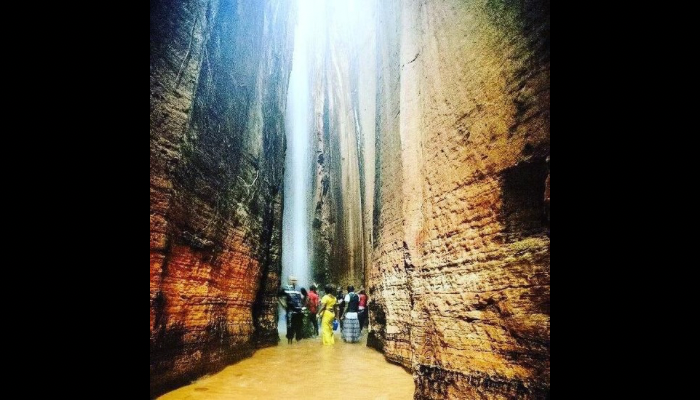
Nigeria does not have a tourism attraction problem. Nigeria possesses some of the most diverse tourism assets in Africa- cultural festivals, beaches, mountains, waterfalls, cuisine, entertainment ecosystems, religious tourism, conference tourism, and one of the continent’s largest domestic travel markets. Yet despite these enormous advantages, tourism remains one of the most underperforming sectors of the Nigerian economy.
A major part of the answer lies within one of the weakest institutions in Nigeria’s tourism ecosystem – State Tourism Boards. Across Nigeria’s 36 states and the FCT, tourism boards, tourism agencies, tourism corporations, and tourism ministries exist in different forms. On paper, Nigeria appears to possess a nationwide tourism governance structure. In reality, many of these institutions are either inactive, underfunded, politically manipulated, poorly staffed, or almost completely invisible. In a few instances, the Commissioners and the core ministry staff are at daggers drawn with the tourism boards.
The unfortunate truth is that many tourism boards in Nigeria exist merely as government offices rather than functioning destination management institutions. Tourism boards are supposed to drive destination development, tourism investment, destination branding, tourism intelligence, tourism marketing, standards enforcement, stakeholder engagement, tourism research, and long-term planning. Instead, many have become ceremonial structures with little measurable impact on tourism growth.
One of the biggest problems is the absence of coherent tourism planning across many states. This explains why several states continue to organise festivals without building destinations. They celebrate events without creating tourism economies. They launch tourism slogans without establishing tourism strategies. They commission tourism offices without developing tourism products. The result is predictable: tourism remains disconnected from economic development.
Lagos State offers a striking example. Despite being Nigeria’s commercial capital and arguably the country’s strongest tourism and entertainment destination, industry stakeholders have repeatedly raised concerns over the delayed institutional implementation of tourism governance frameworks. The 2019 Lagos State Tourism Promotion Agency Law, passed by the Lagos State House of Assembly and signed into law is yet to be implemented.
If Lagos, with its enormous advantages, still struggles with institutional coordination, one can only imagine the situation in states where tourism receives little policy attention.
Cross River State presents another important lesson. For years, Cross River was celebrated as Nigeria’s tourism capital through initiatives such as the Calabar Carnival, Tinapa Resort, and Obudu Mountain Resort. During its peak years, the state demonstrated how tourism could shape destination identity and attract national attention. However, stakeholders have increasingly raised concerns over declining momentum, infrastructure deterioration, inconsistent management, and insufficient reinvestment in tourism assets. The challenge reflects a recurring Nigerian problem: creating tourism projects without sustaining tourism institutions.
The problem extends beyond Lagos and Cross River. Research conducted on tourism governance in South-Eastern Nigeria found that tourism development in states such as Imo, Ebonyi, Anambra and Abia has been weakened by low investment in tourism boards, poor public-private partnerships, weak institutional coordination, and limited involvement of tourism professionals within governance structures.
In Imo State, industry stakeholders have repeatedly raised concerns about the operational capacity of the state tourism structure, particularly regarding a shortage of professionally trained personnel, weak institutional visibility, limited tourism programming, low staff morale, and poorly equipped administrative systems required to drive modern tourism development. Many operators within the sector describe the tourism board as largely neglected and institutionally marginalised despite the state’s strategic location and strong hospitality presence. Stakeholders further argue that tourism governance in the state has not evolved sufficiently to position Imo competitively within Nigeria’s tourism landscape, while the absence of strong political commitment towards structured tourism governance has further limited the sector’s growth and institutional development.
In Delta State, many hospitality and tourism stakeholders believe the tourism ecosystem has gradually lost some of the visibility and institutional momentum it once enjoyed, despite the state’s enormous cultural, entertainment, and hospitality potential. Several operators argue that stronger destination marketing, institutional coordination, and tourism development planning are urgently required to reposition the state competitively. There is also growing sentiment within the industry that the State Tourism Board requires greater institutional attention, operational strengthening, and possibly a more independent framework capable of driving tourism development beyond the limitations of regular ministerial bureaucracy.
In Ebonyi State, studies examining tourism development challenges identified poor funding, shortage of qualified personnel, weak government commitment, and absence of local tourism structures as major obstacles to tourism growth. These findings expose a dangerous pattern across many states.
In Kebbi State, industry observers point to another structural challenge within tourism governance. The tourism board reportedly operates under the department of tourism in the Ministry of Commerce, Industry, Cooperatives and Tourism, with limited institutional independence and no dedicated budgetary structure beyond periodic cash allocations. Stakeholders argue that such arrangements make long-term tourism planning, destination development, marketing, research, and sustainable sector growth extremely difficult.
Appointments to tourism agencies frequently reflect political considerations rather than professional competence. Many tourism boards lack destination managers, tourism economists, tourism marketers, researchers, hospitality professionals, or investment specialists.
The consequences are visible everywhere. Many states cannot provide reliable tourism statistics. Many tourism boards have no destination marketing strategy. Many maintain weak digital visibility. Many have little engagement with hotel operators, airlines, tour operators, hospitality investors, or tourism educators. Several states cannot accurately provide annual visitor arrivals, tourism revenue contribution, tourism employment figures, or hotel occupancy trends.
How can tourism be developed without data? How can investment be attracted without intelligence? How can destinations compete without a strategy?
The governance vacuum becomes even more dangerous when combined with weak regulation. Across several states, hotel inspections are inconsistent, service standards are weakly monitored, and tourism establishments operate with little quality assurance oversight. The result is a hospitality environment where service quality varies dramatically, and accountability is often absent. Industry experts have repeatedly identified fragmented laws, overlapping regulatory structures, weak enforcement capacity, poor institutional coordination, and underfunding as major barriers to tourism development in Nigeria.
While insecurity remains a major challenge affecting tourism growth in Nigeria, it cannot entirely explain the sector’s underperformance. Countries such as Egypt have also faced terrorism threats, regional instability, and security concerns over the years, yet continue generating billions of dollars annually from tourism through stronger destination management systems, aggressive tourism marketing, institutional coordination, and sustained investment in tourism governance.
The difference is simple: successful tourism economies do not rely solely on attractions. They build strong institutions capable of managing risks, protecting destinations, attracting investment, and sustaining visitor confidence.
Nigeria’s tourism challenge is therefore not primarily about attractions. It is about governance.
Countries with successful tourism economies understand that tourism boards are not event committees. They are destination development institutions. They coordinate strategy. They attract investment. They collect data. They market destinations. They regulate standards. They build partnerships. They stimulate economic ecosystems.
Unfortunately, many Nigerian tourism boards have not evolved into these roles. Instead, tourism is too often reduced to cultural pageantry, political ceremonies, and occasional government celebrations. Meanwhile, countries such as Rwanda, Kenya, Morocco, and South Africa continue strengthening tourism governance structures and improving destination competitiveness.
Nigeria cannot continue relying solely on its natural and cultural assets. Resources alone do not build tourism economies. Institutions do.
The future of Nigerian tourism will depend largely on whether state governments are willing to reform tourism governance, professionalise tourism boards, strengthen public-private partnerships, invest in destination management, and place competent industry professionals in leadership positions.
Until that happens, Nigeria may continue possessing world-class tourism potential while producing below-average tourism outcomes.
And until State Tourism Boards become accountable, professional, data-driven, and development-focused, Nigeria’s tourism potential may remain exactly what it has been for decades- potential.
Diala is a hospitality development strategist, tourism advocate, and Founder of Hotel Human Capital Strategy. He is also the Convener of the International Hospitality & Tourism Eco-Sustainability Forum (IHTEF Africa), a pan-African platform focused on hospitality development, tourism growth, human capital advancement, and industry policy conversations across Africa. [email protected]

Join BusinessDay whatsapp Channel, to stay up to date
Open In Whatsapp