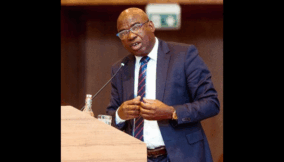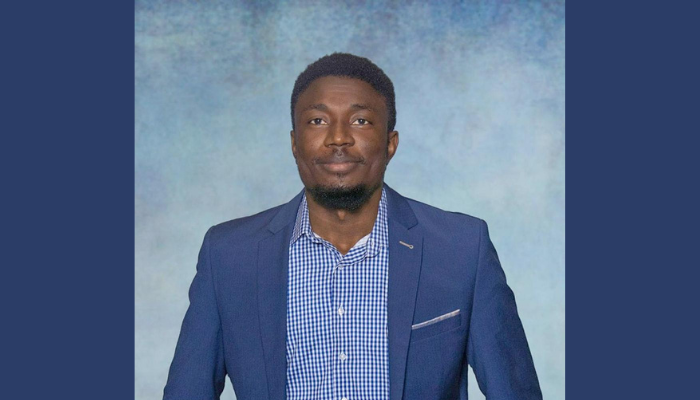
Daniel David Bolorunduro is the founder of DanDavid Agri Solutions Limited, a food security advocate, and an agricultural researcher, whose academic journey has taken him to three countries (Nigeria, Russia, and the United States). He is currently doing his master’s degree in the Department of Agricultural Economics and Rural Sociology, Auburn University, Alabama, United States, where he is a graduate research assistant. In this interview with REMI FEYISIPO, he spoke about the Nigerian agricultural sector, his work, and other issues. Excerpts:
How would you rate Nigeria’s government commitment to agriculture?
Nigeria’s commitment to agriculture is strong in intention but inconsistent in execution, particularly at the grassroots level. While policies and programmes exist, implementation gaps limit their effectiveness. Key areas for improvement include better coordination across government levels, stronger monitoring systems, and a more integrated approach that goes beyond production.
Investment in rural infrastructure, development of risk management tools, improved access to finance, and stronger extension services are all critical. Ultimately, agriculture needs to transition from a fragmented system to a coordinated, market-driven one that delivers measurable outcomes for farmers.
How can Nigerian youths begin to see agriculture as a lucrative sector?
The perception of agriculture as unprofitable is largely due to how it is presented. It needs to be reframed as agribusiness rather than subsistence farming.
Agriculture offers opportunities across the entire value chain — processing, logistics, marketing, and distribution — not just production. This makes it accessible to individuals with diverse skills and interests. Risk reduction is also critical. Access to insurance, financing, and reliable market systems can significantly improve confidence in the sector. When uncertainty is reduced, participation increases.
Scalability is another important factor. Cooperative systems, shared infrastructure, and digital tools can lower entry barriers and allow small operations to grow efficiently. Finally, visibility matters. Highlighting successful agribusiness models can shift perceptions and demonstrate that agriculture can be both profitable and scalable.
What three problems would you like to solve in Nigeria using your agriculture and business background?
I would focus on three interconnected challenges that limit the performance of Nigeria’s agricultural sector.
The first is income instability driven by production risk. Agriculture in Nigeria remains highly vulnerable to climate variability, and farmers often face unpredictable yields and incomes. Addressing this requires well-designed risk management systems, including insurance mechanisms and structured support that stabilise outcomes and encourage investment.
The second is weak and fragmented value chains. A significant portion of agricultural produce is lost after harvest due to poor storage, transportation, and processing systems. Strengthening value chains through better infrastructure and coordination would improve efficiency and allow farmers to capture more value from their production.
The third is limited access to finance. Many farmers struggle to obtain affordable credit, and when financing is available, it is often not aligned with agricultural cycles. Developing financial systems that integrate risk management and flexible repayment structures would make it easier for farmers to invest and scale operations.
Addressing these issues together creates a more resilient, productive, and market-oriented agricultural system.
How would you invest a N1billion agribusiness grant in Nigeria?
I would structure the investment across four key pillars: production support, value chain infrastructure, risk and finance systems, and capacity building.
This integrated approach ensures that improvements in one area reinforce others. The goal would not be short-term spending, but building a self-sustaining system that continues to generate impact over time.
How would you describe your academic journey from Nigeria to Russia and now the United States?
My academic journey reflects a deliberate progression shaped by curiosity, adaptability, and a deep interest in how economic systems influence agricultural outcomes. Each stage has contributed to how I think about policy, data, and real-world impact.
I began at the Federal University of Technology, Akure (FUTA), where I studied Agriculture and Resource Economics. Growing up in Nigeria, I was constantly exposed to the realities farmers face — uncertain weather conditions, limited access to credit, and policy inefficiencies. My undergraduate training provided a strong foundation in economic theory and resource management, but more importantly, it sparked my interest in how policies, such as subsidies, credit systems, and insurance, affect farmer behaviour and welfare. I began to realise that many agricultural challenges are not just technical, but structural.
To broaden my perspective, I pursued a master’s degree in High Technology Business Management at Samara State University in Russia. This experience exposed me to a different economic environment and strengthened my understanding of finance, strategy, and organisational decision-making. It allowed me to connect agricultural systems with broader business and institutional frameworks, particularly how firms and markets operate beyond the farm level.
However, I realised my core interest remained in policy-oriented and data-driven research. This led me to Auburn University in the United States, where I am currently focused on econometrics and applied policy analysis. My research examines how crop insurance subsidy intensity affects farmers’ net indemnities in the southeastern US, with a focus on understanding real income outcomes.
Overall, my journey has evolved from awareness in Nigeria, to systems thinking in Russia, to rigorous empirical analysis in the United States — each stage refining my focus on improving agricultural policy and outcomes.
Tell us more about your scholarly work at Auburn University and its impact.
My research focuses on understanding how agricultural policies — particularly crop insurance and subsidy programmes — translate into real economic outcomes for farmers.
Using county-level data combined with weather variables such as temperature, precipitation, and drought indicators, I analyse how subsidy intensity affects net indemnity per acre. Unlike many studies that focus on participation rates, my work evaluates outcomes — specifically, whether these programmes actually stabilise farmer income after accounting for premiums, subsidies, and losses.
One key finding is that higher subsidy intensity significantly increases realised indemnities, suggesting that policy design directly affects financial outcomes. I also find that revenue-based insurance plans tend to amplify these effects more than yield-based plans, likely because they account for both price and production risks. Additionally, subsidies appear to enhance resilience during adverse conditions such as drought, by influencing farmers’ ex ante decisions like coverage levels and plan selection.
The broader impact of this work lies in improving policy design. It provides evidence that subsidy structures matter, highlights the importance of targeting, and shifts the conversation from participation to actual welfare outcomes. Ultimately, my goal is to contribute to more efficient, resilient, and evidence-based agricultural systems that better support farmers under uncertainty.
What does your company, DanDavid Agri Solutions Limited, do?
DanDavid Agri Solutions Limited is an integrated aquaculture business focused on catfish production, processing, and fingerling supply. The company operates across multiple segments of the value chain — producing fish for both domestic and export markets, processing by-products into fish oil, and supplying high-quality fingerlings to smaller farmers. This integrated model improves efficiency, reduces waste, and increases overall value capture.
What distinguishes the company is its systems-based approach. Production, processing, and distribution are not treated as separate activities but as interconnected components of a coordinated system. Performance metrics such as growth rates, feed efficiency, and output quality are used to guide decision-making and maintain consistency.
Although I am currently in the United States, I remain actively involved as an absentee CEO. I oversee operations through structured reporting systems and independent audits, ensuring accountability, transparency, and continuity while contributing to long-term strategic direction.
You once said, “Wealth is time.” Can you explain what you mean by this?
True wealth is not just about money — it is about control over your time. A person may earn a high income but have no flexibility, while another may earn less income but have the ability to decide how they spend their time. The latter has a different kind of wealth — freedom.
In my case, my business operates through structured systems, allowing me to focus on research and long-term goals while maintaining oversight. That flexibility represents a form of wealth that goes beyond income. Money is important, but time is the one resource that cannot be replaced.
Do you see yourself as a leader? What can youths learn from Tony Elumelu that you commented on one of his leadership nuggets on LinkedIn?
Yes, but I define leadership in terms of responsibility, structure, and impact, rather than position. Leadership involves building systems that function effectively, even in one’s absence. It also involves taking initiative, maintaining accountability, and delivering consistent results.
From Tony Elumelu’s perspective, key lessons include discipline, execution, accountability, adaptability, and empowering others. Leadership is not just about ideas — it is about implementation and sustained impact.
What were the findings of your inflation and technology paper?
The study found that high and unstable inflation negatively affects technological development by creating uncertainty and discouraging long-term investment. Inflation reduces the real value of capital and increases borrowing costs, limiting innovation. However, stable and predictable inflation does not necessarily hinder development.
I would rate Nigeria’s technological progress at 6 out of 10 — strong potential, but constrained by structural challenges such as infrastructure gaps and economic instability.
What can Nigerian universities learn from those in the US in terms of agricultural studies and innovation?
Key improvements include adopting problem-based learning, integrating data and analytical tools, strengthening industry partnerships, and emphasising entrepreneurship.
Agriculture should be taught as a complete system —from production to markets — while encouraging interdisciplinary collaboration. These changes would make education more practical, relevant, and attractive.
How is life in the US treating you, and what does the American Dream mean to you?
Life in the U.S. has been both challenging and rewarding. The academic environment emphasises critical thinking, independence, and evidence-based analysis.
To me, the American Dream represents opportunities — the ability to grow, create value, and pursue goals through effort and structure. I would say I am in the process of building it — developing skills, conducting meaningful research, and positioning myself to contribute to long-term impact.
Beyond academics, living in the U.S. has also required a level of personal growth and adaptation. Navigating a new environment, culture, and system has strengthened my resilience and discipline. It has also exposed me to diverse perspectives, which has broadened how I think about problems and solutions, especially in agriculture and economic development.
The experience has reinforced the importance of consistency and long-term thinking. Progress here is often incremental but structured, and that has influenced how I approach both my academic work and career planning. Being in an environment where ideas are tested, refined, and applied has been particularly valuable.
Ultimately, the journey is not just about achieving success, but about building the capacity to create meaningful and lasting impact over time. It has also shaped my perspective on opportunities, showing me that access alone is not enough, that what matters is how effectively one utilises it to create value, contribute meaningfully, and build something that extends beyond individual achievement.

Join BusinessDay whatsapp Channel, to stay up to date
Open In Whatsapp