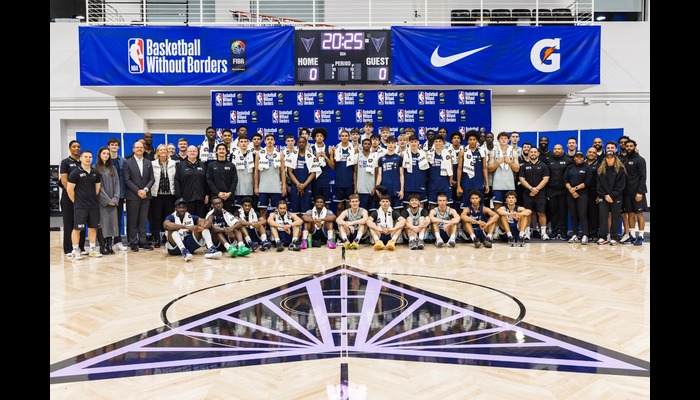
When the NBA and FIBA announced a restructured format for Basketball Without Borders (BWB) ahead of NBA All-Star 2026, the headline appeared routine.
Forty elite high-school prospects from 29 countries. Three days in Los Angeles. Testing, scrimmages, life-skills seminars.
But beneath the surface, the real story was structural. The NBA is redesigning its global talent pipeline.
For 25 years, Basketball Without Borders operated through regional camps — Africa, Europe, Asia, the Americas.
The newly launched “BWB Next Up” camps will replace regional formats, creating two annual global pools:
• Top 80 male prospects outside the U.S.
• Top 80 female prospects outside the U.S.
From those pools, the top performers advance to the flagship BWB All-Star camp held during NBA and WNBA All-Star weekends.
This is not just a scheduling adjustment. It is vertical integration of international scouting.
Instead of scattered regional exposure, the NBA is building a centralized evaluation funnel — a clearer pathway from grassroots to
Opening night of the 2025–26 NBA season featured a record 135 international players. More than 50 were former BWB campers.
That statistic is not nostalgic, rather its proof of pipeline efficiency.
Among 2026 All-Stars alone:
• Shai Gilgeous-Alexander (Canada)
• Jamal Murray (Canada)
• Pascal Siakam (Cameroon)
• Deni Avdija (Israel)
All passed through BWB systems. In business terms, BWB is not a charity initiative. It is upstream talent acquisition.
The Competitive Implication for Africa
For African prospects — including Nigerian players — the new structure creates both opportunity and pressure.
Opportunity: A clearer, merit-based progression to NBA All-Star visibility.
Pressure: A more competitive global pool. No regional insulation.
Where previous BWB Africa camps guaranteed continental representation, the “Next Up” format places prospects into a truly global ranking ecosystem. Evaluation becomes comparative, not geographic.

Join BusinessDay whatsapp Channel, to stay up to date
Open In Whatsapp