Experts in the housing sector have expressed fears that more illegal estates may be on the way in Lagos, Nigeria’s commercial nerve centre, due to the state government’s recent decision to increase land transaction fees by 300 percent.
The experts explained that these new fees, which rose to N1billion in some cases, will not only discourage new investments in housing but also compel some developers to circumvent the necessary approvals and documentation.
They recalled that in August 2025, the state’s Ministry of Physical Planning and Urban Development shocked housing sector stakeholders by announcing that about 176 illegal estates in the Eti-Osa, Epe, Ibeju-Lekki, and Ajah axis of the state had been blacklisted after being deemed illegal by the state government.
“This number is quite huge, and many more will be added to it with the recent increase in transaction fees by the state government,” Timothy Nubi, a Professor at the Faculty of Environmental Sciences of the University of Lagos, noted.
Read also: Lagos restates commitment to combat illegal drug store operators
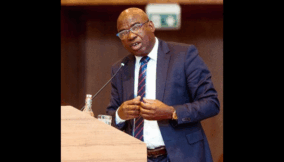
Nubi’s views were contained in his keynote speech at a one-day real estate conference hosted by Exclusive Estates with the theme, ‘Exploring Redevelopment Investment Opportunities in Lagos Mainland Real Estate Market.’
Ladi Lewis, an architect, wondered what the state government hopes to achieve with that increase beyond revenue drive, adding that the fees increase came at a time when investors and developers were expecting a downward review of the old fees to encourage more housing developments in the state.
Oluwole Sotire, the Permanent Secretary of the Office of Physical Planning, who announced the illegal estates, explained that the owners failed to obtain layout approvals from the ministry.
Nubi noted that the developers of the identified illegal estates did not have the approvals as a matter of choice, but due to affordability constraints, lengthy and expensive processes, among other factors, which is why, according to him, the new fees might create more problems than they would solve.
A couple of weeks ago, Lagos announced significant increases in land transaction fees, effective May 1, 2026. This adjustment, according to the state government, is due to the soaring property values in the last two decades, pointing out that the fees had remained unchanged between 2005 and 2015.
The increase in fees will affect various statutory charges, including Governor’s Consent fees, Stamp Duties, Registration fees, Capital Contribution Levy, Charting charges, and other miscellaneous land-related expenses.
The hike is particularly felt in high-value areas such as Lekki Phase 1 and Banana Island, where property owners and investors will face much higher perfection costs. For instance, a typical Governor’s Consent transaction in Lekki Phase 1, which cost about ₦18 million in 2015, will now cost roughly ₦70 million in 2026.
In Banana Island, an exclusive enclave in the estate, buyers of luxury properties valued at about N10 billion could potentially pay between N700 million and N1 billion as perfection and other statutory costs.
The government’s decision to revise the fee structure to align with current property valuations is already eliciting comments from real estate developers, investors, and potential homeowners, many of whom believe the additional charges could further increase hurdles to property acquisition in Lagos’ already costly housing market.

Join BusinessDay whatsapp Channel, to stay up to date
Open In Whatsapp