…But expert says those against action on Refinery are enemies of present administration
A leading group of community advocates and environment experts has demanded that details of the deal with the Chinese for the revamp of the two refineries be made open.
The group also called on the NNPCL, the Ministry of Petroleum Resources, and the Chinese partners to establish a Community Stakeholders Engagement Forum.
The experts said the forum should include traditional leaders, youth representatives, civil society, and women groups from host communities for quarterly briefings and interactions to ensure a better working relationship, mutual understanding, community ownership and social security to mitigate crisis.
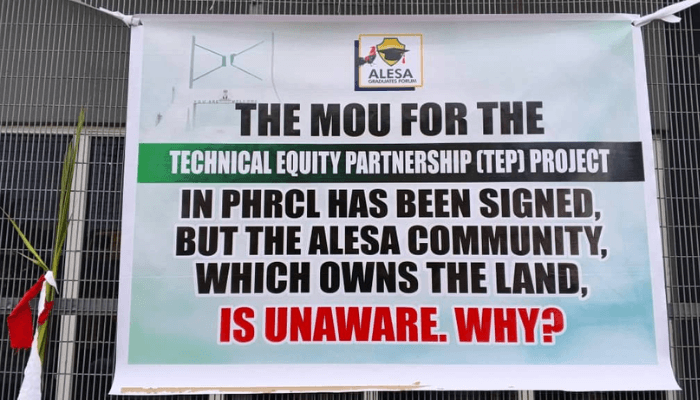
This is as the host communities who have laid siege at the gates of the Port Harcourt Refinery until government listened to them, has demanded for reconstitution of the Joint Community Relations Committee (JCRC) that should interface between the host communities and the NNPCL.
In a statement after day one of the siege, Fyneface Dumnamene Fyneface, Executive Director, Youths and Environmental Advocacy Centre (YEAC-Nigeria), acknowledged the recent signing of a Memorandum of Understanding (MoU) between the Nigerian National Petroleum Company Limited (NNPCL) and two Chinese firms — Sanjiang Chemical Company Limited and Xinganchen (Fuzhou) Industrial Park Operation and Management Co. Ltd. — aimed at reviving the Port Harcourt and Warri Refineries.
The statement said: “We recognize that a functioning domestic refining sector is critical to reducing Nigeria’s dependence on imported fuel, cutting clandestine subsidy costs, creating jobs for Nigerians, particularly youths in the Niger Delta and the fight against oil theft and artisanal refineries.
“However, YEAC-Nigeria stresses that the success and sustainability of this MoU must not be measured only by the resumption of crude refining. It must also be measured by transparency, environmental responsibility, and direct benefits to host communities.”
Stating key positions, YEAC-Nigeria demanded for transparency and accountability, saying: “The full terms of the MoU between NNPCL, Sanjiang Chemical Company Limited, and Xinganchen (Fuzhou) Industrial Park Operation and Management Co. Ltd. must be made public in line with the Petroleum Industry Act (PIA) 2021, the Nigerian Extractive Industries Transparency Initiative (NEITI) framework and Freedom of Information Act, 2011.
“Nigerians deserve to know the cost structure, financing model, ownership arrangement, roles of both Chinese firms, and the projected timeline for refinery operations because secrecy breeds suspicion and undermines public trust.”
YEAC-Nigeria demanded for community inclusion and youth employment, saying host communities in Eleme, Okrika, Warri South, and surrounding areas must be meaningfully engaged from planning to implementation. “We insist on a clear local content plan that prioritizes skilled and unskilled employment for Niger Delta youths to provide a lawful alternative to illegal refining and reduce pipeline vandalism.”
The statement went on: “Technology and safety standards must be upgraded with modern, low-emission technology that meets international environmental safety standards.
“The era of gas flaring and toxic discharges into waterways and atmosphere must end. We call on the Nigerian Upstream Petroleum Regulatory Commission (NUPRC) and the National Environmental Standards and Regulations Enforcement Agency (NESREA) to ensure strict compliance and independent monitoring of both NNPCL and its Chinese partners on these refineries rehabilitation projects.”
They said energy transition must not be ignored. “While reviving the refineries addresses immediate energy needs, Nigeria must not lose sight of the global energy transition process. This investment should also include a roadmap for integrating cleaner energy solutions and training youths for jobs in renewable energy and green technology.
“Advocacy Centre remains committed to monitoring this process and will continue to hold all parties responsible to account for the people of the Niger Delta.”
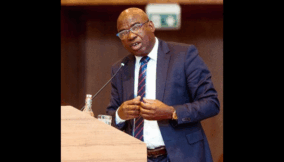
Meanwhile, Joseph Obele, an energy expert and University lecturer has described the growing opposition against the refinery partnership deal involving Chinese investors as politically motivated.
In a statement in Port Harcourt, Obele, lecturer in Energy Marketing at Ignatius Ajuru University of Education, alleged that many of the critics were opponents of President Bola Ahmed Tinubu’s economic reforms and supporters of monopoly in Nigeria’s downstream petroleum sector.
Reacting to recent comments made in the public space by some members of the Organised Private Sector of Nigeria (OPSN), Obele said while constructive criticism was healthy in a democracy, outright opposition to new refinery investments without allowing the process to mature could discourage foreign direct investment and slow Nigeria’s industrial progress.
According to Obele, the proposed partnership with Chinese firms is aimed at expanding Nigeria’s refining capacity, creating jobs, attracting foreign direct investment, boosting technology transfer, and strengthening the nation’s energy security.
He noted that countries seeking industrial growth and economic transformation cannot afford to reject foreign investments capable of reviving critical sectors such as refining, petrochemicals, and energy infrastructure.
Obele argued that some individuals and groups attacking the agreement were uncomfortable with the opening up of the sector to broader participation because they have benefited for years from monopoly, import dependency, and limited competition within the petroleum industry.
He further stated that President Tinubu’s administration has continued to encourage international partnerships and private sector investments as part of efforts to reposition Nigeria’s economy and end decades of inefficiency in the oil and gas sector.
According to him, the entry of additional refinery investors into Nigeria will help stabilize fuel supply, reduce pressure on foreign exchange, encourage healthy competition, and ultimately lower the cost of petroleum products for consumers.
Obele stated that the partnership would trigger stronger competition in Nigeria’s downstream petroleum sector and dismantle every form of monopoly that has negatively affected consumers over the years.
He explained that once competition fully sets in, consumers of petroleum products will begin to enjoy better value, improved product availability, and more affordable prices across the country.
The energy expert acknowledged concerns raised about technical competence and transparency but maintained that such issues should be addressed through due regulatory processes, detailed negotiations, performance benchmarks, and proper monitoring rather than public campaigns capable of undermining investor confidence.
Obele who is a member of the refinery host community also revealed that many host community members have welcomed the refinery partnership initiative, stressing that Alesa Eleme community as the core host community to Port Harcourt Refinery has complained of neglect despite over 50 years of operations by the Nigerian National Petroleum Company Limited (NNPC Ltd.)
He stated that his community members believe the new investment could bring meaningful development, employment opportunities, infrastructure, skills acquisition, and improved economic activities that were lacking for decades.
According to him, stakeholders across the energy sector have described the development as a welcome initiative capable of boosting investor confidence and strengthening the economic reform agenda of President Bola Ahmed Tinubu.
He added that stakeholders and host communities are already looking forward to receiving the investors and are prepared to provide a peaceful, hospitable, and supportive working environment to ensure the success of the project.
He stressed that Nigeria, as Africa’s leading oil-producing nation, should not depend heavily on imported refined products when there are opportunities to establish more local refineries through strategic global partnerships.
Obele called on Nigerians to support every genuine investment capable of promoting industrialization, employment opportunities, energy sufficiency, and economic growth rather than politicizing developmental initiatives.
He added that no single refinery should dominate the nation’s energy market, emphasizing that competition remains essential for efficiency, price stability, innovation, and long-term sustainability in the sector.
The statement urged the NNPCL and the Chinese investors to give due consideration to the host communities in the MOU regarding adequate equity.

Join BusinessDay whatsapp Channel, to stay up to date
Open In Whatsapp