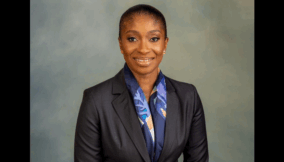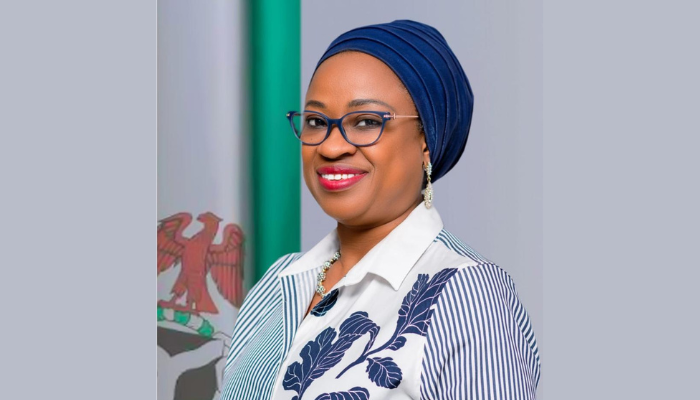
Hauwa Nuru, Kwara State commissioner for Finance, is a seasoned, reform-driven public servant and strategist with over 30 years of experience spanning the private and public sectors. She is a Fellow of the Certified National Accountant (FCNA), Fellow of the Chartered Institute of Taxation of Nigeria (FCTI), and a member of the Nigerian Institute of Management (NIM). A Harvard and Manchester Business School-trained expert, Nuru possesses extensive expertise in banking, finance, treasury management, strategy, and institutional leadership. She also served as Chief Financial Officer of Eko Electricity Distribution Company (EKEDC), where she played a pivotal role in driving financial reforms within Nigeria’s power sector. In this interview with SIKIRAT SHEHU, she shares insights on the state’s significant Internally Generated Revenue (IGR) growth, prudent expenditure, and investments in critical infrastructure aimed at improving the ease of doing business, supporting SMEs, and attracting investors. She also speaks on efforts to align Kwara State’s financial management practices with global standards. Excerpts:
As the state commissioner for Finance, what has been your experiences so far?
My experience has been impactful and rewarding. It has provided an opportunity to contribute to the growth and development of Kwara State through reforms, prudent financial management, transparency, and teamwork. Despite economic challenges, we have remained focused on strengthening the State’s financial systems and ensuring resources are effectively utilized for the benefit of Kwarans. It has also been an opportunity to contribute meaningfully to the development agenda of His Excellency, Mallam Abdulrahman Abdulrazaq, whose administration is committed to prudent financial management, infrastructural renewal, and people-centered governance. The journey has further reinforced the importance of collaboration, accountability, reforms, and strategic planning in public service.
How would you describe the State’s economic policy under your watch as Commissioner?
Kwara State’s economy has remained resilient despite national economic challenges. The administration of Governor Abdulrahman Abdulrazaq has focused on infrastructure, agriculture, Health, Education, ease of doing business, and investment promotion to stimulate economic growth and improve the lives of citizens.
The State has continued to position itself as an emerging destination for investment and economic growth. While several macroeconomic factors influence GDP growth, the administration’s deliberate reforms and investments have positively impacted economic activities across sectors such as agriculture, commerce, education, and infrastructure development. Most importantly, government policies have been directed toward ensuring that growth translates into real improvements in the lives of Kwaran’s.
Can you expatiate on the current state of revenue generation today, compared to what it used to be?
Revenue generations has improved significantly through reforms, automation, improved tax administration, and reduced leakages. The State’s Internally Generated Revenue has grown steadily, helping to strengthen fiscal sustainability and reduce dependence on federal allocations. We have also strengthened institutional capacity and introduced measures that reduce leakages while improving compliance. Beyond increasing revenue, the State government have focused on building citizens’ confidence in government by ensuring that public funds are transparently managed and channeled toward impactful projects and social interventions.
How would you assess the economic policies of Governor Abdulrahman Abdulrazaq’s administration and their impact on Kwarans?
The economic policies of Governor Abdulrahman Abdulrazaq’s administration have been people-focused, reform-driven, and development-oriented. Through prudent spending, infrastructure development, social investments, and economic reforms, the government has improved opportunities for citizens and enhanced service delivery across key sectors. One of the major strengths of this administration is its commitment to financial discipline and transparency. Resources are carefully managed to ensure value for money while also prioritizing projects that directly impact the lives of ordinary citizens.
The impact can be seen in improved infrastructure, support for vulnerable groups, investments in education and health, increased opportunities for youths and women, and reforms that continue to attract development partners and investors to the State.
Despite the current economic situations in the country, how does the State finances its capital projects?
The State finances capital projects through prudent financial management, improved revenue generation, strategic prioritization, and support from development partners such as the World Bank. Resources are carefully managed to deliver impactful, sustainable projects.
The administration prioritises projects based on their economic and social impact while ensuring fiscal responsibility. Additionally, the government’s commitment to transparency and accountability has strengthened partners’ and stakeholders’ confidence, enabling the State to access support for key developmental projects.
Kwara is a gateway state between the North and the South. How is the state leveraging this advantage to boost its economy?
Kwara State government is deliberately leveraging this advantage to drive growth and investment. Under the leadership of Governor Abdulrahman Abdulrazaq, the State is investing in critical infrastructure, such as road networks, to enhance connectivity and facilitate trade and the movement of goods. This positioning naturally makes Kwara a hub for commerce, logistics, agriculture, and agro-processing. We are also strengthening the ease of doing business environment to attract investors who can take advantage of Kwara’s central location to serve both regions efficiently. In addition, the State is promoting agricultural value chains, supporting SMEs, and encouraging private-sector participation to stimulate economic activity. The goal is to position Kwara not just as a transit state, but as a destination for investment, production, and trade.
The state is often regarded as civil servants-oriented. Do you agree with this assessment?
Historically, Kwara State has had a strong civil service structure, and that legacy continues to play an important role in governance and public administration. However, the current administration is actively diversifying the State’s economic base beyond the civil service. There is a deliberate shift toward building a more vibrant, private-sector-driven economy through investments in agriculture, entrepreneurship, technology, and infrastructure. While the civil servants remain a critical pillar, it is no longer the sole driver of the State’s economy. The government is creating opportunities for businesses to thrive, supporting innovation, and encouraging young people to explore enterprise and skills development. So, while the perception may have been valid in the past, Kwara is steadily evolving into a more dynamic and diversified economy with multiple drivers of growth.
Women are regarded as second class in governance affairs. What is your message to women generally?
My messages to women in Kwara State and across Nigeria is to believe in themselves remain focused, and never underestimate their potential. Excellence, integrity, resilient, and hard work will always create opportunities. Women play an important role in leadership, governance, business and nation-building. l encourage women to continue investing in personal development, education, and capacity building while supporting one another to succeed. To young girls, especially, I want them to know that there are no limits to what they can achieve with determination, discipline and faith in God. The future belongs to those who are prepared, committed and willing to make a positive impact in society.

Join BusinessDay whatsapp Channel, to stay up to date
Open In Whatsapp