For years, the world has kept up with the Kardashians. In Nigeria, politics has increasingly become its own version of reality television, complete with family alliances, public rivalries, strategic reconciliations and carefully staged photographs with the President.
And lately, Nigerians have found themselves keeping up with the Kalus.
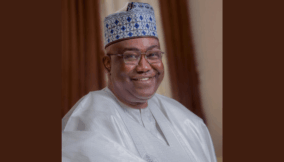
Not just one Kalu, but two: former Abia governor and senator, Orji Uzor Kalu, and Deputy Speaker of the House of Representatives, Benjamin Kalu.
Both men are influential figures in the All Progressives Congress (APC) in Abia State.
Both insist they enjoy the confidence of President Bola Ahmed Tinubu. And both, in recent weeks, have subtly and sometimes openly laid claim to the political soul of Abia APC.
The drama began when Uzor Kalu emerged from a meeting with Tinubu and declared that he had received marching orders to coordinate the affairs of the party in Abia State.
Read also: 2027: Kalu knocks opposition, says Tinubu, APC not teleguiding INEC
Almost simultaneously, Benjamin Kalu also signalled that he had been entrusted with leadership responsibilities in the state by the President.
Suddenly, the question became unavoidable: who exactly is the authentic leader of APC in Abia State?
That question may appear ordinary on the surface, but underneath it lies a deeper struggle over power, succession and the future of the party ahead of the 2027 governorship election.
At the centre of it all is ambition.
Benjamin Kalu has long been linked with a governorship aspiration.
Young, articulate and strategically positioned as Deputy Speaker, he represents a new generation of APC leadership in the South-east.
His supporters see him as the bridge between Abuja power circles and Abia grassroots politics.
But standing across from him is a political institution in his own right, Uzor-Kalu, the former governor who still commands enormous influence across Abia North and beyond.
Even out of office, Orji remains one of the most recognisable political brands in the South-east.
He has survived defections, prosecutions, opposition waves and shifting alliances while maintaining relevance in national politics.
More importantly, he understands power, how to build it, preserve it and transfer it.
And this is where the story becomes even more layered.
The former governor is not only interested in controlling the party structure; many within APC believe he is also interested in determining who runs against Governor Alex Otti in 2027.
That calculation appears to include support for his younger brother, Mascot Kalu, who has already declared interest in the governorship race.
Suddenly, the APC in Abia looks less like a political party and more like a complicated family chessboard.
Benjamin Kalu wants the governorship. Mascot Kalu wants the governorship. Orji Kalu wants influence over the governorship. And all sides insist they are loyal to Tinubu.
The result is a supremacy battle disguised as a unity project.
Interestingly, both camps are speaking the language of peace while quietly measuring political strength.
At a stakeholders’ meeting in Abia on Thursday, Orji Kalu repeatedly called for unity and reconciliation.
He warned party members against gossip and anonymous attacks targeted at Benjamin Kalu.
“Unity, unity, unity must prevail in the party,” he declared.
But even within the conciliatory language was an unmistakable reminder of political seniority.
“I can go to any part of this state,” he said confidently. “There is no part of this state where I cannot go in the morning, in the night, in the afternoon.”
That statement was more than nostalgia. It was a subtle assertion of enduring grassroots dominance, the kind that cannot easily be replaced by federal titles or Abuja influence.
Yet Benjamin Kalu is not without his own advantages.
As Deputy Speaker, he currently occupies one of the highest-ranking political offices in the country.
In today’s APC, proximity to federal power matters immensely. His rise has also coincided with renewed efforts by the ruling party to gain stronger footing in the South-east.
Within APC circles, many see him as the face of a newer Abia political movement, less combative, more technocratic and more appealing to younger voters.
But critics argue that his camp moved too quickly in promoting a 2027 governorship project, creating fears of imposition within the party.
That concern partly explains the resistance from Orji Kalu loyalists and Mascot Kalu’s camp.
Mascot himself did not mince words when he rejected alleged endorsement moves in favour of the Deputy Speaker.
“Such an imposition will be met with stiff and unequivocal resistance,” he warned.
In truth, what is unfolding in Abia APC is not unusual in Nigerian politics.
Parties often struggle when multiple heavyweights emerge from the same political family, ethnic bloc or power base.
What makes the Abia situation fascinating, however, is the symbolism attached to the Kalus themselves.
For nearly two decades, Orji Kalu represented the dominant political dynasty in Abia politics.
Now another Kalu, Benjamin is attempting to build his own structure, independent of the old order.
The irony, of course, is that while they share a surname, they are effectively competing visions of APC leadership.
One represents legacy power. The other represents emerging power.
And somewhere in between sits President Tinubu, whose endorsements, real or perceived, have become political currency.
Perhaps the most revealing moment came when Orji Kalu admitted publicly that he defended Benjamin Kalu before the President when questions were raised about him.
“The President asked me questions about him,” he disclosed. “I answered the man gladly, in his favour.”
The statement sounded supportive, but politically it also reinforced hierarchy. It subtly projected Benjamin as someone still requiring validation from an older political authority.
Yet the Deputy Speaker’s camp appears determined to establish independence. His allies argue that Abia APC has become more organised and nationally connected under his influence.
They also point to his strategic position in the National Assembly as evidence that he is better placed to negotiate federal attention for the state.
Still, the larger challenge for APC may not even be the Kalus themselves.
The real obstacle remains Governor Alex Otti, whose Labour Party administration continues to enjoy significant goodwill among many Abia residents.
For APC to seriously challenge Otti in 2027, it would need a united structure, a credible candidate and a disciplined internal process. So far, the party appears consumed by internal calculations over who controls what.
That explains Orji Kalu’s repeated warning against imposition.
“In 2023, they imposed a governorship candidate; we refused to work with him,” he reminded party members.
It was both a reflection on past mistakes and perhaps a warning about the future.
Because beneath the handshakes, speeches and public declarations lies a fundamental truth: in Nigerian politics, there can rarely be two captains in one state chapter.
Eventually, Abia APC may have to decide whether it belongs to the old lion who still commands influence across the state, or the rising national figure determined to shape a new political future.
Until then, Nigerians will continue keeping up with the Kalus, a political family drama where every meeting, every photograph, and every statement carries the weight of succession, ambition, and power.

Join BusinessDay whatsapp Channel, to stay up to date
Open In Whatsapp