An indigenous operator Pipeline Infrastructure Nigeria Limited (PINL) is being credited as one of the central factors behind Nigeria surpassing the Oil Producing and Exporting Countries (OPEC) quota for first time. The feat comes from the recovery along the Trans Niger Pipeline (TNP).
Nigeria has surpassed its OPEC production quota for the first time in 2026, and figures released by the Nigerian Upstream Petroleum Regulatory Commission (NUPRC) on June 11, 2026, show national oil output rose 2.2 per cent in May, from 1.66 million barrels per day in April to about 1.70 million. Crude oil production averaged 1.53 million barrels per day, above the country’s OPEC quota of 1.5 million for the first time this year.
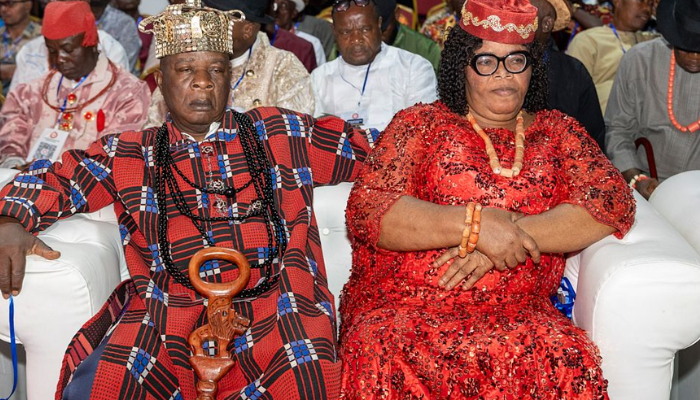
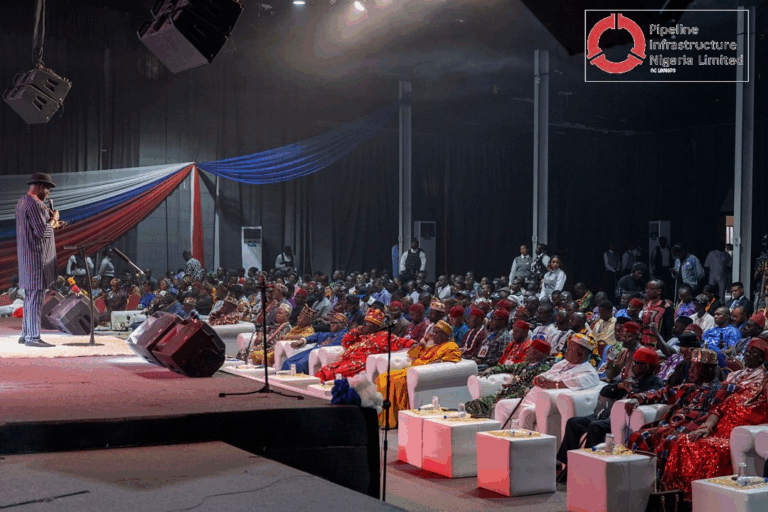
The performance was a recurring theme at a stakeholders meeting convened by PINL in Port Harcourt for host communities across Rivers, Imo and Abia states, where traditional rulers called for greater institutional support for the company’s work keeping the pipeline operational.
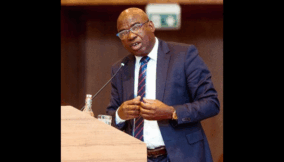
Akpos Mezeh, PINL’s General Manager for Community and Stakeholder Relations, said the improvement reflected stronger operational stability on the TNP, deeper community participation, and a shared resolve among government, security agencies and host communities to reject crude theft and pipeline vandalism.
Read also: Nigeria meets 102% of OPEC Quota as crude oil production hit 1.7mn bpd in May
“The Trans Niger Pipeline continues to record remarkable operational stability,” he said, adding that more reliable infrastructure was contributing to government revenue, energy security and investor confidence.
Sergeant Awuse, a monarch and Chairman of the South-South Monarchs Forum, who is also the Nye Nweli Emohua, said the peace around the oil-producing communities has become a target. “Some people who are not patriotic enough will want to spoil your good works,” he said.
He went on: “This is the time the National Security Adviser and the relevant agencies should give you more support, because if our oil production goes down, it will affect every act of governance.”
Philip Obele Osaro, king of Eleme, said PINL’s programmes have curbed youth restiveness, saying increased funding would expand youth and women empowerment across host communities.
Akponime Omojewvhe, Head of Field Operations for the Eastern Corridor at NNPCL’s Project Monitoring Office, urged communities to report suspicious activity early, noting that timely information remained crucial to protecting the corridor.
PINL officials said the feat has proved what collaboration can do. They expressed deep concern by the recent attack on the Trans-Niger Pipeline (TNP) by alleged armed individuals around the Odau axis, Zone 8 in Abua/Odua Local Government Area of Rivers State.
Officials said the unfortunate incident has been promptly escalated to the relevant security authorities for urgent intervention and necessary action, saying they were confident that the security agencies would take appropriate measures to apprehend those responsible and also prevent any recurrence.
Mezeh told stakeholders at the forum in Port Harcourt that recent developments in Nigeria’s oil and gas industry provide encouraging evidence that collaboration works.
The GM thanked the community leaders for their continued support, cooperation, and commitment to what he termed the collective responsibility of protecting critical national assets and sustaining peace across our host communities.
Mezeh said the stakeholders were committed to one purpose; ensuring the security of strategic oil and gas infrastructure, promoting environmental sustainability, fostering economic opportunities, and advancing community development.
He said the national outlook has vastly improved leading to reinforcing Nigeria’s position as Africa’s leading oil producer, representing the highest combined production level recorded since July 2025. “Key production streams such as Bonny and Forcados terminals have continued to demonstrate remarkable performance, while offshore assets have maintained stable contributions to national output.
“Bonny Terminal has emerged as the largest contributor during the month, recording an output of 293,870 barrels per day.”
He said these figures were contained in a statement issued on June 18, 2026, by the Head of Media and Corporate Communications of the NUPRC, Eniola Akintujoye.”
He agreed with the Commission to say, “Production performance during the review period remained robust, with combined crude oil and condensate output ranging between a low of 1.51 million barrels per day and a peak of 1.86 million barrels per day.”
He quoted the Commission further to say that the average crude oil production recorded during the month of May represents 102 per cent of Nigeria’s 1.5 million barrels per day production quota allocated by the OPEC. He said production remained largely stable throughout the month, describing the development as a significant upswing in Nigeria’s oil output and the highest crude oil production level recorded in the last fifteen months.
Showing how this happened, Mezeh said it was not by accident, submitting they were direct outcomes of improved pipeline security, enhanced stakeholder engagement, stronger community participation, and the collective determination of government, security agencies, host communities, and industry operators to reject crude oil theft, pipeline vandalism, and illegal refining activities.
“We are particularly pleased to report that the Trans-Niger Pipeline continues to record remarkable operational stability. The increasing reliability of our production infrastructure, coupled with improved security across operational corridors, is contributing significantly to national economic growth, increased government revenue, enhanced energy security, and greater investor confidence in Nigeria’s oil and gas sector.
“This success belongs to all of us. It is a testament to what can be achieved when communities, traditional institutions, government agencies, security services, and industry operators work together in pursuit of a common goal. Your vigilance, commitment, and cooperation have made these achievements possible.”
He said security is not built on force alone but on trust, sustained through dialogue, grows on inclusion, and flourishes when communities are treated as partners rather than spectators.
Showing how the process is anchored on community ownership, stakeholder participation, transparency, accountability, and shared prosperity, the GM all reported cases of military harassment of surveillance guards are being investigated by the military as many hoped that proper action would be taken.
He also announced that the damaged area reported in Umorie was discovered to be caused by a hacksaw, and that the spot has been repaired by the PINL maintenance team.
He urged their contractors to increase the presence of their surveillance guards at all times on the pipeline right of way to deter the return of
vandals.
The GM called on stakeholders, leaders, youths, contractors, surveillance personnel, and security agencies to remain vigilant and continue to work together in protecting these vital national assets.
He said the PINL is committed to supporting the communities in various ways to achieve peaceful coexistence among host communities. He announced strategic priorities including reconciliation in Ogoni, saying the Office of the National Security Adviser (ONSA) has received support from key stakeholders, including community leaders and civil society organizations.
“The leadership of MOSOP has publicly acknowledged the dialogue process as a significant opportunity to pursue mutual understanding and collective benefits for the Ogoni people.
“This demonstrates the power of constructive engagement and reinforces our belief that sustainable development is only possible when dialogue replaces confrontation and cooperation replaces conflict.
“Equally encouraging are recent reports from the Hydrocarbon Pollution Remediation Project (HYPREP) indicating significant progress in environmental restoration efforts across Ogoniland.
“The declaration that active illegal refining sites have been eliminated in the area, coupled with the impressive success recorded in mangrove restoration and shoreline remediation projects, demonstrates what can be achieved when government agencies, communities, and development partners work together toward a common objective.”
He spoke on three key issues and PINL response, saying; all beneficiaries of empowerment schemes have been paid as promised; all outstanding scholarship grants have been paid; and that plans are progressing for more structured youth training and capacity-building programmes.
The GM said PINL management has established monitoring and support mechanisms aimed at ensuring that beneficiaries received continued guidance and mentorship to maximize the impact of empowerment interventions.

Join BusinessDay whatsapp Channel, to stay up to date
Open In Whatsapp