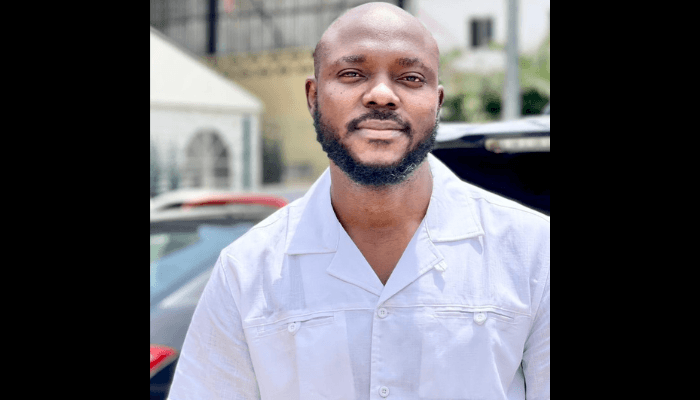
Lagos-based contemporary artist Damilola Moses Opedun says years spent mentoring children in Makoko have transformed not only his artistic practice but also his understanding of art as a vehicle for hope, empowerment and social change. Opedun, a Lagos-based contemporary artist, has built his practice around themes of spirituality, identity, memory, displacement and resilience. Born in Akure, Ondo State, in 1983, Opedun’s artistic journey has been shaped by more than a decade of engagement with Makoko, one of Lagos’ most vulnerable communities. Through his NGO, The Seed of The True Vine Foundation, he works with children in underserved communities, using art as a tool for education, empowerment and social transformation. His paintings often combine contemporary Black figures with historical and spiritual imagery, reflecting the intersection of struggle and hope. In this interview with KENNETH ATHEKAME, Opedun discusses how Makoko became the defining influence on his work, why he believes “imagination is something nobody can evict,” and what Nigeria must do to unlock the economic potential of its creative industry while expanding opportunities for talented children from underserved communities. Excerpts:
For more than a decade, you have worked with children in Makoko through your NGO. What first drew you to the community, and how has that experience transformed your worldview and artistic practice?
I was drawn to Makoko because it reflected parts of my own background. I grew up in a difficult environment, raised by my late single mother, and I understood what it meant to experience hardship. Initially, I visited Makoko to take photographs as references for my paintings. But what I encountered was far beyond what I expected: poor living conditions, underage motherhood, children growing up surrounded by neglect and limited opportunities. The experience deeply affected me. My love for children and my desire to contribute led to the creation of The Seed of The True Vine Foundation, which focuses on the welfare and education of children in the community.
Every Saturday, I visit Makoko with art students and interns from my studio to teach and encourage the children. Over the years, we have witnessed remarkable transformations. That experience changed my understanding of art. I realised that art is not just about creating beautiful objects; it is also about service, healing and empowerment. Spirituality, for me, became a language of liberation, resistance and progress.
Many of your recent works, including Joseph, The Witness and The Meeting Point series, are inspired by Makoko. Why has the community become such a powerful recurring subject in your work?
Makoko represents a larger human experience. It symbolises struggle, resilience and the challenges people face while pursuing their dreams. The community reflects the tension between present realities and future possibilities. It is a place where hardship exists alongside hope, where people continue to build lives despite difficult circumstances. For me, Makoko is not just a location; it represents humanity’s ability to survive, imagine and create despite adversity.
You have said that “imagination is something nobody can evict.” In communities facing poverty, displacement and insecurity, how can art become a tool for empowerment rather than simply expression? Art is spiritual at its core because it allows people to imagine possibilities beyond their current circumstances.
It connects the visible and invisible: what exists today and what people hope to create tomorrow. In difficult environments, art gives people a sense of control, identity and hope.
Through my work in Makoko, I have also used art to teach young people practical skills that can become sources of income. I encourage them to explore different creative fields, including fashion, design and other forms of expression.
The goal is to help them understand that they are capable of creating something valuable that the world appreciates.
Your paintings often juxtapose Makoko’s stilt houses with Santa Maria della Salute in Venice, a symbol of divine intervention and hope. What message are you communicating through this contrast?
The message is simple: your environment does not determine your destiny.
When I place Makoko beside Santa Maria della Salute, I am showing that two realities can exist together. A person can come from a community considered disadvantaged and still achieve greatness.
Santa Maria della Salute was built during a period of suffering and uncertainty as a symbol of hope. Makoko, in its own way, also represents faith, survival and community.
I want young people to understand that hope is not something that comes from outside. It already exists within them.
Having witnessed demolitions and displacement in Makoko, how do you balance documenting painful realities with offering hope through your art?
I believe it would be incomplete to only show the pain. My responsibility as an artist is to tell the full story: the displacement, the struggles, but also the resilience, faith and imagination that cannot be destroyed.
Hope is not about ignoring suffering. It is about recognising the dignity that exists within difficult circumstances.
That is why my work places Makoko and Venice together. They represent struggle and beauty, reality and vision.
When we only focus on hardship, we reduce people to their problems. But when we show their humanity, creativity and resilience, we change the narrative.
You describe spirituality as a language of liberation rather than escape. How do you communicate that message to children through your mentorship?
I teach children to understand faith as resilience, not simply as religion.
Spirituality should encourage action. It should inspire people to improve themselves and contribute to their communities.
Through our NGO, older children mentor younger ones, share resources and learn the importance of service.
Liberation happens when people realise they are not just waiting to be helped they are also capable of helping others.
Faith, hope and spirituality should remind people of who they are: creators, witnesses and people with a future.
Nigeria’s creative economy is gaining global recognition, yet many talented children from low-income communities remain excluded. What practical steps should government, private sector and cultural institutions take to close this gap?
Talent exists everywhere in Nigeria. The biggest challenge is access. The government needs to support individuals and organisations working in creative education through funding and partnerships.
The private sector can do more by investing in creative talents, purchasing artworks and creating opportunities for young creatives.
Cultural institutions also need to open their doors and collaborate with grassroots organisations.
The next globally recognised Nigerian artist may come from Makoko, but we must create the environment where that talent can develop.
Your work has been exhibited internationally in cities such as Vienna and London. Why is it important for communities like Makoko to be represented on global art platforms?
Representation changes narratives. For many years, Makoko has mainly been presented through images of poverty, demolition and hardship. But through art, the world can see the creativity, dignity and humanity of the people who live there.
When my work is displayed internationally, people do not only see the challenges; they see the beauty, faith and resilience of the community.
It moves the conversation from pity to partnership.
For the children, representation is also powerful because they begin to see that their stories matter and that they are not invisible.
As you continue creating internationally recognised works while mentoring children in underserved communities, what legacy do you hope to leave behind?
I hope to prove that great art does not only come from major cities, elite institutions or traditional centres of power. It can emerge from places people have overlooked.
I want Makoko to be remembered not only for what it has endured but for what it has created as a place of imagination, resilience and creativity. Through our NGO and future art centres, I want children in Makoko to grow up knowing that becoming an artist is possible.
For the next generation of Nigerian artists, I hope to inspire them to tell their stories honestly, embrace their identity and remember the importance of giving back.
My legacy will not only be the artworks I create, but the people I inspire to create, teach and build for others. If one child I mentor goes on to mentor ten more, then the seed has grown.
Because imagination, as I always say, is something nobody can evict.

Join BusinessDay whatsapp Channel, to stay up to date
Open In Whatsapp