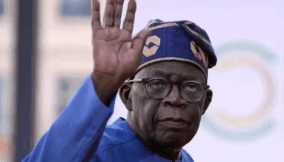
Months before candidates are legally permitted to solicit votes, the country’s leading presidential candidates have intensified a high-stakes international influence campaign, deploying Washington lobbyists, diplomatic channels and competing narratives in an effort to shape global opinion, court influential foreign stakeholders and gain strategic advantage ahead of the 2027 presidential election.
Although the Independent National Electoral Commission (INEC) fixed August 19, 2026, for the commencement of campaigns for the presidential and National Assembly elections, the race for Aso Rock has since begun, and already spilling beyond Nigeria’s borders.
The latest developments underscore how Nigeria’s 2027 presidential contest is increasingly being fought at home for the votes of Nigerians and abroad for international legitimacy, credibility and diplomatic leverage.
The latest episode centres on Atiku Abubakar, presidential candidate of the African Democratic Congress (ADC), whose Washington-based lobbying firm, Von Batten-Montague-York, L.C., disclosed that it has begun distributing records relating to President Bola Ahmed Tinubu’s 1993 civil forfeiture case to officials in the administration of President Donald Trump, members of the United States Congress and senior congressional staff.
The development has opened another front in the political rivalry between the two leading contenders for the presidency, raising fresh questions over the growing role of foreign influence in Nigeria’s electoral politics.
Atiku’s Washington offensive
The lobbying firm, engaged by Atiku under a 12-month contract reportedly valued at $1.2 million, said it was` providing U.S. policymakers with more than 60 pages of Department of Justice court filings, affidavits and federal court decisions relating to the 1993 civil forfeiture proceedings involving Tinubu.
According to the firm, the objective is to ensure that officials in the White House, Congress and relevant oversight committees have access to the complete historical record of the case.
The documents include a chronology of the Department of Justice investigation into an alleged Nigeria-based heroin trafficking network, which prosecutors claimed deposited proceeds into bank accounts linked to Tinubu. The records identified Adegboyega Mueez Akande and Abiodun Agbele among individuals named in the government’s filings.
According to the chronology, the Department of Justice instituted a civil forfeiture action before the U.S. District Court for the Northern District of Illinois in 1993, with the matter ending in a negotiated settlement under which part of the funds was forfeited to the U.S. government.
The lobbying firm also disclosed that the records, alongside documents from the ongoing Freedom of Information Act (FOIA) litigation initiated by journalist Aaron Greenspan, are being circulated to House and Senate committees for “informational and oversight purposes,” particularly amid reports that Tinubu is seeking a meeting with Trump during the United Nations General Assembly.
Tinubu’s forfeiture case had featured prominently in petitions filed after the 2023 presidential election by Atiku and Peter Obi. However, the Presidential Election Petition Court ruled that the forfeiture proceedings were civil rather than criminal and held that the petitioners failed to establish that Tinubu had been convicted of any criminal offence or made false declarations to INEC.
Presidency, Atiku clash
However, the Presidency has dismissed Atiku’s latest move as an attempt to internationalise Nigeria’s domestic politics.
Bayo Onanuga, Special Adviser to the President on Information and Strategy, described the lobbying campaign as an affront to Nigeria’s sovereignty, insisting that the matter had been settled by both the electorate and the courts.
“It is baffling and disappointing that someone who has sought the presidency for over three decades now resorts to reporting the President of Nigeria to US President Donald Trump and members of the US Congress,” Onanuga said.
He argued that the 1993 case was resolved more than three decades ago without any criminal conviction and maintained that Nigerians reaffirmed Tinubu’s legitimacy through the 2023 election and the Supreme Court judgment.
The Presidency also shifted attention to Atiku’s legal history in the United States by referencing the William Jefferson bribery scandal and a 2010 U.S. Senate investigation chaired by Carl Levin, which examined alleged foreign corruption involving offshore companies.
It further questioned why Atiku would spend $1.2 million on American lobbyists while, according to the Presidency, unresolved questions remain over his own legal history.
But Atiku’s camp accused the Tinubu administration of avoiding the substance of the allegations.
Phrank Shaibu, Senior Special Assistant on Public Communication to Atiku, said the Presidency had chosen insults over accountability by failing to respond directly to questions surrounding the publicly available records.
According to him, asking legitimate questions based on official U.S. documents cannot be interpreted as reporting Nigeria to a foreign government.
Foreign voices join Nigeria’s political contest
As the exchanges intensified, influential American political figures also weighed into issues relating to Nigeria.
Ted Cruz, United States Senator, has criticised the Tinubu administration for allegedly spending resources on lobbying firms in Washington instead of addressing concerns over the persecution of Christians and broader religious freedom issues.
The Republican senator argued that Nigerian officials were investing in public relations efforts abroad while neglecting concerns repeatedly raised by members of the U.S. Congress.
Cruz also referenced his proposed Nigeria Religious Freedom Accountability Act 2025, which seeks sanctions against Nigerian officials found complicit in religious persecution or in enforcing laws considered inconsistent with religious freedom.
Ironically, barely 24 hours after Atiku’s lobbying campaign gained attention, Trump publicly commended Tinubu. In a letter dated July 6, 2026, later released by the Presidency, Trump praised Tinubu’s leadership in combating terrorism and improving security, particularly efforts aimed at protecting Christian communities.
The commendation immediately sparked another round of political exchanges. Bolaji Abdullahi, National Publicity Secretary of the ADC, dismissed the significance of the letter, arguing that endorsements from foreign leaders cannot determine Nigeria’s electoral outcome.
“Ultimately, Nigerians will not judge this government by the letters it receives from foreign capitals. They will judge it by whether it improved the lives of the people it was elected to serve,” Abdullahi said.
Implications for 2027 election
Weighing in on the matter, Bernard Mikko, former lawmaker and political scientist, said the growing foreign lobbying by political actors is a normal feature of electioneering and should not be interpreted as overheating the polity.
Mikko, a former Rivers State governorship aspirant, told BusinessDay that elections naturally bring greater scrutiny of candidates, including issues that may have been considered settled years earlier.
According to him, opposition parties are expected to raise questions about the credibility of incumbents, just as ruling parties seek to defend their records. He argued that while both the ruling and opposition parties may seek support or validation abroad, the ultimate decision on who governs Nigeria rests with Nigerian voters.
“It is during elections that politicians are held accountable. Even issues that happened decades ago are revisited because voters want to make informed choices. At the end of the day, Nigerians, not foreign governments, will decide who becomes president in 2027,” he said.
Also reacting, Chekwas Okorie, elder statesman and founder of the All Progressives Grand Alliance (APGA) and the defunct United Progressives Party (UPP), said foreign lobbying has become an established feature of Nigerian politics and is unlikely to determine the outcome of the presidential election.
Okorie recalled that ahead of the 2023 election, leading presidential candidates engaged international audiences, including at Chatham House in London, adding that political actors have always sought to use every available platform to advance their electoral interests.
He said the recent lobbying efforts in the United States merely represents another phase of political competition, with both the government and opposition attempting to shape public perception.
According to him, what will ultimately determine the outcome of the 2027 election is not foreign endorsements or lobbying campaigns but Nigerians’ assessment of the candidates’ performance and the credibility of the electoral process.
Okorie stressed that the greater challenge is ensuring that the 2027 elections are free, fair and credible, warning that public confidence in the electoral system would be more decisive than international lobbying efforts.

Join BusinessDay whatsapp Channel, to stay up to date
Open In Whatsapp