The exit of Shoprite, the South African retail chain, through the sale of its Nigerian subsidiary to Ketron Investments (Persianas), marked the decline of activities/footfalls in formal retail and the emergence of discount retail and neighbourhood malls in the country.
This development was buoyed by rising inflation, weakening purchasing power, and currency depreciation, which are reshaping how Nigerians shop for everyday items, driving a shift toward neighbourhood-focused discount retail chains.
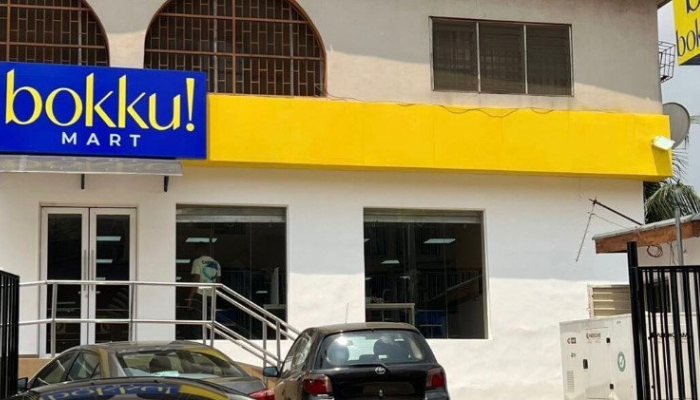
One of those neighbourhood-focused discount retail chains is Bokku! Mart, the latest discounted retail chain in Nigeria owned by Atreos Limited, a retail investment holding platform that joined the market in 2022.
Bokku! could be described as a disruptive agent that has taken the discount retail by storm, riding its micro-format density strategy, which means it can open in any dense residential area without requiring anchor-mall infrastructure.
A recent report by Estate Intel notes that, in just 3 years, Bokku! Mart leads the Nigerian market with 200 stores in Lagos, Ogun and Oyo States. On May 15, 2026, Booku Stores had the official opening of their 200th store on the ground floor of the Kingsway Building in Marina, Lagos.
Read also: Bokku, Justrite, Jendol lead Nigeria’s retail footfall as value shopping deepens
“Each outlet operates on a minimum land size of 600 square metres and a 350 square metres retail store size, with a policy of one store per neighbourhood. The speed of Bokku’s store rollout suggests institutional capital backing the growth.
Bokku! Mart typically secures long-term leases of 15–20 years, focusing on bare land or ground-floor retail spaces. This micro-format density strategy means Bokku can open in any dense residential area without requiring anchor-mall infrastructure,” the report says.
According to the report, another strategy that aids its spread and market leadership is that Bokku! achieves prices 15–30 percent below competitors’ by securing massive bulk-purchase discounts and bonuses from manufacturers and passing those savings directly to customers.
Another outlet that is making waves in the market is Addide Stores, one of the earliest Nigerian chains to plant itself in the middle-income residential neighbourhoods rather than malls.
The outlet, which is owned by Addide Stores Limited, opened for business in March 2008, with its pioneer store at 77 Finbarr’s Road, Akoka, Lagos
Addide currently has 44 locations across Bariga, Gbagada, Surulere, and other middle-class residential areas in Lagos. Its commercial strategy focuses on situating small stores within smaller middle-income neighbourhoods in Lagos, Nigeria.
Grocery Bazaar is yet another established neighbourhood grocery chain, positioning itself at the intersection of wholesale and retail. It is one of the oldest discount retailers in Nigeria. In 2009, Sam Ejeh founded Grocery Bazaa with a model that captures both household shoppers and small traders seeking wholesale-priced stock.
Grocery Bazaar primarily targets wholesale grocery shoppers in Nigeria by offering bulk purchases at discounted prices. Its hybrid approach, which combines a wholesale and retail approach, enables the company to attract both value consumers and resellers.
The chain currently operates across 23 locations, with a strong concentration of warehouse-style stores in Lagos, as well as two additional outlets in Ogun State.

Join BusinessDay whatsapp Channel, to stay up to date
Open In Whatsapp