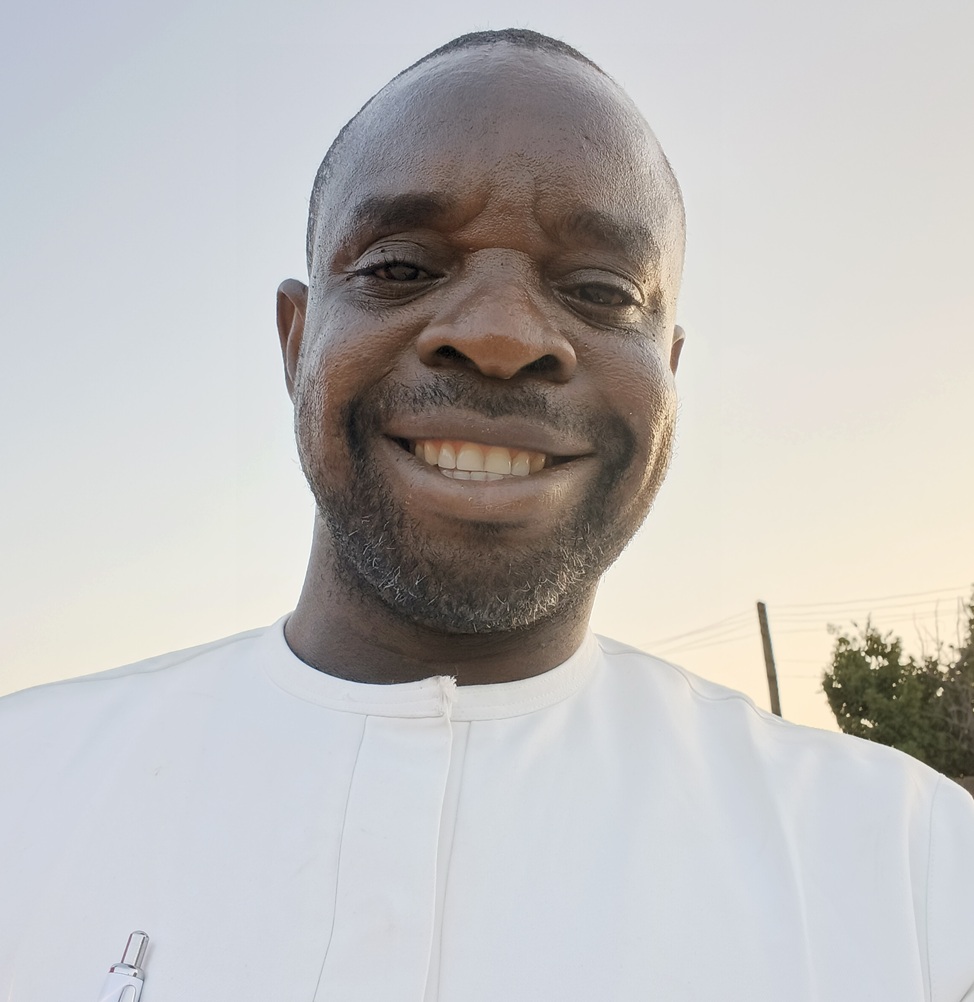
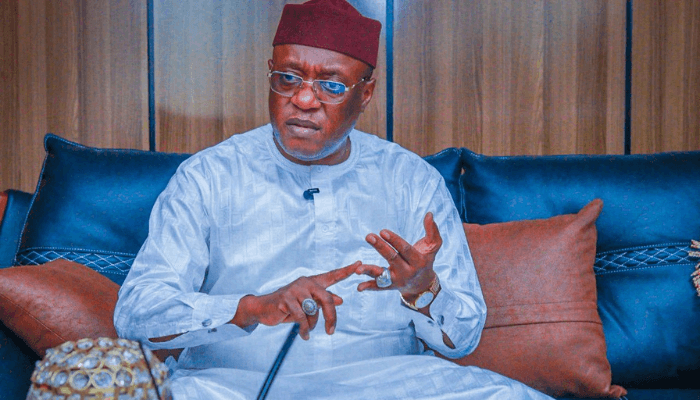
Musa Ahmed Mohammed (Baraden Nasarawa) is the current Accountant General of Nasarawa State. He is a professional accountant with a PhD in Accounting and Finance, and also a chartered accountant of the Association of National Accountants of Nigeria (ANAN) extraction. He served as the speaker, Nasarawa State House of Assembly from 2007 to 2015 after he resigned from the services of the Federal Capital Territory (FCT), to join politics. Recently, Mohammed published a book titled ‘Engr. A. A. Sule: From Vision to Reality’. In this interview with some journalists in his office in Lafia, the AG, who called for sustained support for Governor Abdullahi Sule among other things, also spoke on the developmental strides of the governor and how the governor has been able to prudently manage the state finances which informed his decision to write the book. NATHANIEL GBAORON, brings the excerpts:
You recently published a book titled ‘Governor A.A. Sule: From Vision to Reality’. What fundamentally informed your decision to write this book?
My decision was informed by a deep conviction that governance achievements must be carefully documented for history, learning, and institutional memory. Over the years, I have observed that many administrations have tried their best but in the case of Governor Abdullahi A. Sule, I witnessed, from close professional engagement, a deliberate and consistent effort to move beyond rhetoric to structured, results-driven action.
From his assumption of office to date, the Governor has implemented policies and reforms that have reshaped public finance management, strengthened institutions, improved infrastructure delivery, and enhanced economic stability in Nasarawa State. I felt a responsibility, both as a public servant and a student of governance, to document what has been achieved so far under his leadership—how vision, when supported by discipline, accountability, and effective systems, can produce tangible benefits for citizens.
The book was therefore conceived not merely as a record, but as a reflective governance document. It was also presented as a modest intellectual gift to Governor Sule on the occasion of his 66th birthday, in recognition of his service, leadership, and the milestones recorded during his years in office.
Why did you feel Governor Sule’s administration specifically deserved such detailed documentation?
Governor Sule’s administration stood out because of its consistency and clarity of purpose. From inception, his leadership was anchored on economic reforms, fiscal prudence, and institutional strengthening. What impressed me was the coherence between policy formulation and execution. As someone working within government, I observed how plans were not merely announced but followed through with concrete actions. I believed this experience could serve as a valuable case study for other leaders and states seeking sustainable development.
How did your role as Accountant General of Nasarawa State influence this decision?
My role as Accountant General placed me at the heart of financial planning, budget execution, and accountability mechanisms. This position gave me a unique vantage point to observe how leadership vision translates into fiscal discipline, efficient resource allocation, and transparent financial management. These experiences strongly influenced my decision to write the book, as I could clearly see the connection between sound financial governance and developmental outcomes under Governor Sule’s leadership.
Was there a particular period or experience that convinced you the book must be written?
The realization came gradually as reforms began yielding visible results. As revenue improved, projects were completed, and institutions became more structured, it became evident that these developments needed to be documented while facts were still fresh and records intact. I felt that postponing such documentation could lead to loss of institutional memory or distortion of facts, which would be a disservice to future generations.
Some critics may interpret the book as political or promotional. How do you address such views?
I understand such concerns, but the book is not a political campaign document. It is a governance-focused work rooted in data, policy analysis, and verifiable outcomes. Politics is transient, but governance lessons endure. My aim was to provide an analytical account of leadership and implementation processes that can be objectively examined and learned from, regardless of political affiliation.
How did you ensure objectivity, given that you serve in the same administration you are writing about?
Objectivity was a guiding principle throughout the writing process. I relied heavily on official documents, audited financial reports, policy frameworks, and publicly available data. Personal opinions were deliberately excluded. Instead, I focused on systems, processes, and measurable outcomes, ensuring that readers can independently verify the information presented in the book.
What does the title From Vision to Reality symbolise in the context of the book?
The title captures the essence of governance as a process. Vision alone is insufficient without execution. From Vision to Reality symbolizes the journey from ideas to policies, from policies to programs, and from programs to tangible results. It reflects the central theme of the book—that leadership effectiveness is measured by outcomes, not intentions.
What role did research and data play in informing your decision to write the book?
Research played a critical role. As I reviewed financial data, policy documents, and development indicators, it became clear that there was a compelling story to tell. The availability of credible and consistent data reassured me that the book could be factual, analytical, and balanced, rather than speculative or anecdotal.
What lessons were you hoping public servants would draw from this book?
I hoped public servants would see the importance of professionalism, integrity, and commitment to duty. The book demonstrates that when leadership provides a clear vision and institutions function effectively, public servants become key drivers of development. It reinforces the idea that governance success depends not only on leaders but also on the quality of institutions and personnel.
Did the writing process change or deepen your understanding of leadership and governance?
Yes, it significantly deepened my understanding. Writing the book reinforced the idea that governance is a continuous process requiring consistency, patience, and institutional strength. It also highlighted the importance of long-term planning and disciplined execution over short-term gains or populist gestures.
Who did you have in mind as the primary audience of the book?
The book is intended for policymakers, students of public administration, researchers, development practitioners, and informed citizens. It is particularly useful for those interested in understanding how governance can work effectively at the sub-national level in Nigeria.
What challenges did you encounter while writing the book?
One major challenge was simplifying complex fiscal and policy issues without losing their depth. Another challenge was balancing my official responsibilities with the demands of extensive research and writing. Despite these challenges, the process was intellectually fulfilling.
How does the book contribute to Nigeria’s broader governance discourse?
The book contributes by offering a practical case study of governance in action. Rather than focusing on abstract theories, it examines real policies, financial reforms, and outcomes. It adds to the growing body of literature that emphasizes implementation and accountability as drivers of development.
Do you consider the book part of your personal or professional legacy?
In many ways, yes. The book reflects my commitment to strengthening institutional memory and contributing to knowledge on public finance and governance. It is my way of ensuring that lessons learned from practical governance are preserved and accessible to future generations.
Do you see this book as the beginning of further intellectual contributions?
Certainly. I believe public servants have a responsibility to share knowledge gained from experience. If documenting governance experiences can help improve leadership practices, strengthen institutions, and inspire reform, then writing becomes a duty rather than a choice. This book is just the beginning of that contribution.
Abdullahi Sule has spent six and a half years in office as governor of Nasarawa State; what is your take on the journey so far?
It has been an impactful experience for the state and the country at large. Impactful because Governor Abdullahi Sule’s policies have positively impacted not only on the state’s economy but also that of the country at large. It is to his credit that the world’s attention is drawn to the essential minerals that abound in the state and some part of the country with international investors capitalising on the opportunity. It is also to his credit that the country’s revenue earning from the solid mineral subsector has increased substantially. The Minister of Solid Minerals Development, Mr. Dele Alake, confirmed this few months ago when he said that Nigeria’s solid minerals sector, driven by President Bola Tinubu administration’s new policy of local value addition and a tightened licensing regime, attracted over $800 million in processing projects last year. He said the sector also generated over N38 billion in revenue in 2024, up from just N6 billion the previous year, despite receiving only 18% of its N29 billion budgeted allocation.
Having played critical role in opening the sector for investment, the federal government recongnise the effort of Governor Sule in its transformative drive and has been utilising the opportunity. Don’t forget also that many investors have already established presence in Nasarawa State due to the favourable environment climate put in place by the governor. So, it is pertinent that the federal government collaborate with Nasarawa in driving the process and that is what has been happening.
The state is endowed with lots of minerals, which specific one is of interest currently?
The state is leveraging the immense potential of lithium currently. It is the beautiful bride. You also know that there is also significant interest in our gold and tin deposit. However, the interest in lithium has been overwhelming with investors sinking hundreds of millions of hard currencies in its exploration. It is used to produce rechargeable batteries used in cell phones, electric vehicles and grid storage amongst others. You remember a few days ago, the governor and his deputy spoke on whey Nasarawa will be the first state in the country to produce an electric car because of our lithium potential and the fact that notable companies are already on ground working hard on the end products. The federal government’s value addition initiative is a welcome one, and this is working in our favour. As you will recall, President Bola Ahmed Tinubu commissioned the largest lithium processing factory built by a Chinese firm, Avatar New Energy Materials Company Limited in Nasarawa State. The company has the capacity to produce 4,000 metric tonnes of lithium concentrate per day, with an expansion plan to achieve annual target of 300,000 metric tonnes per annum. And with a $500m turnover and $35m in profits and taxes in Nigeria alone, Avatar had a sustainable profile to turn around the state and the country’s economic fortunes in revenue generation and employment opportunities. You know asides from Avatar other companies are also prospecting lithium in the state.
Aside solid mineral which other areas would you say the governor has performed well?
There is no sector that His Excellency has not significantly performed because going by the policy document which guide the administration’s operation all sectors correlate in terms of activities and performance. Take agriculture for instance, you have big conglomerates establishing presence, injecting millions in the sector and boosting the economy as well as employing the citizens. Over the last few years, because of the favourable business environment put in place by the governor, companies like Dangote Group, Olam Nigeria Limited, Flour Mills of Nigeria, and AZMAN Farms Limited have established agro-allied companies in the state. Dangote Sugar has acquired a 68, 000 hectares of land in Tunga and announced plan to establish a sugar factory that can generate employment for over 1000 people from the immediate community. AZMAN on the other hand acquired 20,400 hectares in Toto LGA for rice production. There are many other companies that have indicated interest to invest in the state. For instance, following his trip to India and China some time ago, the state is expecting the establishment of assembly plants for two leading tractor manufacturers anytime soon. This is the kind of innovation the governor is bringing to the state. It is fundamental to state that the influx of investors is also made possible by the relative peace the state is enjoying courtesy of the proactiveness of the state chief executive. To secure the state for economic activities to thrive, the governor has been collaborating with various security agencies, providing them with logistics to be able to respond to any threat to the peaceful coexistence in the state. You can now understand why I told you earlier that the successes and performances of each sector is dependent on another.
Let’s look at the governor’s infrastructural development strides especially the flyovers and underpass projects; how was he able to fund the projects in Lafia and Akwanga almost at the same time, while also planning that of Keffi?
One key characteristic of Governor Sule that is helping the state in its development strides is the prudent management of resources. The flyover and underpass are capital intensive but critical in easing traffic congestion at strategic areas and reduce the rate of accidents. When he initially announced plans to commence the project in Lafia many people were apprehensive, some were also skeptical that the project was an ambitious one, arguing that there is no way the administration can complete and that it will be abandoned. But what they don’t know is that Governor Sule cannot set out to do something without planning for it. Work on the project has been seamless as you may have noticed. The contractors kept going, and never stop working. What that means is that they were getting the fund for the project. Last year, the Lafia under pass/fly over and other landmark projects were commissioned by president Tinubu himself. You can see how the under pass has contributed to the aesthetic enhancement of the state capital, reflecting the modernisation and progress of the city. It is one of the legacy projects of this administration. The same vision birthed the Akwanga project. The project is a significant part of the governor’s broader strategy to modernize urban infrastructure, improve transportation efficiency, and enhance security in the region. Like all such projects, it is meant to provide more efficient travel routes for both residents and businesses; enhance pedestrian and motorist safety, offering a more secured environment for all road users; and stimulate trade, attract investment, and create new economic opportunities in the ancient town.
The governor came out to announce the refund of money for the Lafia Cargo Airport, many see this as unprecedented because governors or political officeholders hardly make public such gesture; what will you say about this?
It all boils down to the issue of honesty and integrity that I earlier mentioned. It takes a honest man who has the love of his people at heart to do that. It will not be the first time Governor Sule would be doing that. He has been announcing whatever amount that accrue to the state as the funds come. He did not only declare the amount but asked stakeholders for input on what to use the money for. If you listen to our former governor, Senator Abdullahi Adamu’s speech at the event, he made reference to the fact that Governor Sule is the first person he knows that have done that. That is what trust and honesty stand for. He also always ensured that monies are used for the specific purpose there were meant for.
In terms of health care, how is Governor Sule improving access to medical services for the people of Nasarawa?
Governor Sule’s administration has invested heavily in healthcare. Across the state, healthcare centers have been renovated, and new ones have been built. He has constructed health centers in the Gudi community in Akwanga Local Government, Assakio in Lafia Local Government, Toto Local Government, Karu LG among other local governments.
The governor is committed to providing free medical services to the people of Nasarawa, particularly in rural areas. The impact has been visible, with more people now accessing healthcare, especially maternal and child health services. These reforms are part of the governor’s broader agenda to provide quality services and improve the health outcomes of our citizens.
Looking at the education sector, the North has been contending with the disturbing trend of out-of-school syndrome; how is the state government handling the situation?
Like you rightly pointed out, the phenomenon is quite disturbing, but the state government is addressing the problem in collaboration with the critical stakeholders. Governor Sule has also been working tirelessly to return pupils and students, especially girls who withdrew from schools due to different circumstances back to the fold. I think so far over 16, 000 of such have returned to schools and are doing well in their studies. There is a programme in place for the specific purpose through the Adolescent Girls Initiative for Learning and Empowerment (AGILE), where the state and the federal governments with the assistant of the World Bank are collaborating. I’m optimistic with the relentlessness of our governor the challenges like others would be a thing of the past.
So, you are saying that the administration has met the expectations of the people through its performances?
Yes, the most reason why I Wrote Engr. A.A. Sule: From Vision to Reality. Because the administration has exceeded the expectations of the people of the state, and it is less than two years to continue in its development strides. And like the governor has earlier promised, the remaining period would be better.
What is your general advice for the people of the state?
My advice is for them to support Governor Sule so that he can continue to provide the dividends of democracy for them. Today, wherever you go to in this country, you will be proud of yourself as having come from Nasarawa State because of what is happening back home. So, the governor requires our collective support to further move the state on the path of development and growth.
There have been clarion calls from groups and individuals across Nasarawa State urging you to succeed your boss, Governor Abdullahi Sule. What is your reaction to this?
I am aware of these calls and I truly appreciate the goodwill and confidence expressed by various groups and individuals across Nasarawa State. You cannot stop people from wishing you well, and as an indigene of the state and a qualified person who has served in different capacities, I understand the concerns behind such calls. Many of those speaking out desire continuity and are seeking someone whose thinking aligns with that of Governor Abdullahi Sule, particularly in consolidating on the achievements already recorded under his administration.
I have listened, and I am still listening to the people of the state. However, at this moment, my priority is to remain fully focused on my responsibilities as the Accountant General of Nasarawa State. Through this office, I continue to support my boss, Governor Sule, in ensuring prudent financial management and in assisting the administration to deliver tangible dividends of democracy to our people.
In due course, after wide consultations with my boss, the governor, and other relevant stakeholders, I will make my position known. For now, I sincerely appreciate the concern and advice of the people, and I urge them to sustain the support they have continued to give to Governor Sule. I want to assure everyone that their goodwill is valued, and they will not be disappointed.

Join BusinessDay whatsapp Channel, to stay up to date
Open In Whatsapp