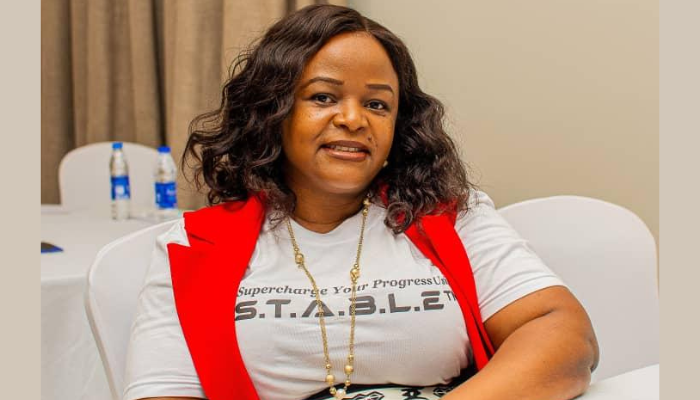
Obianuju Nwaobi-Onyekwere, in this interview with LYDIA ENYIDIYA EKE, on the sidelines of the Strategic Accountants Workshop (SAW 1.0) in Lagos, spoke on digital transformation, the future of accounting, MSME challenges, and why Nigerian accountants must embrace technology to remain relevant. Excerpts:
What inspired the Strategic Accountants Workshop (SAW 1.0)?
The workshop was inspired by the realities we see daily among Nigerian businesses and finance professionals. Many MSMEs still rely heavily on manual processes, disconnected systems, delayed reporting, and fragmented financial records. At the same time, the accounting profession itself is evolving rapidly. We realised there was an urgent need to help accountants transition from traditional roles into more strategic positions where they can support growth, improve systems, and drive better decision-making for businesses.
Why is digital transformation becoming so important for accountants?
Businesses today operate in a fast-moving environment where decisions must be made quickly and accurately. If financial data is delayed or scattered across spreadsheets and manual records, business owners lose visibility. Accountants now need digital tools that can automate processes, generate real-time information, and improve efficiency. Technology is no longer optional; it is now central to modern finance operations.
What major problem are Nigerian MSMEs facing in finance management?
One of the biggest problems is the absence of connected systems. Many businesses cannot see their cash flow, profitability, receivables, inventory, and expenses in real time. Data is often trapped in different places, spreadsheets, emails, WhatsApp messages, and even in employees’ heads. That creates poor visibility and weakens decision-making. Businesses need structured systems that provide control, discipline, and accurate information.
How does SAW 1.0 help address these challenges?
SAW 1.0 was designed as a practical workshop, not just theory. Participants were exposed to digital finance tools, automation systems, artificial intelligence capabilities, and modern accounting workflows. The goal was to help accountants understand how technology can simplify reporting, reduce manual work, strengthen controls, and improve advisory services to clients and business owners.
What role did Zoho Corporation play during the workshop?
Zoho Corporation played a major role in demonstrating how cloud-based finance applications can support businesses. Participants learned about Zoho Books, Zoho Invoice, Zoho Commerce, Zoho Practice Management, and Zia AI. These tools showed how businesses can automate accounting processes and improve operational efficiency.
The workshop emphasised AGIF. What exactly does that mean?
AGIF stands for Automate processes, Generate real-time data, Improve efficiency, and Free up time. It summarises the kind of value modern finance systems should deliver. The idea is that accountants should spend less time on repetitive manual work and more time helping businesses make strategic decisions.
What opportunities now exist for accountants beyond traditional bookkeeping?
There are enormous opportunities. Accountants can now become implementation consultants, automation advisers, digital transformation specialists, and strategic business partners. Businesses are looking for professionals who can help them build systems, improve visibility, and support growth, not just prepare reports at month-end.
Advip Professional Services has announced a goal of supporting the digitalisation of 1,000 MSMEs by 2030. Why is this important?
This is important because MSMEs are the backbone of the Nigerian economy, but many of them still operate with weak systems and limited financial visibility. If we can help these businesses adopt structured finance systems and better controls, we can improve sustainability, efficiency, and long-term growth. The digitalisation agenda is really about building stronger businesses.
What message do you have for accountants who are resistant to technology?
The profession is changing whether we like it or not. The accountant of the future cannot remain only a record-keeper. Businesses now expect accountants to provide insight, analysis, forecasting, and strategic support. Those who embrace technology will remain valuable and competitive. Those who ignore it risk being left behind.
What should participants expect from future editions of SAW with focus on Nigeria and Africa?
Future editions will focus more on practical implementation, artificial intelligence in finance, automation, cloud accounting systems, advisory services, and MSME transformation. We want to build a strong community of digitally enabled accountants who can support business growth across Nigeria and Africa.
Finally, what is your long-term vision for this initiative?
Our vision is to help create a new generation of accountants who combine technical accounting knowledge with digital skills and strategic thinking. We want accountants to become catalysts for business transformation and sustainable economic growth. That is the future of the profession.

Join BusinessDay whatsapp Channel, to stay up to date
Open In Whatsapp