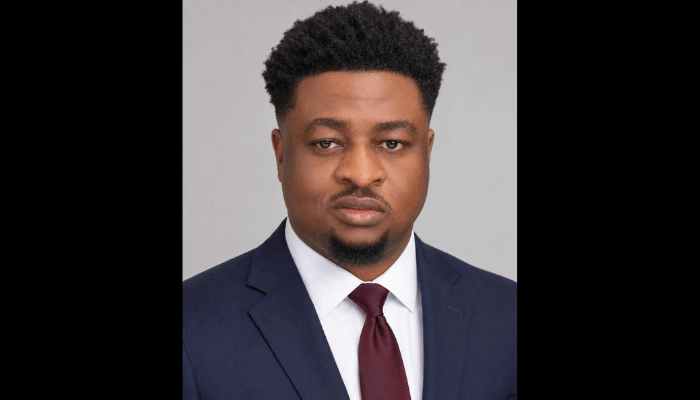
As governments, development institutions, and research organisations increasingly rely on data to inform policy decisions, young African researchers are beginning to play a critical role in shaping evidence-based governance.
One of such emerging voices is Anya Anya Adebayo, a Political Science graduate of Obafemi Awolowo University, Ile-Ife, whose research interests span electoral studies, development policy, climate security, and socio-economic analysis. Following the completion of his National Youth Service Corps (NYSC) programme,
Adebayo sits down with our correspondent to discuss his academic journey, research experiences, and his growing interest in applying technology and data-driven methods to development challenges across Africa.
Tell us about your undergraduate years at Obafemi Awolowo University between 2011 and 2015.
My years at Obafemi Awolowo University were transformational. Like many students, I entered the university with a general curiosity about society and governance, but my time there helped me develop a deeper appreciation for research, policy analysis, and public affairs. Beyond the classroom, I actively participated in research activities, student engagements, and field projects that exposed me to real-world governance challenges. OAU provided a very intellectually stimulating environment, and I was fortunate to interact with lecturers and researchers who encouraged critical thinking and evidence-based analysis.
Why did you choose Political Science?
Political Science appealed to me because it sits at the intersection of governance, public policy, economics, security, and human development. I have always been interested in understanding why societies develop differently, how governments make decisions, and how institutions influence economic and social outcomes. Political Science offered a framework for examining these issues systematically. What many people do not realise is that Political Science is highly analytical. It involves research, statistics, policy evaluation, and data interpretation, which are skills that remain valuable across many sectors today.
Some people view Political Science and Economics as separate disciplines. Do you see an intersection between the two?
Absolutely. In fact, I believe it is almost impossible to separate them completely. Economic policies are often political decisions, while political outcomes are frequently influenced by economic realities. Issues such as poverty, unemployment, public spending, taxation, social welfare, and development planning all sit at the intersection of politics and economics. During my studies, I became increasingly interested in how economic conditions shape governance outcomes and how policy decisions affect economic growth. That intersection remains one of my strongest research interests.
You worked as a Research Assistant with the Centre for Nigerian Election Studies at Obafemi Awolowo University. What was that experience like?
It was one of the most valuable experiences of my academic journey. Working with the Centre exposed me to practical research methodologies beyond what we learned in the classroom. I participated in data collection exercises, field surveys, sample design activities, data coding, data cleaning, and statistical analysis. We conducted research that sought to understand electoral behaviour, democratic participation, governance challenges, and voter perceptions. It was rigorous work that demanded attention to detail and methodological discipline.
What specific skills did you gain from that research experience?
I gained a strong appreciation for the importance of accurate data. Many policy decisions are only as good as the information available to decision-makers. The research experience improved my skills in fieldwork coordination, survey administration, stakeholder engagement, data management, and analytical reporting. It also taught me how to interpret findings objectively rather than through personal assumptions. These skills continue to influence how I approach research and development projects today.
You recently completed your National Youth Service Corps programme. How would you describe the experience?
The NYSC programme was another important stage of personal and professional development. It provided an opportunity to engage with people from different backgrounds and better understand the diversity of Nigeria’s social and economic realities. Beyond the formal service year, it reinforced the importance of community engagement and public service. It also gave me additional opportunities to apply research and analytical skills in practical settings.
Your recent work has explored the relationship between climate change and the proliferation of small arms and light weapons. How did you become interested in that area?
I became interested in climate-security interactions after observing how environmental pressures can contribute to social instability. In many parts of Sub-Saharan Africa, climate-related challenges such as desertification, declining agricultural productivity, resource scarcity, and displacement create conditions that can increase tensions among communities. When livelihoods become threatened, competition over resources often intensifies. Understanding these relationships is important because security challenges are rarely caused by a single factor. They are often the result of interconnected environmental, economic, and political pressures.
How does this affect electoral outcomes across the region?
Elections do not occur in isolation. They take place within broader social and economic contexts. Where communities experience insecurity, displacement, poverty, or resource conflicts, electoral participation can be affected significantly. Voter turnout may decline, public trust in institutions may weaken, and political tensions may become amplified. My research seeks to understand these connections so that policymakers can develop more informed interventions. Sustainable democratic processes require stable social and economic environments.
Do you believe technology can help address some of these governance and development challenges?
Certainly. While technology is not a magic solution, it can be a powerful enabler. Better data collection systems, digital governance tools, geographic information systems, and analytical technologies can improve decision-making and resource allocation. We are already seeing how technology can enhance transparency, improve public service delivery, and support evidence-based policy development. I believe Africa has enormous opportunities to leverage technology for sustainable development.
Looking ahead, what areas would you like to focus on in your future research and professional career?
I intend to continue working at the intersection of governance, development, research, and technology. I am particularly interested in how data-driven systems can improve policy outcomes, strengthen institutions, and support sustainable development across Africa. Whether the issue is elections, security, climate resilience, economic development, or public administration, I believe evidence-based approaches will become increasingly important. My goal is to contribute to solutions that improve lives and strengthen development outcomes across the continent.
Finally, what advice would you give young graduates interested in research and public policy?
Never underestimate the value of curiosity and discipline. Research requires patience, objectivity, and a willingness to learn continuously. The problems facing Africa are complex, but they are also opportunities for innovation and meaningful impact. Young people should invest in analytical skills, embrace evidence-based thinking, and remain committed to lifelong learning. The future belongs to those who can combine knowledge with practical solutions.

Join BusinessDay whatsapp Channel, to stay up to date
Open In Whatsapp